Search Articles


DENVER (CN) — The 10th Circuit on Tuesday affirmed dismissal of landowners’ challenge to the New Mexico Supreme Court’s stance that streambeds have always belonged to the public, even if government agencies previously acted otherwise.
Oddly enough, the divided appellate court reached the decision after reversing the lower court’s findings on standing and sovereign immunity — which were raised on appeal — and then concluding the plaintiffs failed to adequately argue the state court’s actions had amounted to a Fifth Amendment taking.
“Even if judicial-taking claims exist, the landowners have failed to state a claim for a judicial taking as outlined in Stop the Beach Renourishment’s plurality opinion,” wrote U.S. Circuit Judge Carolyn McHugh in a 50-page opinion. “The landowners bear the burden of demonstrating that their rights were sufficiently established before Adobe Whitewater such that this decision amounted to a judicial taking.”
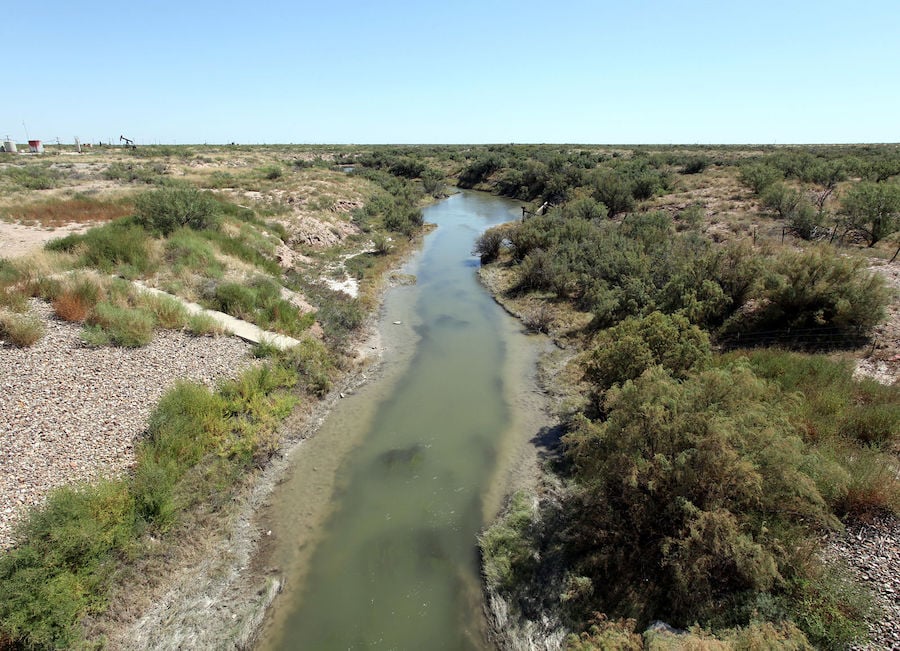
Landowners with property along the Pecos River and Rio Tusas in New Mexico have long understood their property rights included the ability to bar trespassers from streambeds, even though the water itself is public under New Mexico law.
But in 2022, the New Mexico Supreme Court ruled in Adobe Whitewater Club of New Mexico v. New Mexico State Gaming Commission that the state had misapplied its own law and that the public always had the right to access streambeds as well as streams. While the court made it clear the public still can’t pass through private property to reach public streambeds, the move invalidated previous policies that had allowed landowners to post signs warning the public of their boundaries, and even certify streambeds as private property.
In the state’s view, the streambeds had always been public, so the new stance did not change what the landowners owned.
“The court held that it had merely clarified the scope of that easement and that nothing had been taken from the landowners,” McHugh summarized.
But the landowners saw Adobe Whitewater as new law that opened up the streambeds they’d called their own, stripping them of private property without compensation.
The landowners, two of whom have been prosecuted for restricting access to their property, filed a federal lawsuit in 2024. A judge dismissed the case in January 2026, finding the court lacked jurisdiction and that the plaintiffs lacked standing. The landowners appealed.
The lower court had found the state actors could not be held responsible for the landowners’ claim of lost property because it stemmed from a court ruling. Nevertheless, McHugh found the landowners had standing to sue the state actors responsible for enforcing the court’s order.
“Although the landowners’ requested injunction would not return their lost property right or prevent enforcement by the public, it would redress the threat of prosecution by officials with special enforcement authority. Thus, partial redressability was available and, as we explain, is sufficient for standing,” McHugh wrote.
“The New Mexico officials’ argument that the claimed right to exclude never existed — while relevant to the merits of the landowners’ taking claims — does not undermine the landowners’ alleged injury,” the Barack Obama appointee added.
While the 10th Circuit found the landowners had standing to sue and that sovereign immunity did not protect the state from the claims, the majority panel affirmed dismissal after finding the plaintiffs did not adequately state a Fifth Amendment takings claim against the state high court — an issue even the U.S. Supreme Court has avoided addressing head on.
In 2010, the U.S. Supreme Court took up review of Stop the Beach Renourishment v. Florida, in which landowners challenged the state’s claim to own newly built beaches when the property line had long been seen as where the land met the water.
Although the high court declined to address judicial takings, Supreme Court Justice Antonin Scalia wrote in the plurality opinion, “it would be absurd to allow a state to do by judicial decree what the takings clause forbids it to do by legislative fiat.”
Obama-appointed U.S. Circuit Judge Gregory Phillips joined McHugh on the majority opinion. U.S. Circuit Judge Richard Fedrico penned a 10-page dissent to the majority’s decision to dismiss the case rather than remand.
“The law on judicial takings is unsettled, and even the most basic question — is there such a thing as a claim for judicial taking? — remains largely unanswered,” Federico wrote.
The Joe Biden appointee worried ending the case here would deprive the landowners of the opportunity to flesh out their argument and amend the complaint. In a footnote, McHugh noted the lower court had dismissed the suit without prejudice, leaving the landowners free to file anew.
In an email, the landowners’ attorney Chris Kieser said he was disappointed with the decision.
“While the Court of Appeals properly recognized that my clients have standing and that sovereign immunity does not protect the state officials, it unfortunately gave short shrift to my clients’ longstanding property rights,” said Kieser, who practices with the nonprofit Pacific Legal Foundation.
New Mexico attorney James Grayson argued the case on behalf of the state. A spokesperson for the New Mexico attorney general’s office celebrated the court’s decision for protecting access to public waters.
“The ruling supports New Mexico’s longstanding constitutional protection of public waters, and New Mexico Department of Justice will continue to closely guard the public’s right of access to these cherished waterways,” the spokesperson wrote over email.
 Follow @bright_lamp
Subscribe to our free newsletters
Our weekly newsletter Closing Arguments offers the latest about ongoing trials, major litigation and rulings in courthouses around the U.S. and the world, while the monthly Under the Lights dishes the legal dirt from Hollywood, sports, Big Tech and the arts.