Search Articles


DENVER (CN) — In reviving challenges to former President Joe Biden’s expansion of Bears Ears National Monument in Utah, the 10th Circuit on Tuesday found a president’s decisions can be subject to judicial review if they go beyond the powers granted by Congress.
“When the president exceeds statutory limits placed on his power, his actions are not those of the sovereign," wrote U.S. Circuit Judge Joel Carson in a 35-page opinion. “Instead, he acts ultra vires and enjoys no immunity from suit. In such circumstances, federal courts may review presidential acts alleged to exceed lawful authority.”
By passing the Antiquities Act in 1906, Congress gave the president the power to declare national monuments to protect historic landmarks, objects of scientific interest and surrounding lands using the “smallest area compatible.”
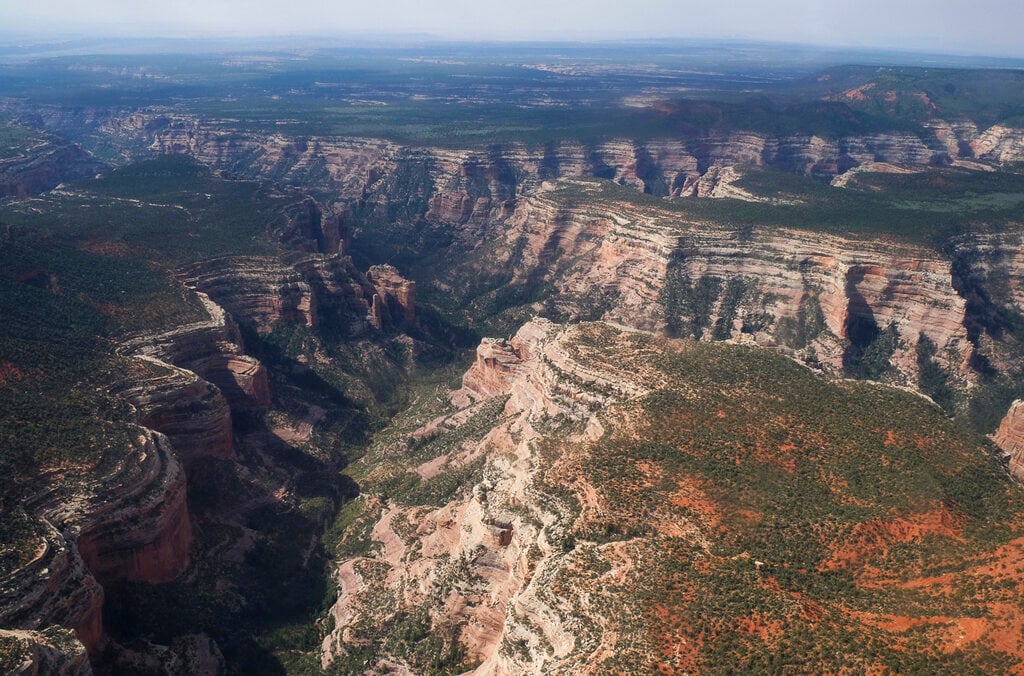
Under the law, former President Bill Clinton established the Grand Staircase-Escalante National Monument in northern Arizona and southern Utah in 1996, and former President Barack Obama declared Utah’s Bears Ears National Monument in December 2016. During his first term, President Donald Trump shrank both reserves and removed many restrictions. When Biden entered office in 2021, he reversed at once, expanding both monuments’ boundaries to encompass 3 million acres of federal land and reinstating Democrat-era protections.
Two lawsuits followed, one by local property owners and the other by the two Utah counties bordering the monument, Garfield and Kane.
In court documents, rancher Zebediah Dalton argued Biden stretched the definition of “monument” to encompass “an indeterminate collection of geographic areas, ecosystems, habitats, and even types of animals — from moths to minnows, shrimp to sheep.”
The lower court consolidated then dismissed both cases in August 2023, finding federal sovereign immunity rendered the Antiquities Act proclamations unreviewable.
Dalton and the counties appealed, arguing the president’s decisions were subject to review if they went beyond the powers granted by Congress.
The 10th Circuit agreed. The president is only immune while acting within his powers, and that venturing into “the wilderness beyond” puts a president’s decisions within the purview of judicial review.
As an example, Carson explained the president couldn’t prevent sheep from being slaughtered under a statute that gave him the power to protect cattle.
Whether Trump or Biden were wrong in how they redrew national monument boundaries remains to be seen while the case returns to the courtroom of Obama-appointed Senior U.S. District Judge David Nuffer.
“Although we decline to go so far as to hold plaintiffs plausibly alleged an ultra vires claim, we conclude that the district court erred in dismissing plaintiffs’ claims,” Carson wrote. “The district court based its determinations on a flawed view of sovereign immunity’s ultra vires exception, and we must correct those errors.”
This won’t be the first time federal courts have reviewed presidential action under the Antiquities Act. In 1908, the U.S. Supreme Court took up a challenge to President Theodore Roosevelt’s designation of the Grand Canyon National Monument.
Although the three-judge appeals panel revived the case, it affirmed the lower court’s dismissal of individual landowners and nonprofit BlueRibbon Coalition for lacking standing.
“The individual plaintiffs and BlueRibbon ostensibly challenge this holding. But in doing so, they failed to mention standing in their opening brief, focusing instead on whether sovereign immunity bars their suit and whether President Biden and the agency defendants violated the Antiquities Act,” Carson wrote. By the time the parties raised standing in their reply brief, it was too late.
Over email, Utah Attorney General Derek Brown celebrated the ruling.
“Today’s ruling is a win for Utah, and for every Western state that has watched federal administrations treat the Antiquities Act like a blank check to lock up millions of acres,” the Republican wrote. “For years, the federal government has insisted that a president’s monument proclamation is unlimited and can’t be reviewed.”
Matthew Campbell, who practices for the Native American Rights Fund, told Courthouse News he will continue to protect the monument.
“We look forward to explaining to the district court the immense historic and scientific importance of Bears Ears and its importance to the tribal nations fighting to protect it,” Campbell said over email.
Biden-appointed U.S. Circuit Judge Veronica Rossman signed onto the opinion with Carson.
Biden’s other 10th Circuit appointment, U.S. Circuit Judge Richard Federico, penned a 31-page dissent arguing the majority gave the court too much authority to second-guess national monument designation.
“The majority’s opinion requires the district court to determine the scope of the president’s authority and to essentially dissect and pick apart the proclamations declaring Bears Ears and Grand Staircase-Escalante as national monuments,” Federico wrote. “Binding precedent does not permit this expansive of a review.”
Attorney Tyler Green argued the case on behalf of Utah’s Garfield and Kane counties. U.S. Attorney John Bies defended the federal government. Attorney Matthew Campbell represented Hopi Tribe, Navajo Nation, Pueblo of Zuni and Ute Mountain Ute tribes on the case. None of the attorneys responded to an inquiry for comment.
 Follow @bright_lamp
Subscribe to our free newsletters
Our weekly newsletter Closing Arguments offers the latest about ongoing trials, major litigation and rulings in courthouses around the U.S. and the world, while the monthly Under the Lights dishes the legal dirt from Hollywood, sports, Big Tech and the arts.
Additional Reads
 States take aim at Trump’s IRS settlement June 23, 2026