Search Articles


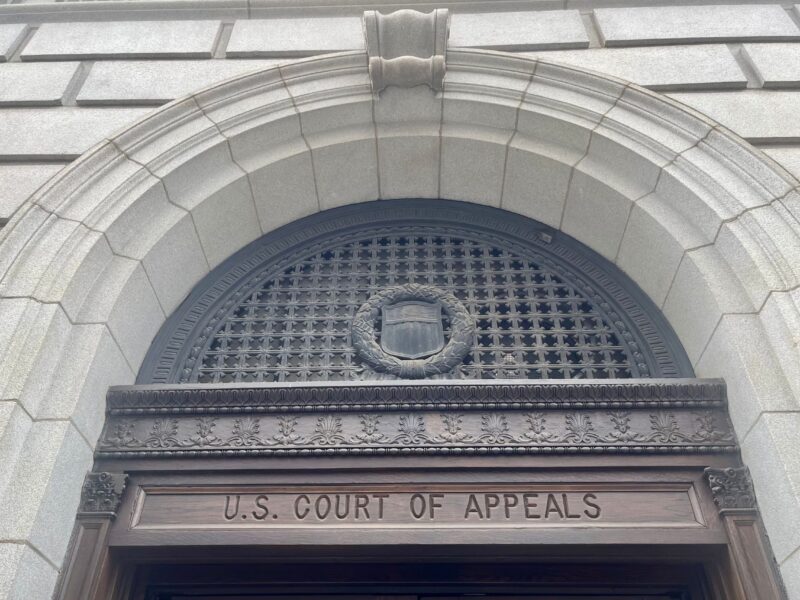
ATLANTA (CN) — The federal government’s use of private accreditation agencies to approve public colleges and universities as eligible institutions for financial aid is constitutional, an 11th Circuit panel unanimously ruled Monday in response to Florida’s challenge to the Higher Education Act.
The three-judge panel of the Atlanta-based appeals court upheld a Florida federal judge’s dismissal of the Sunshine State’s lawsuit. Florida officials accused private accrediting agencies of “gatekeeping” billions of dollars in federal funding by independently setting educational quality standards.
The Higher Education Act requires schools to be accredited for students to receive federal aid. Students may receive federal financial assistance only if they attend an accredited institution.
The state has argued the system violates several clauses of the U.S. Constitution, including the spending clause, appointments clause and private nondelegation doctrine.
“There is really no debate that the accreditation requirement is reasonable,” U.S. Circuit Judge Andrew Brasher wrote on behalf of the panel. “It is obviously connected to Congress’s goal that federal student aid flow to high quality institutions. The history of private accreditation underscores the reasonableness of relying on that kind of preexisting practice.”
Congress has required accreditation as a condition for federal financial aid eligibility since the 1952 G.I. Bill.
An attorney for the state argued during an April hearing that the law unfairly gives accreditors immense authority with little federal oversight. The state has claimed that Congress and the U.S. Department of Education unconstitutionally delegated government power to private accreditors, which have not been appointed as federal officers.
The 11th Circuit roundly rejected the idea that accreditors’ role in judging institutional quality transforms them into government actors.
“Florida asserts that accreditors exercise government power in the form of legislative rule-setting power and executive decision-making power. But a wall of precedent establishes that accreditors exercise neither kind of authority,” Brasher wrote.
Brasher, a Donald Trump appointee, was joined in the opinion by Chief U.S. Circuit Judge William Pryor, an appointee of George W. Bush, and Joe Biden-appointed U.S. Circuit Judge Nancy Abudu.
The panel noted that states routinely rely on similar privately-controlled institutions to decide who is qualified to receive certain professional healthcare or engineering licenses. Courts have repeatedly found that accreditors in those roles are not state actors.
The U.S. Department of Education has also never delegated to private accreditors its authority to terminate federal funds, Brasher pointed out in the 18-page ruling.
“Their power to accredit comes not from the federal government, but from their member institutions who voluntarily submit to their authority and by-laws,” Brasher wrote. “Private accreditors do not rely on any delegation of government power to do what they have always done: accredit their member educational institutions.”
Accrediting agencies are usually funded by the schools or programs that they accredit.
A representative for the office of Florida’s attorney general did not immediately respond to a request for comment Monday afternoon.
Representatives for the U.S. Department of Education and the Justice Department also did not immediately respond to requests for comment.
The decision is yet another blow to Florida Governor Ron DeSantis’s campaign against college accreditors.
DeSantis has accused accrediting agencies of holding colleges and universities hostage. He said Florida’s lawsuit seeks to “strip private, unaccountable accreditors of their authority to stand in the way of Florida’s higher education reforms.”
A spokesperson for the governor did not respond to a request for comment.
DeSantis signed SB 7044 in 2022, requiring Florida’s 40 public colleges and universities to change accreditors every 10 years. Schools may choose from among 61 recognized accrediting agencies.
The law’s passage came after tensions between the state and the Southern Association of Colleges and Schools Commission on Colleges, which accredits all of Florida’s public institutions.
The agency threatened Florida State University’s accreditation after the school considered naming the state’s education commissioner as university president. The accreditor also investigated the University of Florida from 2021 to 2022 after it barred three professors from testifying against the state in a voting rights case.
The accreditor ultimately found the university had not exerted undue political influence.
 Follow @KaylaGoggin_CNS
Subscribe to our free newsletters
Our weekly newsletter Closing Arguments offers the latest about ongoing trials, major litigation and rulings in courthouses around the U.S. and the world, while the monthly Under the Lights dishes the legal dirt from Hollywood, sports, Big Tech and the arts.