
 Search Articles



A day at the ballpark. I had never understood our national fairy tale fixation with professional baseball as an idyllic pastime that brings to mind the carefree days of an innocent past. The sport had always struck me as agonizingly slow to watch.
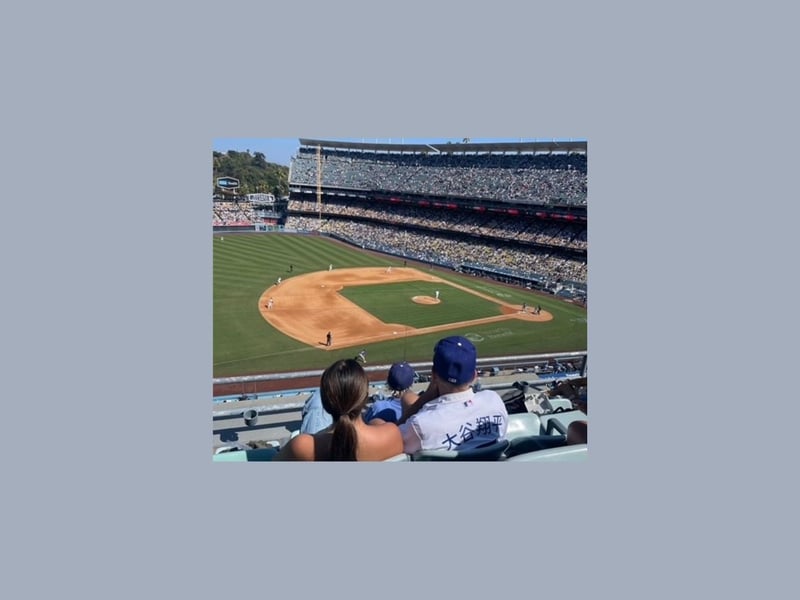
But on Sunday, I went to Dodger Stadium in the company of Japanese friends including two girls in their twenties who flew from Japan for just a few days.
They had two things in mind, the first was to see baseball phenom Shohei Ohtani play and the second was to buy Ohtani-related merch. Ohtani as every baseball fan knows is the 6 foot, 4 inch, 210lb slugger and pitcher from Iwate Prefecture in the northern part of mainland Japan.
The Japanese clientele in the gift shop was so dominant on Sunday that one of the employees alternated between English and Japanese to say, “The line starts here.” Four cash registers were running constantly while I was there, with people buying ceremonial baseballs, Dodgers caps and pricey jerseys.
The Japanese folks with me bought jerseys that had Ohtani’s number 17 on the front and his name in Japanese Kanji on the back plus a signed baseball and blue Dodgers caps.
Then we stood in the area outside the stands and ate hot dogs, fries, nachos and drank cold bottles of water. It was a hot day and unfortunately our seats were in full sun. By the fifth inning, the only people sitting in our seats were me and a 16-year-old girl living in Kansas who could not get enough sunshine.
Ohtani did not disappoint, he singled twice and stole a base in the first few innings against the Colorado Rockies. Then in the bottom of the ninth, Ohtani hit a homer followed by another home run from Mookie Betts to win the game. The success of the Japanese player with 54 home runs and 59 stolen bases this season has the Dodger game announcers frothing over his achievement as the best record ever in Major League Baseball, something that will not be seen again.
But there was indeed a nearly idyllic peace in watching the game itself, hearing the distant smack of the ball in the catcher’s mitt, the occasional sharp crack as the ball was well struck, the individual walk to the hitter’s box, Ohtani’s zen-like stance, erect, bat poised straight up, ready to hit, his size and speed as he stole another base, and then the Dodgers on defense spread out, almost like chess pieces on a board, in white uniforms on a brilliantly green field.
The time watching the game in the stadium was part of a continuum also tied to Japan where on a recent visit, I had little to watch on TV in the evenings and wound up watching local Japanese league baseball games. The game was for the most part a step down from the American majors but that made it less controlled, more wild, more prone to mistakes and swings in the score as the innings racked up. And the fans — the Japanese fans were organized, youthful, enthusiastic and in a constant state of chanting and routines, banging their balloon sticks together.
Totally different than the slow-motion sport I remembered from the U.S. But, like all pro sports, Major League Baseball is oriented around pulling in fans and making money from attendance and the sale of jerseys, caps and memorabilia. And the overall organization of the sport made a difficult and ultimately extremely successful rule change to address its falling fan base, putting in place a pitch clock. It made the game move along fairly briskly, changing it from what it had been, a mind-numbing marathon.
So that when that Sunday was over, and I rode home in a new, blue Dodgers cap, I understood the peace and happy state of mind that can descend upon you when in the stands watching the rhythm of the game. Even so, I will probably go to a night game next time.
Subscribe to our free newsletters
Our weekly newsletter Closing Arguments offers the latest about ongoing trials, major litigation and rulings in courthouses around the U.S. and the world, while the monthly Under the Lights dishes the legal dirt from Hollywood, sports, Big Tech and the arts.