
 Search Articles


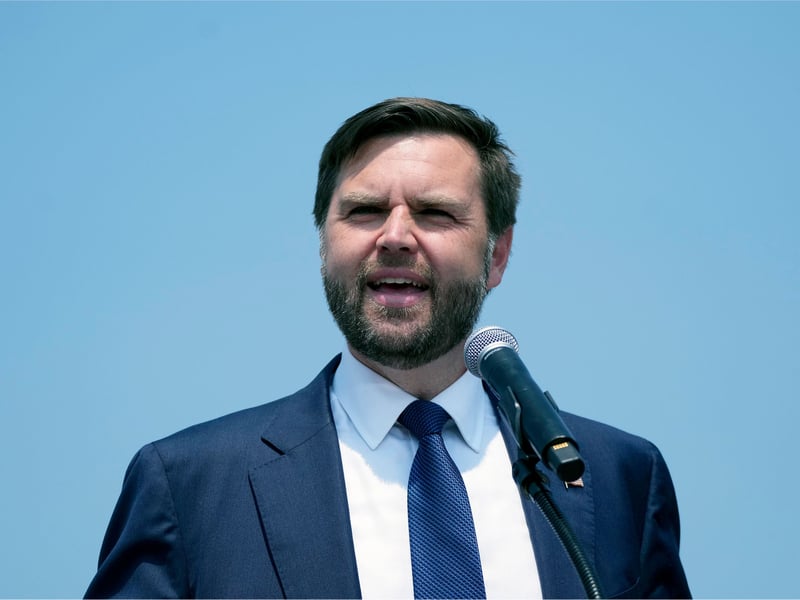
WASHINGTON (CN) — Vice President JD Vance suggested that judges can’t be a check on the presidency as dozens of lawsuits threaten to upend the administration’s key policy goals on immigration, federal spending and civil service protections.
Less than a month into his second term, President Donald Trump’s executive actions face nearly 50 lawsuits — with new complaints filed every day. Civil rights groups say Trump’s policies discriminate against transgender people. Immigration advocates challenged removal policies, attacks on sanctuary cities and the revocation of birthright citizenship. Federal employees say the administration violated civil service protections. Laborunions and other support groups objected to billionaire Elon Musk’s Department of Government Efficiency, or DOGE, rooting around Americans’ private data.
Judges are already pushing back, issuing restraining orders and injunctions putting Trump’s actions on hold.
The vice president appeared to respond to these rulings in a post on X over the weekend, claiming that judges were unlawfully interfering with the administration’s authority.
“Judges aren’t allowed to control the executive’s legitimate power,” Vance wrote.
Politicians and court watchers quickly condemned Vance’s Sunday post, interpreting it as a warning that the Trump administration might try to defy a court order.
“JD Vance is saying the quiet part out loud: the Trump administration intends to break the law,” Illinois Governor JB Pritzker wrote on Bluesky.
Former Wyoming Representative Liz Cheney said if Vance believed the lower courts had exceeded their authority, the recourse would be appeal, not defiance.
“You don’t get to rage-quit the Republic just because you are losing,” Cheney wrote. “That’s tyranny.”
Vance has previously suggested defying court orders. In a 2021 interview, Vance said Trump should adopt Andrew Jackson’s example if the courts tried to block the mass firing of civil servants.
Jackson infamously defied the Supreme Court’s 1832 ruling in Worcester v. Georgia that recognized the Cherokee Nation’s sovereignty. Instead of complying with the ruling, Jackson ordered the Cherokee forcibly removed from Georgia in what would be known as the Trail of Tears.
Legal experts said judges won’t interfere with orders found to be within the executive authority as laid out in the Constitution or federal statutes. The critical question, according to Richard Pildes, a professor at New York University School of Law, is which branch decides whether the president is exercising lawful, legitimate power.
“Under the Constitution and the rule of law, the courts make the ultimate decision about that,” Pildes said in an email. “If the statement means to imply the executive can decide for itself and ignore the courts’ judgments, that would be a direct flouting of the rule of law.”
The most infamous example of judicial disobedience followed the Supreme Court’s landmark ruling in Brown v. Board of Education , which ordered the desegregation of public schools. Arkansas Governor Orval Faubus ordered the state’s National Guard to prevent nine Black teens — later known as the Little Rock Nine — from attending Central High School.
Defiance to court orders continued until President Dwight Eisenhower federalized the National Guard and sent U.S. Army troops to guard the students so they could attend class.
Victoria Nourse, a professor at Georgetown Law, said Vance’s post must be read in context with Trump’s broad executive authority claims at the heart of the legal challenges.
“They’re undermining the checks and balances right and left and that joins this claim,” Nourse said.
Trump said he wanted to shut down the Consumer Financial Protection Bureau and tried to put broad swaths of federal funds on hold. Congress controls the power of the purse, and according to Nourse, Trump’s actions directly cross into lawmakers’ sphere of authority.
Nourse said if the Supreme Court was to endorse wide-ranging presidential authority — coined the unitary executive — then the system of checks and balances will be in serious trouble.
“If they take that theory seriously, it will create a constitutional crisis because they’re just going to keep taking over agencies,” Nourse said. “It’s the pattern that disturbs me.”
Adrian Vermeule, a professor at Harvard Law School, questioned the assumption that Vance was suggesting refusing to obey a judicial judgment.
“The much more straightforward — and less hysterical — reading is that it refers to ordinary legal doctrines of reviewability, standing, and the so-called ‘political question doctrine,’ which are themselves legal principles that courts apply to restrain their own jurisdiction to review executive action, and all of which are ultimately rooted in the separation of powers,” Vermeule wrote on X.
As an example, Vermeule pointed to the Supreme Court’s 2023 ruling in United States v. Texas . In an 8-1 decision, the justices rejected a challenge to the Biden administration’s immigration policies, finding that “our constitutional system of separation of powers contemplates a more restricted role for Article III courts.”
“In other words, the question ‘who decides?’ comes in two different forms; failing to distinguish them causes confusion,” Vermeule wrote. “As a matter of separation of powers, the courts may themselves decide that courts ought not to be the ones to decide a given issue. Reviewability, standing, the political question doctrine, and so on all have this effect.”
Vance didn’t further explain his post, and the vice president’s office did not answer questions about its meaning. Vance seemed to hint at his intention Sunday night when he reposted a columnist who said that the judiciary has nothing to compel lawless decisions.
On Monday afternoon, a Rhode Island judge ruled that the administration had violated his order to thaw a funding freeze on federal grant programs.
 Follow @KelseyReichmann
 Follow @kelseyreichmann.bsky.social
Subscribe to our free newsletters
Our weekly newsletter Closing Arguments offers the latest about ongoing trials, major litigation and rulings in courthouses around the U.S. and the world, while the monthly Under the Lights dishes the legal dirt from Hollywood, sports, Big Tech and the arts.