Search Articles


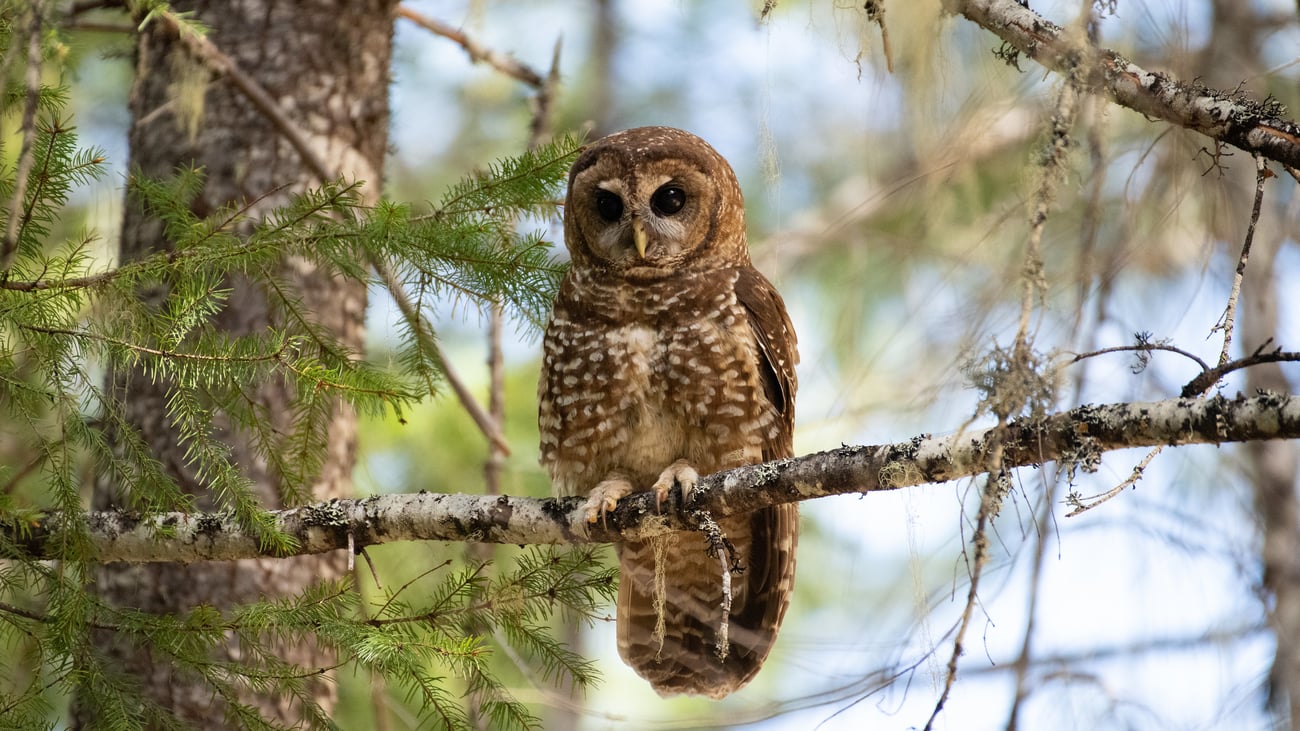
(CN) — A federal judge questioned animal rights organizations Wednesday on their standing to bring a lawsuit against federal agencies that issued a permit to kill barred owls in the Pacific Northwest, which they claim violated the Administrative Procedure Act.
In a consolidated case in the U.S. District Court for the District of Oregon, environmental nonprofits Friends of Animals and Animal Wellness Action said federal agencies issued a special purpose permit to shoot and kill over 400,000 barred owls as part of a broader conservation strategy to protect the northern spotted owl.
The northern spotted owl is a threatened species under the Endangered Species Act that competes for habitat and resources with barred owls. The organizations claim the barred owl management strategy wasn’t specific enough to meet the National Environmental Policy Act standards, nor works within the context of the Migratory Bird Treaty Act.
Northern spotted owls are known to have larger ranges and slower reproductive rates than barred owls. Barred owls are originally from the northeastern U.S. and migrated west in the 1970s.
At a hearing for cross-motions on summary judgment, U.S. District Judge Adrienne Nelson asked the plaintiffs about the barred owl management strategy’s scope.
Friends of Animals attorney Jennifer Best said the U.S. Fish and Wildlife Service issued a special purpose permit for the removal of barred owls in forests throughout Washington, Oregon and Northern California at night away from human activity, because the agency couldn’t meet the regulations necessary under a general depredation permit, which includes the restriction not to lure or call the owls into shooting range.
Furthermore, Best said, the agency’s use of the term “invasive species” for barred owls doesn’t meet the legal definition under an executive order, as barred owls didn’t migrate to the west due to direct human action, she argued, and their range naturally expanded over decades.
“The problem with this is that there is no rational basis for this conclusion,” said Best on the agency’s use of the term. Best said the decision for issuing the permit “must be set aside as arbitrary and capricious.”
Best and Animal Wellness Action attorney Claire Davis said the U.S. Fish and Wildlife Service used faulty data to conclude spotted owl recovery increased after the removal of barred owls. Due to the use of unreliable data to issue a special purpose permit, the animal rights organizations argued, Nelson should not defer to the U.S. Fish and Wildlife Service’s scientific process to make her decision.
The service’s plan to remove barred owls is so broad, Davis said, “it was unable to identify or much less provide any meaningful analysis of adverse impacts or advise the public of any meaningful and potential adverse impacts and where they would take place, rendering it impossible for the Service to give it the hard look NEPA requires.”
Additionally, the groups argued their missions as animal rights organizations to protect animal welfare and survival were enough to prove standing, even if the organizations didn’t have members who could make specific claims based on individual harm.
Erika Furlong, Department of Justice trial attorney representing the U.S. Fish and Wildlife Service and the Bureau of Land Management, said timing is important to implement the removal plan.
“Fish and Wildlife Service determined it is critical to manage barred owls before spotted owls are extricated from their native range,” she said.
Furlong said the agency developed the barred owl removal strategy from years of studies and collaborating with state agencies and tribal partners.
“It is the product of multiple years of analysis and a comprehensive public process,” she said. “Plaintiffs challenge the strategy for the simple reason they disagree with it.”
Furlong argued it wasn’t clear the court had jurisdiction for the plaintiffs’ case, and they didn’t have standing because the areas where they specifically cited in declarations where they could incur harm, by hearing gunshots, for example, are not areas where barred owls are currently being removed.
She said a depredation permit wasn’t “appropriate” for protecting spotted owls from barred owl competition and there was a “compelling justification” to issue a special purpose permit. U.S. Fish and Wildlife Service determined barred owls are a “species of least concern," and the removal plan, if implemented fully over 30 years, would kill 28% of barred owls in spotted owl habitat, said Furlong.
“I believe the figure was closer to 0.4% removal under the strategy across the barred owl range nationally,” she said.
Nelson, a Joe Biden appointee, said at the beginning of the two-hour hearing she did not anticipate making a ruling from the bench and would take the arguments under submission.
Subscribe to our free newsletters
Our weekly newsletter Closing Arguments offers the latest about ongoing trials, major litigation and rulings in courthouses around the U.S. and the world, while the monthly Under the Lights dishes the legal dirt from Hollywood, sports, Big Tech and the arts.
Additional Reads
 House Democrat moves to block Trump IRS settlement June 4, 2026