Search Articles


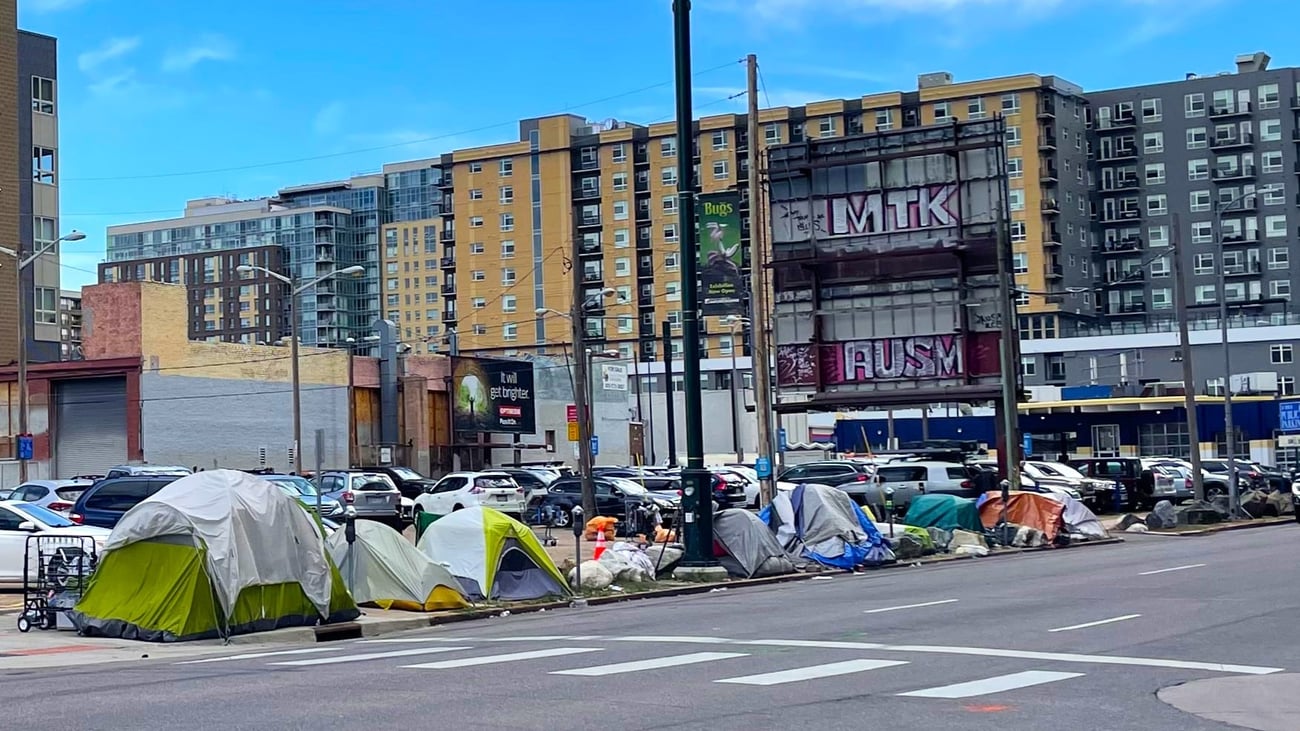
(CN) — The Colorado Court of Appeals upheld the city of Boulder’s ban on sleeping and camping on public property Thursday.
“Boulder’s residents without a safe place to rest indoors understandably may seek to shelter on public property,” Judge Eric Kuhn wrote in the unanimous opinion. “But no matter how sympathetic their plight, these circumstances alone don’t create new state constitutional rights.”
A now-defunct homeless advocacy group, Feet Forward, had joined three unhoused residents and two taxpayers in suing Boulder in 2022, arguing that a pair of city ordinances banning camping or setting up tents on public property were unconstitutional. A Superior Court judge dismissed all but one cause of action, allowing the claim that the camping bans amounted to cruel and unusual punishment to move forward.
But as the case moved forward with discovery, the U.S. Supreme Court issued its landmark ruling in Grants Pass v. Johnson, which found that such bans were not prohibited by the Eighth Amendment. Following that guidance, the Superior Court judge tossed the remaining claim in the lawsuit against Boulder.
In their appeal, Feet Forward and the individual plaintiffs argued the Colorado Constitution was different from that of the United States and required an independent interpretation. The judges were unpersuaded by this argument, failing to see “any substantive differences” between the Eighth Amendment and the Colorado Constitution.
For the appellate court judges, the key issue was whether or not the ordinances criminalized the act of camping in a park or on a sidewalk or the “status” of being homeless, which still enjoys Eighth Amendment protection. After some hand-wringing, the three-judge panel decided that the camping bans were targeting actions.
“To be sure, we appreciate the tension in differentiating between a person’s conduct and status when their conduct involves basic activities for survival due to an involuntary status,” Kuhn wrote. “That said, there is no precedent establishing that a person should be treated under our constitution as if they have a medical condition — effectively ‘an illness or infirmity’ — based on their inability to access or afford indoor shelter… We can’t conclude that the status of homelessness is involuntary in all instances. To the contrary, the complaint reveals that homelessness in Boulder is driven by a complex web of factors and individual circumstances.”
The plaintiffs had pointed to Justice Sonia Sotomayor’s dissent in Grants Pass, in which she argued, “It is cruel and unusual to apply any penalty selectively to minorities whose numbers are few, who are outcasts of society, and who are unpopular, but whom society is willing to see suffer.”
The appellate judges acknowledged this disagreement but concluded that “issues related to homelessness have levels of complexity and nuance that raise the type of questions better ’left to be resolved through ‘productive’ democratic ‘dialogue’ and ‘experimentation,’ rather than addressed through ‘a rigid constitutional mold,’” quoting from the majority opinion in Grants Pass.
“Given all this,” Kuhn wrote, “we cannot conclude on this record that the ordinances criminalize status rather than conduct — even if that conduct is difficult to avoid under the totality of the circumstances.”
After the ruling, plaintiffs’ attorney Andy McNulty said this reasoning amounted to the court finding that some are “choosing homelessness,” something that was not “supported by the pleadings in the case.” He noted Boulder has only one homeless shelter with around 150 shelter beds. “They turn away people pretty much every night,” McNulty said.
The judges also concluded the ordinances, which carry a penalty of up to $2,650 fines and 90-day jail sentences, were not cruel “because they don’t terrorize, disgrace, or cause pain to those charged.”
The plaintiffs had also argued that the camping bans violated the fundamental right of freedom of movement. The judges rejected this argument as well, finding that freedom of movement only exists when it doesn’t interfere with the liberty of others.
“A resident occupying public property to shelter for sleep and rest necessarily interferes with every other resident’s ability to traverse, use, and enjoy that same space,” Kuhn wrote.
Judges Terry Fox and Grant Sullivan concurred with Kuhn’s opinion.
“The city of Boulder appreciates the Court of Appeals’ decision, which affirms the city’s authority to enforce its camping and tent laws to protect public health, safety and access to public spaces,” said Sarah Huntley, a Boulder spokesperson, in an email. “Boulder’s approach will continue to balance compassion for individuals experiencing homelessness with accountability for maintaining shared public spaces.”
McNulty said his clients would likely appeal the ruling to the state’s Supreme Court.
“We are interested in establishing that the Grants Pass decision was wrongly decided, and that the Colorado constitution provides greater protection to Coloradans,” he said. “We’re going to see this thing through to the end.”
 Follow @hillelaron
Subscribe to our free newsletters
Our weekly newsletter Closing Arguments offers the latest about ongoing trials, major litigation and rulings in courthouses around the U.S. and the world, while the monthly Under the Lights dishes the legal dirt from Hollywood, sports, Big Tech and the arts.
Additional Reads

 Appeal over Columbia University dismissed, moot May 14, 2026