
 Search Articles


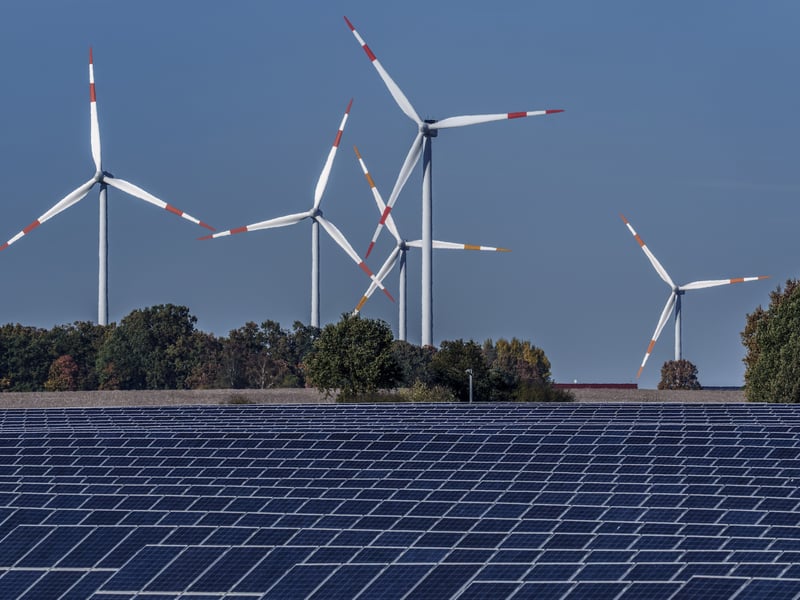
(CN) — A Massachusetts federal judge on Monday deemed President Donald Trump’s executive order halting wind energy projects illegal, calling it “arbitrary and capricious.”
U.S. District Judge Patti Saris vacated the president’s day one executive order in a 47-page ruling, siding with a coalition of 17 attorneys general of blue states and the District of Columbia who say the order hampers the country’s transition to clean, renewable energy and impacts state economies.
“Given that the Wind Order constitutes a change of course from decades of agencies’ issuing (or denying) permits related to wind energy projects, the agency defendants were required, at minimum, to ‘provide a reasoned explanation for the change’ and to ‘display awareness that [they were] changing position.’ They failed to do so. Instead, they implemented the Wind Order on Inauguration Day without elucidating the ‘reasons for the new policy’,” Saris, a Bill Clinton appointee, wrote.
The federal government had argued that the order — in which Trump “temporarily” withdraws consideration of wind energy leasing — did not constitute a final agency action the states could contest.
On Jan. 20, the president had ordered the suspension of all federal approvals for wind energy projects, claiming the administration needs to conduct a more thorough review of the economic and environmental impacts of these projects.
However, Saris noted that, in the 10 months since the executive order and throughout legal proceedings, the administration has not provided any timeline or end date for such a review.
“The agency defendants concede that the Wind Order will remain in effect until, at the earliest, the Comprehensive Assessment is complete. In other words, the Wind Order — despite being ‘characteriz[ed] … as an interim’ undertaking — ‘is the final word from the [A]gency [Defendants] on what will happen up to the time of any different permanent decision’ resulting from the Comprehensive Assessment,” she wrote.
Saris determined that the order counted as a final agency action and that the states — along with the Alliance for Clean Energy New York — had demonstrated standing with evidence that their investments in wind energy were being compromised.
Saris said she had the authority to rule on the matter, and determined the executive order violated the Administrative Procedure Act and was arbitrary and capricious.
“Insulating an agency action from arbitrary-and capricious review in such a circumstance would undermine the APA and ‘shockingly allow presidents to insulate any desired rulemaking from judicial review with the single stroke of an executive pen,’” she wrote.
Led by New York, the 17 states and the District of Columbia said in their May suit that the executive order defies the Administrative Procedure Act and is an overreach of executive authority.
The defendant federal agencies — including the Department of the Interior, the U.S. Army Corps of Engineers, the Environmental Protection Agency and the Department of Energy, among others — claimed that they and a “Wind Memo” they issued, were shielded from review because they were acting on the orders of the president.
“But plaintiffs have challenged ‘the agency defendants’ actions under the’ Wind Memo, not the Wind Memo itself. The proof is in the pudding: No permits have issued since the Wind Order was promulgated, and the agency defendants acknowledge that they will not issue any permits at least until they complete the comprehensive assessment, for which there is no timeline. That action is contrary to law,” Saris said.
In a statement, New York Attorney General Letitia James praised Saris’ ruling.
“As New Yorkers face rising energy costs, we need more energy sources, not fewer. Wind energy is good for our environment, our economy, and our communities. I am grateful the court stepped in to block the administration’s reckless and unlawful crusade against clean energy,” she said.
The Department of Justice declined to comment on the ruling.
In separate executive order, Trump announced measures to encourage the development of “a reliable, diversified, and affordable supply of energy,” but notably excluded wind energy from its definitions, despite the renewable energy source meeting those very standards, according to the states.
Meanwhile, Trump has issued multiple directives to bolster the coal industry and has sued several states to prevent them from enforcing climate change laws against fossil fuel companies.
Subscribe to our free newsletters
Our weekly newsletter Closing Arguments offers the latest about ongoing trials, major litigation and rulings in courthouses around the U.S. and the world, while the monthly Under the Lights dishes the legal dirt from Hollywood, sports, Big Tech and the arts.