
 Search Articles


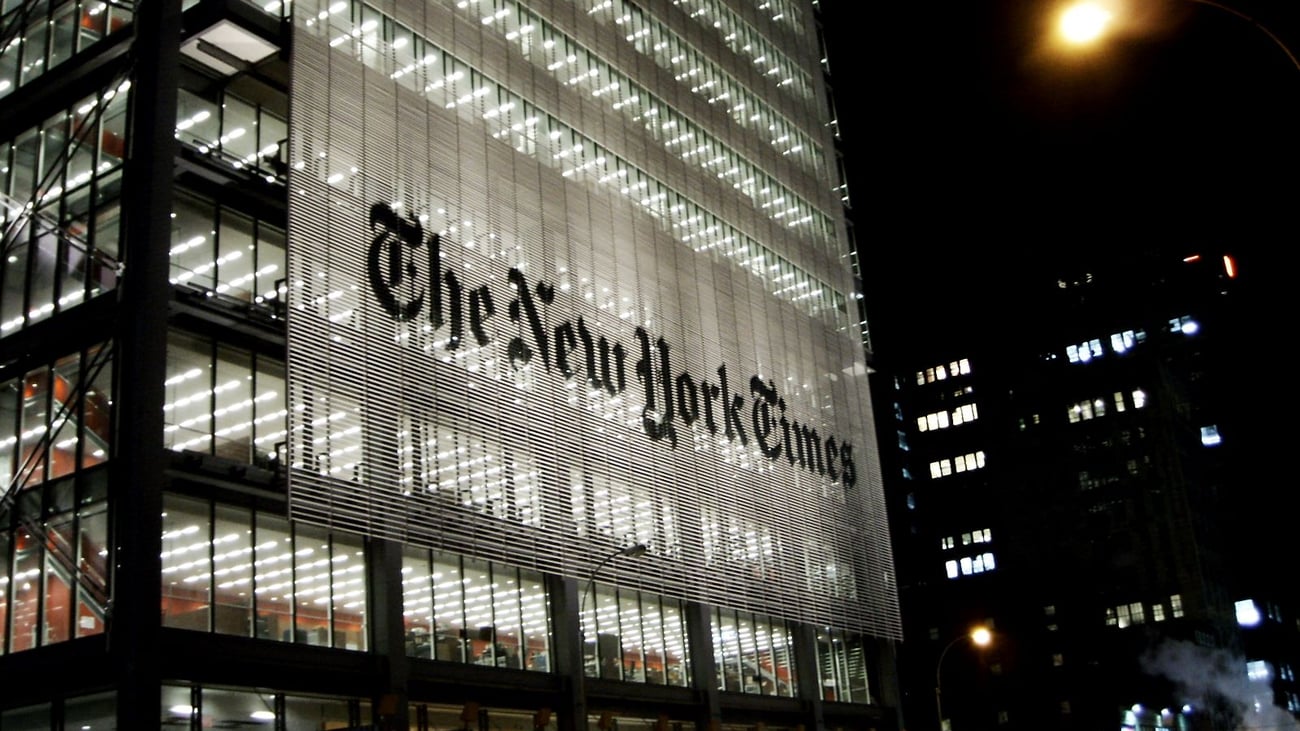
MANHATTAN (CN) — The Department of Justice on Thursday agreed to withdraw grand jury subpoenas of a group of New York Times reporters who covered President Donald Trump’s new Qatari-donated Air Force One jet — only after a federal judge grilled the department for issuing them in the first place.
The Times was seeking to quash the subpoenas, claiming they were issued in bad faith to deter the journalists from continuing to produce reporting that enraged the president. The stories at issue cited anonymous sources and surrounded security concerns aboard Trump’s new plane that prevented him from using it during a recent trip to the Middle East.
At a Thursday hearing, U.S. District Judge Arun Subramanian chided the government for hastily issuing the subpoenas that even the DOJ’s own attorneys acknowledged were rife with “inadvertent errors.”
“Subpoenas are the last step, not the first step, but the last step,” the Joe Biden appointee said.
The roughly 90-minute hearing got increasingly tense as Subramanian pressed Sean Buckley, chief counsel to the U.S. Attorney in the Southern District of New York, on the department’s apparent neglect of regulations set to protect First Amendment rights. He lambasted the government for not trying to secure the information it sought before rushing to send out the subpoenas.
“When you see something like this, if this were a civil proceeding, what I’d normally do is ask the parties to show cause why sanctions should not be issued or steps shouldn’t be taken with respect to the incorrect statements or misstatements,” Subramanian said.
He told Buckley that he effectively had two options: quash the subpoenas from the bench or allow Buckley to agree to withdraw them.
Buckley had initially sought to merely suspend the subpoenas as the department continued its investigation into the source of the information leaked to the Times. But after the dressing-down from Subramanian and a brief recess to consult with the newspaper’s counsel, he eventually agreed to withdraw them altogether.
At one point, the judge called Assistant U.S. Attorney Kevin Sullivan, who was seated in the gallery, to the well to answer questions about additional subpoenas into the reporters’ phone records. According to Subramanian, Sullivan misled another judge about the publicity of the investigation when seeking a sign-off on those subpoenas.
“It was an oversight on the government’s part,” Sullivan said.
The department also admitted its subpoena of one of the journalist’s mothers and two of their spouses was unintentional. Of that, Buckley said “that is an error that we own.”
“It seems like the inadvertent errors and ‘we should’ve done things differently’ are piling up,” Subramanian quipped.
While the DOJ agreed to pull the subpoenas, the department could potentially issue them again in the future if it fails to get the information it’s seeking in its investigation.
The government claims it’s targeting the source of the leaks to the Times reporters, not the reporters themselves, who revealed that the new Air Force One plane lacked antimissile and other defensive features.
A DOJ spokesperson railed against Subramanian in a statement following the hearing, claiming the judge “blocked us from presenting the meticulous process of this investigation.”
“The grand jury has a right to hear testimony from all material witnesses in a federal criminal investigation,” the spokesperson said. “This judge’s conduct overrides clear longstanding principles and common sense — blocking the grand jury from receiving core evidence in a national security investigation. Make no mistake, this investigation remains ongoing, and we will pursue justice against those threatening national security by leaking classified information, a serious federal crime.”
David McGraw, senior vice president and deputy general counsel at The New York Times, said the court appearance was “an important affirmation of our country’s commitment to a free press.”
“We are pleased that the government finally conceded that the subpoenas violated the law, but they should never have been issued in the first place,” McGraw said in a statement. “The Times and our journalists will continue to report and seek the truth without fear or favor. We will not be deterred in the face of tactics like these."
The Trump administration has come under fire from critics and First Amendment activists over its persistent bids to get information from journalists about their reporting. DOJ officials recently withdrew similar subpoena requests from The Washington Post and The Wall Street Journal, compelling them to testify in front of a grand jury.
“The second Trump administration is being particularly aggressive when it comes to leak enforcement and, in particular, going after journalists to identify their confidential sources,” Gabe Rottam, vice president of policy at the Reporters Committee for Freedom of the Press, told Courthouse News on Thursday.
Rottam added that he doubts this is the last time this DOJ tries to subpoena reporters for this information, but he hopes “the department’s track record in court would give them pause before they do this again.”
The administration has also faced heat for taking the luxury jet as a gift from Qatar last year. The administration announced in May 2025 that it was taking the $400 million Boeing 747-8 to be used as Air Force One, with plans to eventually transfer it to Trump’s presidential library.
 Follow @Uebey
 Follow @uebey.bsky.social
Subscribe to our free newsletters
Our weekly newsletter Closing Arguments offers the latest about ongoing trials, major litigation and rulings in courthouses around the U.S. and the world, while the monthly Under the Lights dishes the legal dirt from Hollywood, sports, Big Tech and the arts.
Additional Reads
 Journalist defamed 1st Amendment Praetorians? July 23, 2026