
 Search Articles


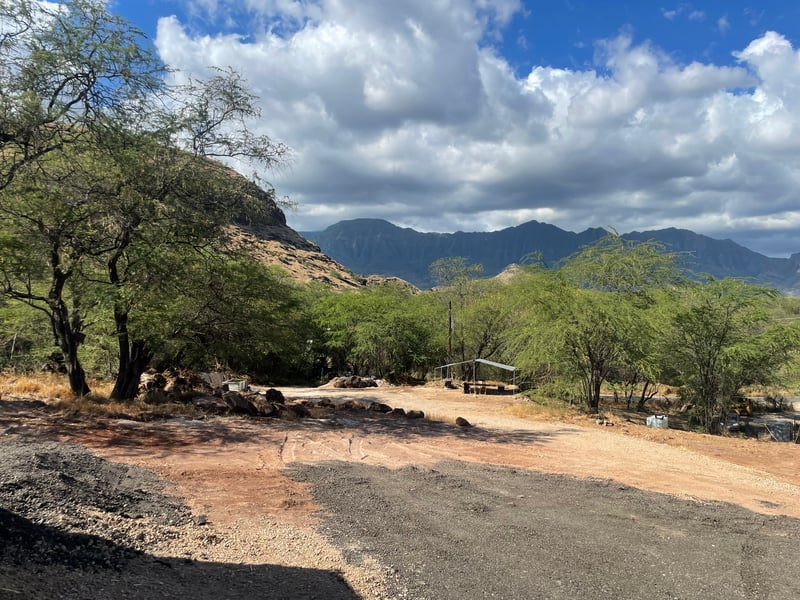
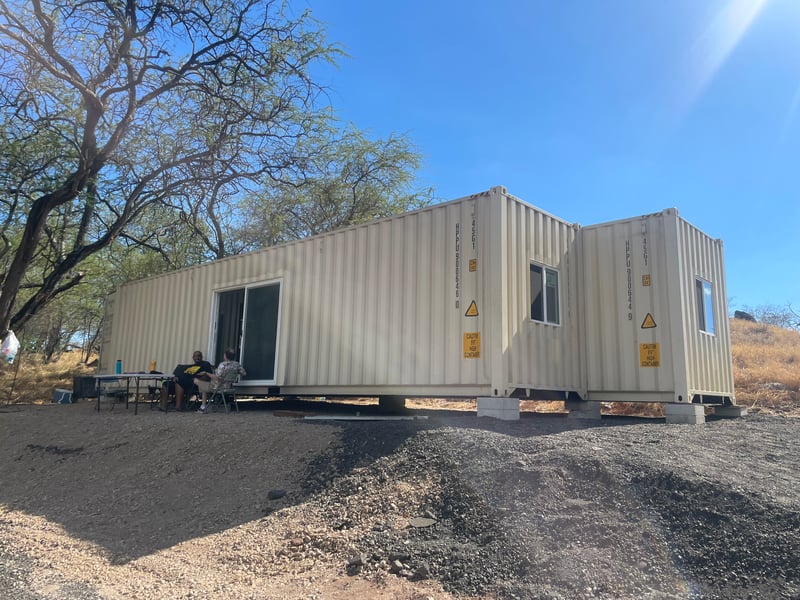
HONOLULU (CN) — De MONT Kalai Manaole lives in a shipping-container home in Lualualei, a coastal valley outside of Honolulu on the island of Oahu.
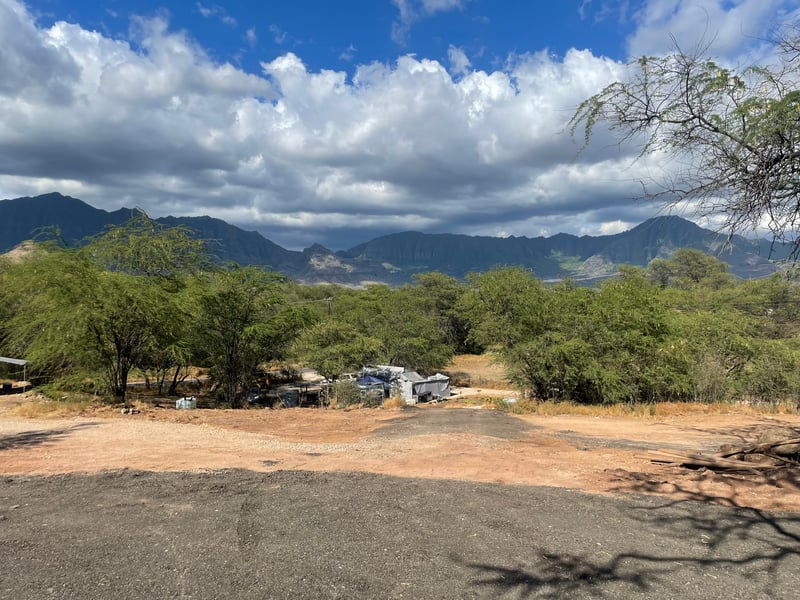
He wakes each morning to the sound of roosters and the distant hum of traffic. Outside, the Waianae Mountains rise like sleeping giants against the sky.
It’s a modest homestead — but for Native Hawaiians like Manaole, this project carries enormous weight.
At 61, Manaole and his off-the-grid home have become symbols of Hawaiian efforts to settle the land that is legally theirs.
Not long ago, this corner of Lualualei was a dumping ground.
All matter of junk littered the area, much of it from contractors illegally dumping construction materials. Native and invasive plants grew wild around the refuse, creating an impenetrable thicket of trash.
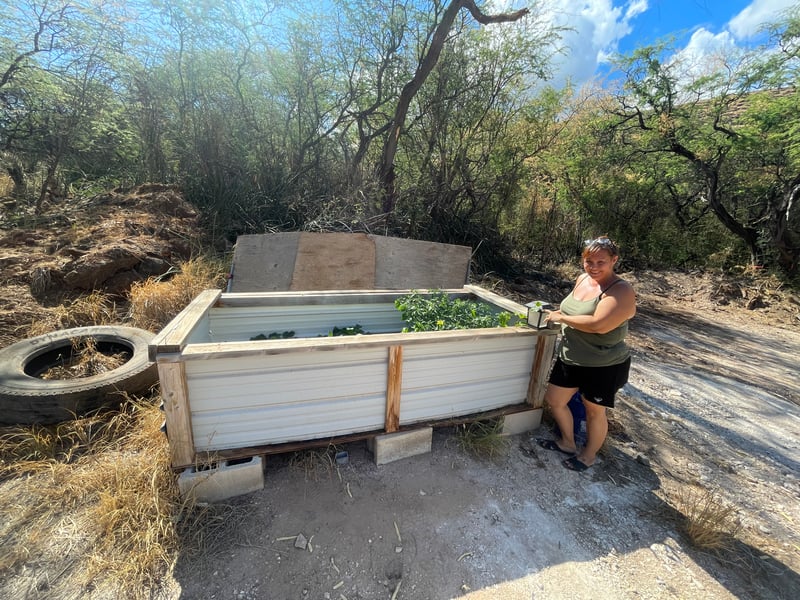
Manaole has transformed this neglected patch of land into a home, clearing walking paths and installing solar panels.
Where construction debris once lay scattered, he started small gardens. Chickens peck at the ground where car parts used to rust.
A modest home like this is just what many Hawaiians are after.
For more than 100 years, federal and state officials have theoretically guaranteed their right to have a house in their native lands. And yet even as Hawaii has become by far the most expensive state to live in the country, thousands of Hawaiians have died waiting for their spot on waitlists.
Despite reforms and lawsuits over the years, critics say unnecessary barriers also keep deserving people from accessing the program. DHHL offers homes in the range of $500,000 to $700,000 — a modest sum by Hawaii standards, but still a lot of money.
Just like with most home purchases, applicants must qualify for mortgages. “That right there redlined Native Hawaiians right out of the process," Manaole told Courthouse News.
Born De MONT Rafael Darwin Conner, Manaole legally changed his name in 2022 to honor his Hawaiian roots and his grandfather, Samuel Kalai Manaole.
He grew up poor and has spent time in prison, experiences he says taught him to advocate for himself.
In a sense, Manaole is a professional gadfly. After earning a paralegal degree in 1997, he started the company Premier Paralegal Services Hawaii.
“I teach them what I’ve learned,” he says of his clients. “I teach them how to be a pro se litigant and represent themselves in court.”
Around 2022, Manaole began regularly appearing at Hawaiian Home Lands Commission meetings.
He repeatedly raised the issue of indigent Native Hawaiians, families like his own who didn’t meet the financial requirements for traditional homestead programs. At the time, Manaole and his wife Aiko were living with friends.
Manaole’s advocacy eventually led to the state Department of Hawaii Home Lands’ Indigent Native Hawaiian Pilot Project.
Under the experimental program, Manaole was granted limited rights to build a homestead in Lualualei Valley. “We’re the guinea pigs,” he said. “If we fail, the program will die, and nobody else will be able to do it."
Although it’s still unclear exactly what will come of this experiment, DHHL officials say the project could pave the way for new 99-year homestead leases for indigent Native Hawaiians.
Under the pilot, participants must still meet DHHL’s eligibility requirements and would be responsible for developing their own housing on the land. The department is separately exploring lower-cost options — such as modular and factory-built homes — to make construction more affordable.
Manaole currently lives in a modified shipping container, representing a $30,000 mid-range option. It may not be much, but it’s a step towards the homes long promised to Hawaiians.
“This is a pilot project of self-determination,” he said.
The roots of Hawaii’s homestead crisis date back to 1921, when President Warren Harding signed the Hawaiian Homes Commission Act. The law created a trust to provide longterm and low-cost homestead leases to those with at least 50% Native Hawaiian ancestry.
When Hawaii became a state in 1959, the act was incorporated into the state constitution. But the transition reshaped the program’s administration and funding, laying the groundwork for problems that persist today.
Since then, thousands of Native Hawaiians have died before receiving the homestead leases. The current waitlist has around 29,000 people and continues to grow.
Hoping to address the problem, lawmakers in 1978 made DHHL the only state agency with funding guarantees in the state constitution. But Native Hawaiians continue to face long delays.
In 2007, in the case Nelson v. Hawaiian Homes Commission , a group of Hawaiians including Richard Nelson III sued state officials, arguing they were shirking their duty to provide homes.
They won in lower court, but the state’s high court partially reversed, finding it was up to lawmakers to determine what constituted adequate funding. The case reaffirmed Hawaii homeland rights but teed up years of bickering and finger-pointing over how that would actually be accomplished.
Money is a major obstacle. R. Kalani Fronda, a DHHL administrator, has said it would take $6 billion — about one-third of Hawaii’s annual state budget — to fulfill housing obligations and clear the current waitlist.
“We’re trying to build tomorrow’s products with yesterday’s money,” Fronda told PBS Hawaii. “Each time we delay, it gets more expensive.”
In 2022, lawmakers gave DHHL $600 million to help address its waitlist.
That money didn’t make much of a dent. And yet without clear results, lawmakers have been wary to put even more money into the agency. The latest session ended with no new funding, after legislators turned down another request for $600 million.
State Senator Samantha DeCorte, a Republican and Native Hawaiian, emerged last session as a prominent critic of the DHHL.
At a public roundtable this past July, she said that despite asking for more funds, DHHL “weren’t able to produce any real-time numbers on the leases that were awarded.” She questioned the DHHL’s strategy of building whole homes, which she argued priced out Hawaiians.
“This is not about funding; this is about accountability,” DeCorte said. “They’re creating these housing prices that are just enormous, and our people cannot afford it.”
Others argue the agency is making progress and that not funding it will make problems worse.
“I do understand the high costs of the homes,” Democratic State Representative Daniel Holt said at the roundtable. But “if [Native Hawaiians] were given just a piece of land, it would be difficult for them to go through the process to get the permits [and] materials and to build their home.”
Like the land itself, those costs can be much higher in Hawaii. Besides, he argued DHHL was making progress. The agency plans to build up to 8,000 more homes, compared to around 12,000 from 1920 (when the Hawaiian Homes Commission Act was first passed) until now.
Against this backdrop of political gridlock, DHHL approved Manaole’s experimental approach last December.
The project gets at a core question in the Hawaii homestead debate: Should officials focus on getting Hawaiians land as quickly as possible, even if it means the land is barely developed?
Manaole certainly thinks so. He thinks that with just a plot of land, Hawaiians like him could figure the rest out. He joked, “This [pilot project] is to get us off our butt and take responsibility for ourselves.”
Manaole is just the type of person who might struggle to qualify for a traditional homestead mortgage. Still recovering from a bout of recent strokes, he and his wife Aiko cobble together an income with a small catering business.
His personal history demonstrates other barriers in the homestead system, too. Several relatives, including his mother, died after spending decades on housing waitlists. Despite being offered housing three times on the Big Island, Manaole had to defer because he couldn’t afford the mortgages.
When he moved to Oahu, he remained on the island’s residential lease waitlist. He is currently 11,203rd in line.
Besides money, the DHHL also faces other challenges in meeting its obligations.
Officials may need to clear ordnance from former military land or conduct environmental surveys of endemic species. All of that is on top of the regular utilities needed for a home.
“The department actually needs to build the entire water system, wastewater system, roadways, etc.” said Fronda, the DHHL administrator. “Infrastructure so our beneficiaries can actually access the property."
Despite describing herself as “0% Hawaiian,” Manaole’s wife Aiko has become an enthusiastic supporter of her husband’s homestead project.
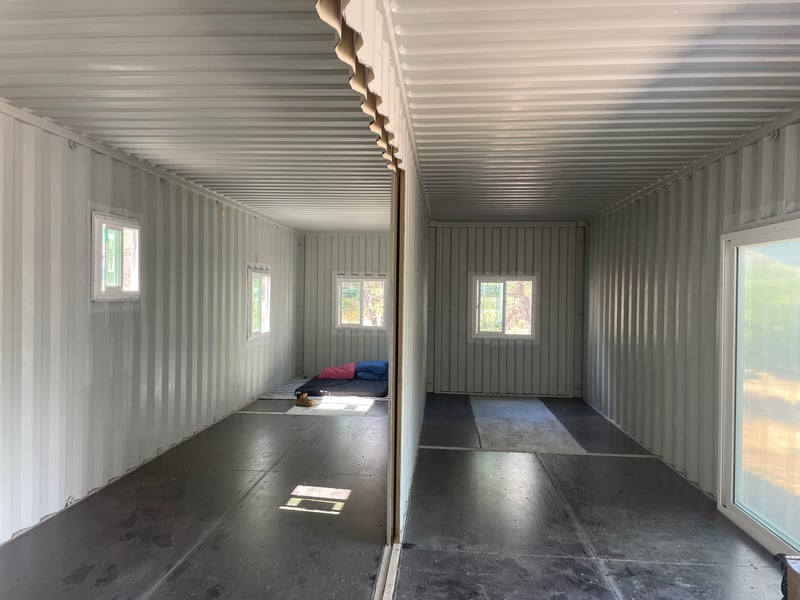
“Even if you have one drop of Hawaiian, this is your land, right?” she asked in an interview. She thought it was unjust how Hawaiians spent their whole lives waiting for legally promised land. “When my husband came up with this idea, I just kind of rolled with him,” she said. The couple has lived on the property since April.
The living was rough at first: With little savings between them, the couple scraped together around $3000 to build a raised platform and put up a tent.
As word spread of their experiment, they received an outpouring of support from local businesses and activists.
The couple estimates they’ve received tens of thousands of dollars from supportive Hawaiian businesses, including Souza Brothers, Tai-Son Services and Kanai Trucking. They now live in a converted shipping container donated by Aloha Containers.
“It was Native Hawaiians who came together,” Manaole said. “That’s what I love about this. This is organic.”
As the cost of living climbs and waitlists persist, Manaole is just one of many Hawaiians looking for ways to make a home on the island.
In the census-designated place of Waianae, Regina “Nani” Pua Okalani Peterson is planning a similar homestead.
A civic leader, activist, and Hawaiian language teacher, Peterson envisions recreating kauhale , or traditional Hawaiian family compounds. Such a project would not only provide homes but help Hawaiians reconnect with their culture. If and when the project moves forward, she estimates she is in contact with 20 to 30 people who are interested in and eligible for the pilot program.
Peterson sees the Hawaii homelands crisis as a problem of generational trauma and cultural disconnection. She wants to help Hawaiians reconnect to their roots, whether that’s through traditional kava ceremonies or by teaching them about the language and culture.
Her homestead project centers on the concept of pilina , a Hawaiian word meaning relationship or connection.
“The style of life we live now is very individualistic,” Peterson said in an interview. “It’s very me, me, me, me. That is not how our kupuna [ancestors] lived. We need to instill in our people that it’s about we, not me.”
Peterson rejected the way state officials described Hawaiian homeland properties.
“The state tells us these lands are vacant and unmanaged,” she said. “These are lands that are not possible to be lived on, under that definition — and that is not our culture. Our kupuna understood that every piece of land has a purpose, just like every single one of us has a purpose.”
Like Manaole, Peterson would like the DHHL to simply give Hawaiians land if that’s what it will take for officials to honor their promises.
“Really, we just need the land,” she told Courthouse News. “We can figure out what we need to do as a people of that land to move forward together.”
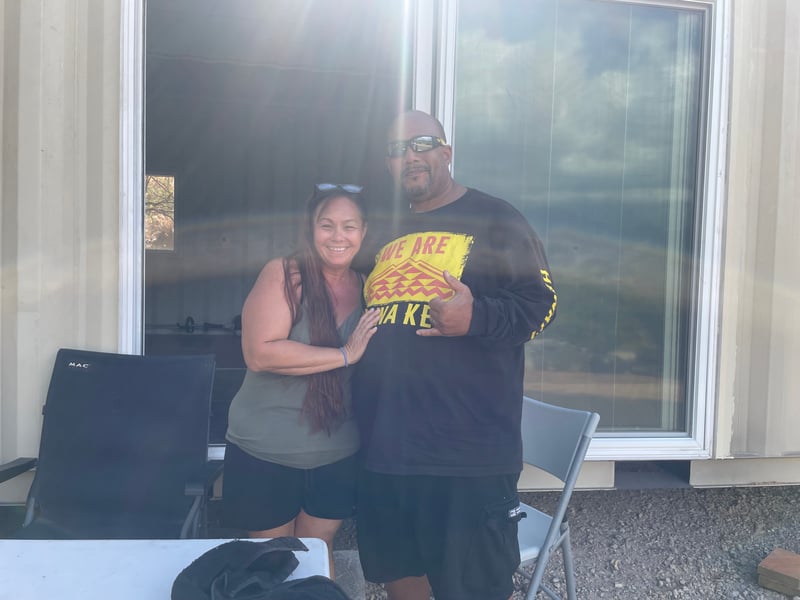
As December approaches and Manaole’s pilot project nears its end, the stakes have become deeply personal for this 61-year-old Native Hawaiian.
Each morning, he surveys the transformed landscape, the solar panels gleaming where twisted rebar once jutted from debris.
Under the hot Hawaii sun, the physical demands of clearing the land and building infrastructure test his limits each day. But the challenge is eased by his current living situation: In addition to his wife Aiko, he shares the land with Aiko’s ex-husband and the former couple’s two children, a supportive arrangement that reflects how Hawaiians once lived.
For Manaole, this homestead is about proving that Hawaiians can and will rebuild communities on their native lands.
“I’m not going to be the second generation to die on a waitlist,” he said. “I do this in honor of my mother, who died on the wait list, my aunties who died on the wait list, and my uncle who died on the wait list.”
 Follow @JeremyYurow
Subscribe to our free newsletters
Our weekly newsletter Closing Arguments offers the latest about ongoing trials, major litigation and rulings in courthouses around the U.S. and the world, while the monthly Under the Lights dishes the legal dirt from Hollywood, sports, Big Tech and the arts.