
 Search Articles


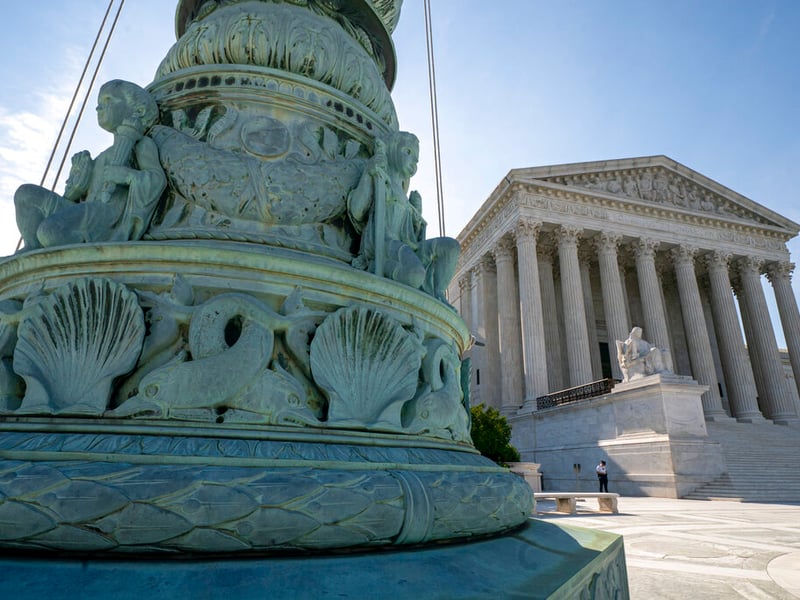
WASHINGTON (CN) – The Supreme Court agreed Friday to hear a case that will decide whether companies with “.com” or other domains in their names can receive federal trademark protection, even if their names would otherwise be generic.
The case out of the Fourth Circuit concerns hotel site Booking.com, which filed suit in Virginia after the Patent and Trademark Office refused to register trademarks that included the company’s name.
Under the PTO’s logic, the term “booking” is a generic term that is not eligible for trademark protection under federal law and adding the domain “.com” does nothing to change that fact. A federal judge sided with Booking.com, and the Fourth Circuit agreed.
In asking the high court to take up the case, the Patent and Trademark Office argued allowing companies to trademark terms that would otherwise be generic by adding a domain would go against an 1888 decision that held firms could not receive trademark protection simply by adding the word “company” to a generic term.
It also argued the decision goes against the longstanding principle that companies cannot make generic terms eligible for trademarks just by becoming so popular that people begin associating the term with their service.
Booking.com argues the addition of the domain fundamentally changes the meaning of the word and that its trademark could not possibly be confused with a generic term meant to refer to all hotel reservation websites.
Booking.com is represented by Jonathan Moskin, an attorney at the New York firm Foley & Lardner. Neither Moskin nor a spokesperson for Booking.com immediately returned requests for comment.
Per its custom, the Supreme Court did not issue any comment in taking up the case.
Subscribe to our free newsletters
Our weekly newsletter Closing Arguments offers the latest about ongoing trials, major litigation and rulings in courthouses around the U.S. and the world, while the monthly Under the Lights dishes the legal dirt from Hollywood, sports, Big Tech and the arts.