Search Articles


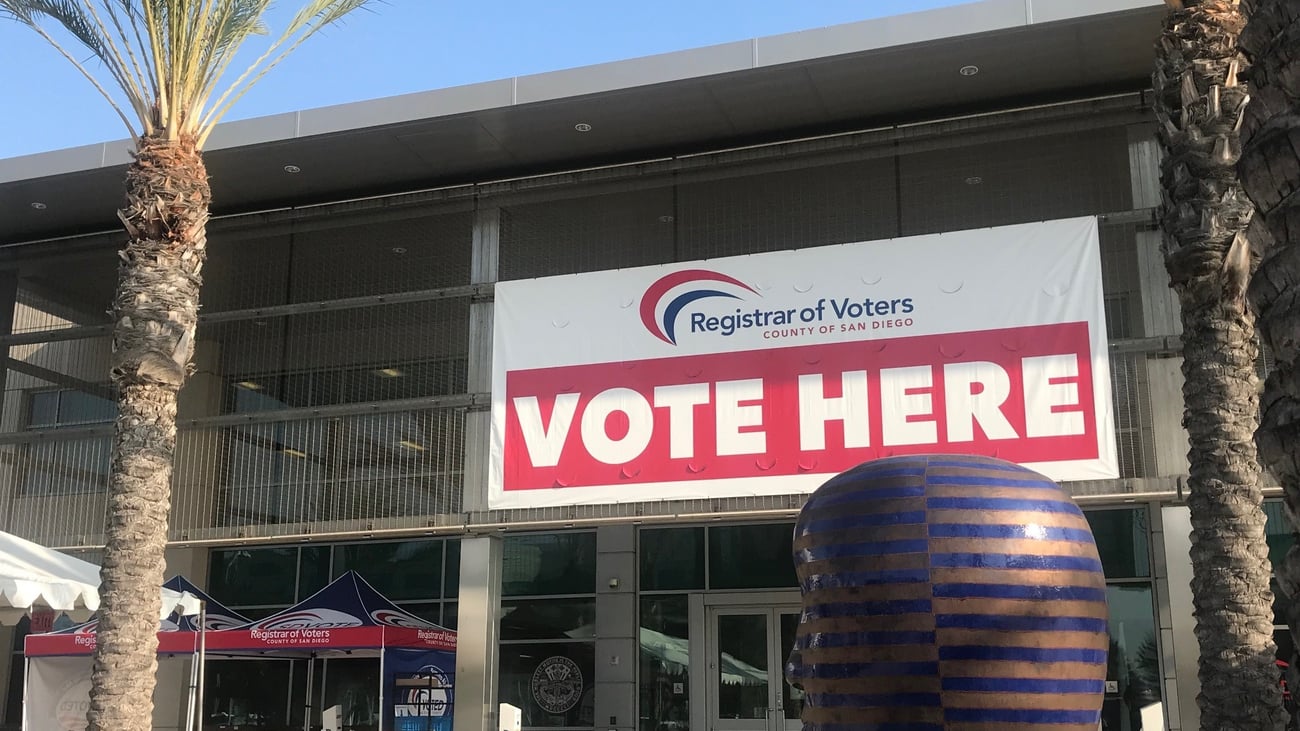
SACRAMENTO, Calif. (CN) — A California appeals court on Thursday denied an urgent request from the state’s attorney general to slap down a Shasta County elections law he has called illegal.
The Third District Court of Appeal opted against reviewing Attorney General Rob Bonta’s challenge to the county’s Measure B, which adds additional requirements like showing photo ID when voting.
That measure, which received about 55% of the vote June 2 in the North State county, would require government-issued identification to register and vote, largely eliminate vote-by-mail and early voting, mandate hand-counted ballots and create a county voter registration system separate from California.
The appeals court made no decision about the suit’s merits.
“The denial is without prejudice to petitioners seeking expedited relief in the trial court in the first instance and to refiling in this court upon a showing that petitioners attempted to obtain expedited relief in the trial court, and the trial court failed to timely act,” the court wrote.
Bonta’s office in a statement to Courthouse News called the decision a purely procedural order.
“The attorney general and the secretary of state will quickly move to obtain relief in the appropriate court to protect voters’ rights and enforce state election laws,” it added.
Shasta County couldn’t be reached for comment.
Bonta filed his complaint June 12, asking for a swift decision.
He asked the appeals court to invalidate the measure, stop its implementation and undo any steps already taken to enforce it. He wanted a quick resolution, as the general election is Nov. 3 and voters need certainty about how to register, whether their registration is active and where they can vote.
Shasta County is a charter county, which gives it authority to enact some local laws in conflict with the state. However, Bonta has said it couldn’t regulate elections. State law prohibits photo ID requirements and access to vote-by-mail and early voting is guaranteed.
That means, regardless of its own ideas on state election laws, the county can’t create or enforce laws that are inconsistent or an impediment to state regulation of the electoral process, Bonta has said.
The attorney general has said Measure B stemmed from the Save Shasta Elections group. It began gathering signatures for the measure in spring 2025. County officials wanted to avoid drafting the measure’s title and summary because the proposal couldn’t legally be enacted through the ballot process.
A judge rejected the request. Later that year, the county registrar determined the measure had qualified for the ballot, and the Board of Supervisors voted to place it before voters on June 2.
Another judge also declined to block the measure from appearing on the ballot, finding that any challenge to its legality was better addressed after the election.
Shasta County has butted heads with the state over elections before.
In January 2023, county supervisors terminated Shasta County’s voting-system lease with Dominion Voting Systems. They later directed staff to develop procedures for hand-counting ballots and select a new voting-equipment vendor for voters with disabilities.
Dominion became a national flashpoint after conspiracy theories falsely claimed its machines were used to sway the 2020 presidential election in favor of Joe Biden. In 2023, Fox News agreed to pay Dominion $787.5 million to settle a defamation lawsuit.
The 2023 move by Shasta County supervisors led to the passage of a state law that forbids manual vote tallies in a jurisdiction with over 1,000 registered voters.
The back-and-forth over voting between California and Shasta County also is playing out on the national level.
President Donald Trump on Wednesday canceled a signing ceremony for a bipartisan housing bill, saying he would withhold his signature until Congress passed the Save America Act.
That act, which Trump has for months urged Congress to pass, would rework voting laws across the country. It would require Americans to provide identification and proof of citizenship to vote. The highly controversial measure has been tied up in the Senate, where even some Republicans are skeptical of its provisions.
Subscribe to our free newsletters
Our weekly newsletter Closing Arguments offers the latest about ongoing trials, major litigation and rulings in courthouses around the U.S. and the world, while the monthly Under the Lights dishes the legal dirt from Hollywood, sports, Big Tech and the arts.