Search Articles


LOS ANGELES (CN) — A federal judge on Thursday rejected California’s bid to prevent Sable Offshore Corp. from using a segment of a controversial pipeline to transport crude oil from its platforms off the coast of Santa Barbara to refineries inland.
U.S. District Judge Stephen Wilson in Los Angeles rejected California Department of Parks and Recreation’s request for a preliminary injunction on the use of a four-mile segment of the pipeline that runs underneath Gaviota State Park.
While California argued that the oil company is trespassing on its parkland because a previously granted easement has long expired, the judge, a Ronald Reagan appointee, said the state had failed to show it faces irreparable harm in the absence of a court order shutting down the pipeline.
“The pipeline operated for nearly thirty years below plaintiff’s property without incident,” Wilson wrote. “Although the pipeline was initially discontinued due to a catastrophic spill, it is not alleged that any part of the relevant pipeline was responsible for the offending leak, particularly not the segment running beneath the park.”
The judge also said California was “grasping at straws” in claiming a sinkhole had formed near the pipeline after it was restarted on March 16 per instruction of the Trump administration.
Sable, Wilson pointed out, had provided testimony of an expert witness who said the purported sinkhole was no more than a rodent burrow, to which California had no retort.
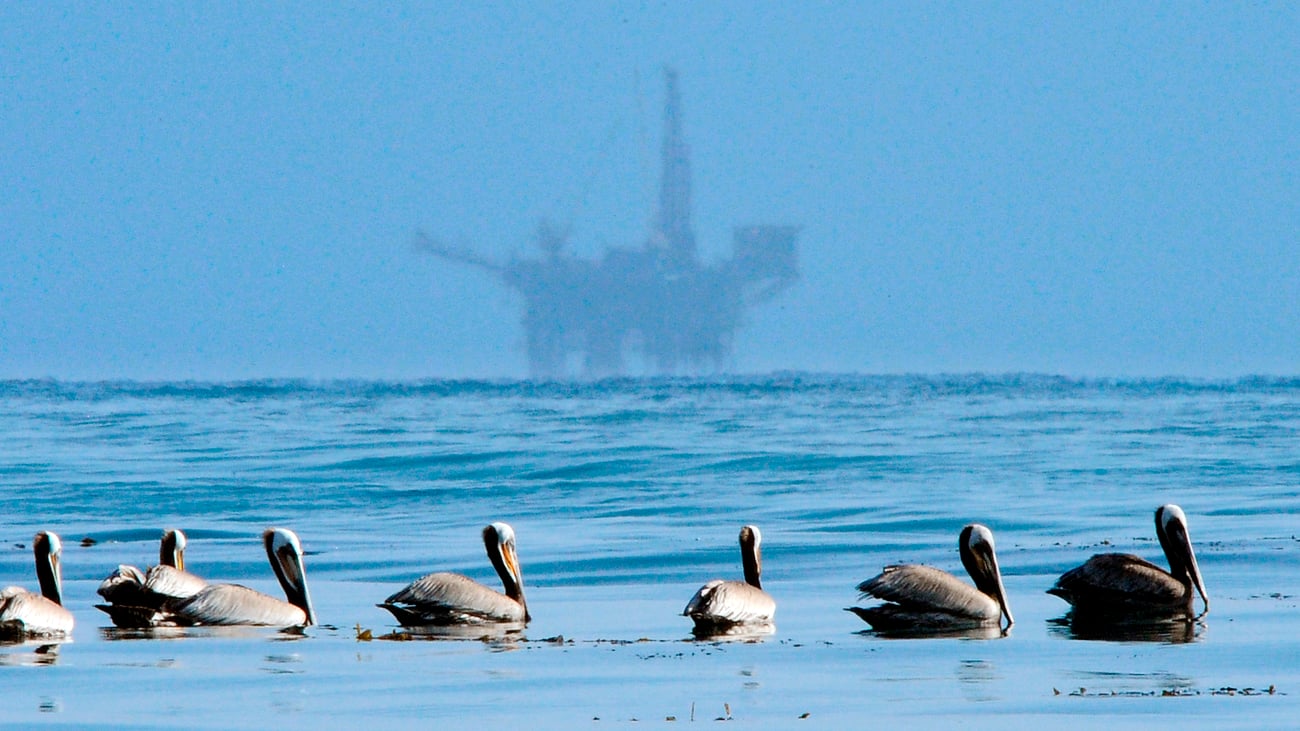
The case is one of many challenges to Sable’s reboot of the three oil platforms, known as the Santa Ynez Unit, which the Houston-based company acquired in 2024 together with the pipeline system to move the crude oil to a processing facility onshore and onward to the San Joaquin Valley, the hub of the state’s oil industry.
Earlier this month, a different federal judge ruled that two nonprofits who are challenging the U.S. Bureau of Ocean Energy Management’s approval to restart the drilling platforms in Central California lacked standing to bring the lawsuit.
The three platforms across from Santa Barbara County had been shut down in 2015 following a catastrophic oil spill when the a different segment of the pipeline than that underneath Gaviota State Park ruptured.
The 2015 Refugio Oil Spill dumped more than120,000 gallons of oil in the ocean, leaving miles of coastline blackened and — for a time — crippling local tourism and fishing industries. The cost of the cleanup was estimated to be around $86 million.
The rupture was linked to a corroded line, owned and operated by Plains All American Pipeline. In 2018, a jury convicted the company of nine criminal charges.
Sable said in a court filings that it has invested over $1.4 billion to restart the oil platforms and pipeline after a more than decadelong period of dormancy, including over $215 million in repairs and upgrades to the pipeline.
In March, after the U.S. and Israeli attacks on Iran disrupted global oil shipments, U.S. Energy Secretary Chris Wright ordered Sable to start using the patched-up pipeline to transport oil from the offshore platforms under the Defense Production Act.
The company said in March it expects to produce and transport 50,000 barrels of day from the Santa Ynez Unit.
Representatives of the California Attorney General’s Office, which is representing Parks and Recreation in the lawsuit, and of Sable didn’t immediately respond to requests for comment on the ruling.
 Follow @edpettersson
Subscribe to our free newsletters
Our weekly newsletter Closing Arguments offers the latest about ongoing trials, major litigation and rulings in courthouses around the U.S. and the world, while the monthly Under the Lights dishes the legal dirt from Hollywood, sports, Big Tech and the arts.