
 Search Articles


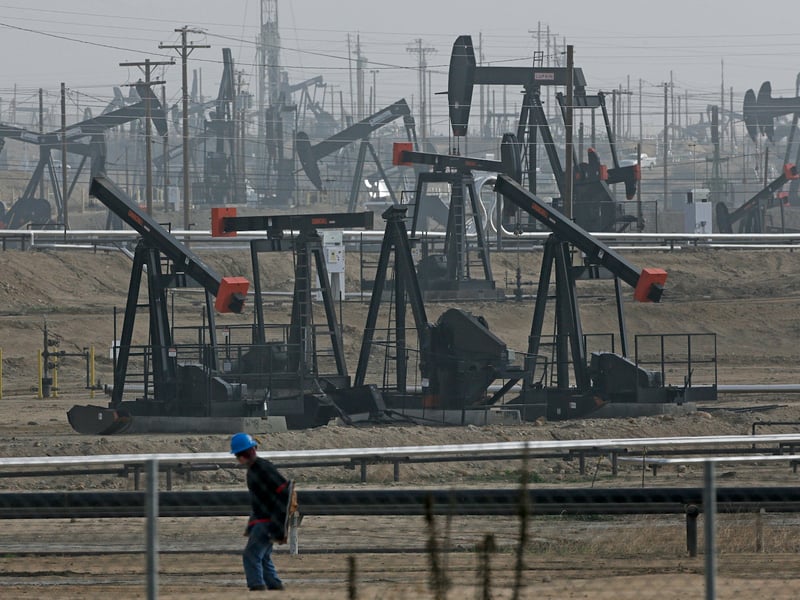
SACRAMENTO, Calif. (CN) — The legislative struggle over an oil and gas bill continued Tuesday in the California Senate Appropriations Committee, where industry representatives said overregulation could lead refiners to leave the Golden State.
There was little doubt as to the fate of Assembly Bill 1, which passed the committee in a 4-to-2 vote. It now advances to the floor of the Senate, which is scheduled to convene Friday morning.
The bill is the result of Governor Gavin Newsom calling a special session of the Legislature to address price spikes at the pump. It has two main components: requiring refineries to meet criteria before performing maintenance, which officials have said interrupts supply; and a mandate for refiners to maintain a minimum amount of gasoline.
“This measure has the potential to save Californians billions,” said Assemblymember Gregg Hart, a Santa Barbara Democrat and one of the bill’s authors.
Zachary Leary, representing the Western States Petroleum Association, argued the bill has many unknowns, including how much storage refiners would need. The legislation would lead to significant costs for refineries, and policies such as Assembly Bill 1 could encourage them to leave the state.
“We do know that this policy could likely result in supply shortages and increased costs,” Leary added.
Jeremy Smith, deputy legislative director with the State Building and Construction Trades Council, also pointed to the unknown costs associated with the bill. He said the economic strengths that come from refineries and jobs couldn’t be overstated.
Like Leary, Smith said refineries weigh legislation when determining whether to stay in California.
“These jobs could go away if the Legislature keeps pushing this industry to stop being in California,” he added.
Republicans on the committee pushed back on the bill, pointing to the unknown costs and concerns that it would exacerbate, not alleviate, price spikes.
State Senator Brian Jones, a San Diego Republican and the minority leader, noted that the bill doesn’t specify how many days of supply a refiner must keep. He also said that the impact to the price of gas isn’t known.
A 15-day supply of gasoline has been discussed in hearings on the bill, though the number doesn’t appear in the legislation, said Siva Gunda, vice chair of the California Energy Commission. He added that in 2022, when a price spike occurred, there was just under 13 days of supply available.
“Fifteen days is not a magic number,” Gunda said.
Christian Beltran, with the state Department of Finance, said the initial costs of the legislation could be absorbed, though additional funding might be needed in the future.
Beltran also noted that while the state Division of Occupational Safety and Health has funding for vacant positions, the state is looking at reducing thousands of positions across all departments. It’s unknown how that would affect the division tasked with oversight of refineries.
State Senator Kelly Seyarto, a Murrieta Republican, questioned why the committee should meet if the costs can be absorbed.
“Obviously, they’re not,” he said.
Seyarto argued that reallocating people within the California Energy Commission to oversee the bill’s implementation comes with a cost, as it would leave those employees’ original jobs unfilled.
The Murrieta senator also called for an analysis on how the loss of refineries in California would affect the state’s fuel supply.
State Senator Steven Bradford, a Gardena Democrat, also expressed worry over the absorbable costs of the bill. He pointed to several bills that died in committee or were vetoed over cost concerns.
A supporter of the bill, state Senator Aisha Wahab, a Hayward Democrat, questioned why requiring supply would hurt refineries. Leary said it creates a pinch point. If storage tanks are full of fuel to meet a mandated level of supply, production will slow.
Additionally, the bill does nothing to encourage refiners to stay in the state, Leary said.
“We are not receiving permits to drill,” he added. “That is impacting supply.”
Subscribe to our free newsletters
Our weekly newsletter Closing Arguments offers the latest about ongoing trials, major litigation and rulings in courthouses around the U.S. and the world, while the monthly Under the Lights dishes the legal dirt from Hollywood, sports, Big Tech and the arts.