
 Search Articles


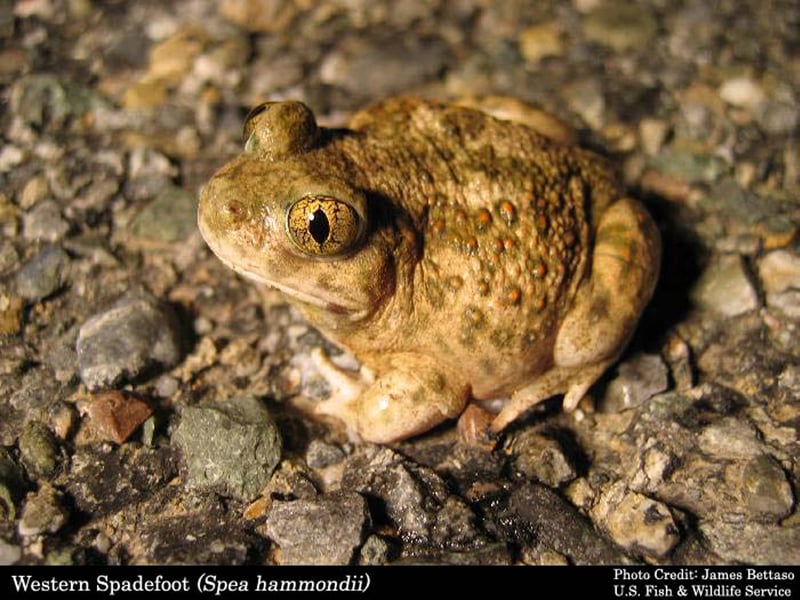
SACRAMENTO, Calif. (CN) — A conservation group on Wednesday formally petitioned for the western spadefoot frog to receive protection under California’s Endangered Species Act.
The Center for Biological Diversity petitioned for federal protection for two frog populations separated by Southern California’s Transverse Ranges. It recommends listing the northern group as threatened and the southern group as endangered, citing different threats and warning the species could decline further without safeguards.
“Their habitat is disappearing by the day, so California officials need to act,” said Sofia Prado-Irwin, a scientist at the center, in a statement. “These little cryptic frogs are struggling as their home turf gets eaten up by roads and poorly planned development.”
The western spadefoot frog, a small, big-eyed species once common across California, has seen steep declines for decades due to habitat loss, fragmentation and degradation. Climate change, pollution and invasive species add to the threats, the center said.
The frogs depend on vernal pool complexes, which are temporary wetlands connected to upland grasslands or shrublands. Vernal pools are depressions in a forest that hold water for part of each year, supporting species like the western spadefoot.
According to the center, more than 90% of these pools have been lost to urban development, intensive agriculture and roads. With fewer connected wetlands, the frogs tend to return to the same breeding sites, especially in coastal and inland areas, making them more vulnerable to decline.
“The risk of extinction for this species is all too real, but our Fish and Game Commission could help turn the tide,” Prado-Irwin said.
It appears the species’ mortality is also potentially affected by urban development and a dry climate.
Adult western spadefoots have a 51% survival rate, excluding human-caused deaths, and are particularly vulnerable to roadkill.
Larvae face risks if pools dry out before metamorphosis begins, and shrinking pools can concentrate them, increasing the likelihood of predation.
The threats are interconnected: climate change alters wetland cycles, and pollution can weaken immune systems, increasing mortality in some animals, the center said.
These factors — like the loss of habitat, roads and pollutants — show that the western spadefoot is vulnerable to extinction, the center said. It also shows that the threats the species faces are immediate and continuing.
Most of the western spadefoot’s habitat lacks protection, and without restoration or measures to connect populations, both groups could vanish within a human generation.
Existing laws, including the National Environmental Policy Act, Clean Water Act and even the federal Endangered Species Act, have offered little help, according to the center.
A 2023 proposal to list the species under the Endangered Species Act remains undecided, and the center argued that the Trump administration’s efforts to weaken environmental rules make federal protection unlikely anytime soon.
That led the center to recommend that the state take steps toward protecting the western spadefoot under its own Endangered Species Act.
Recommendations include granting the threatened and endangered statuses for the two populations, respectively, protecting known occupied breeding and upland habitats, and enhancing habitats that encourage connections between various populations.
The California Fish and Game Commission couldn’t be reached for comment as of publication time.
Subscribe to our free newsletters
Our weekly newsletter Closing Arguments offers the latest about ongoing trials, major litigation and rulings in courthouses around the U.S. and the world, while the monthly Under the Lights dishes the legal dirt from Hollywood, sports, Big Tech and the arts.