Search Articles


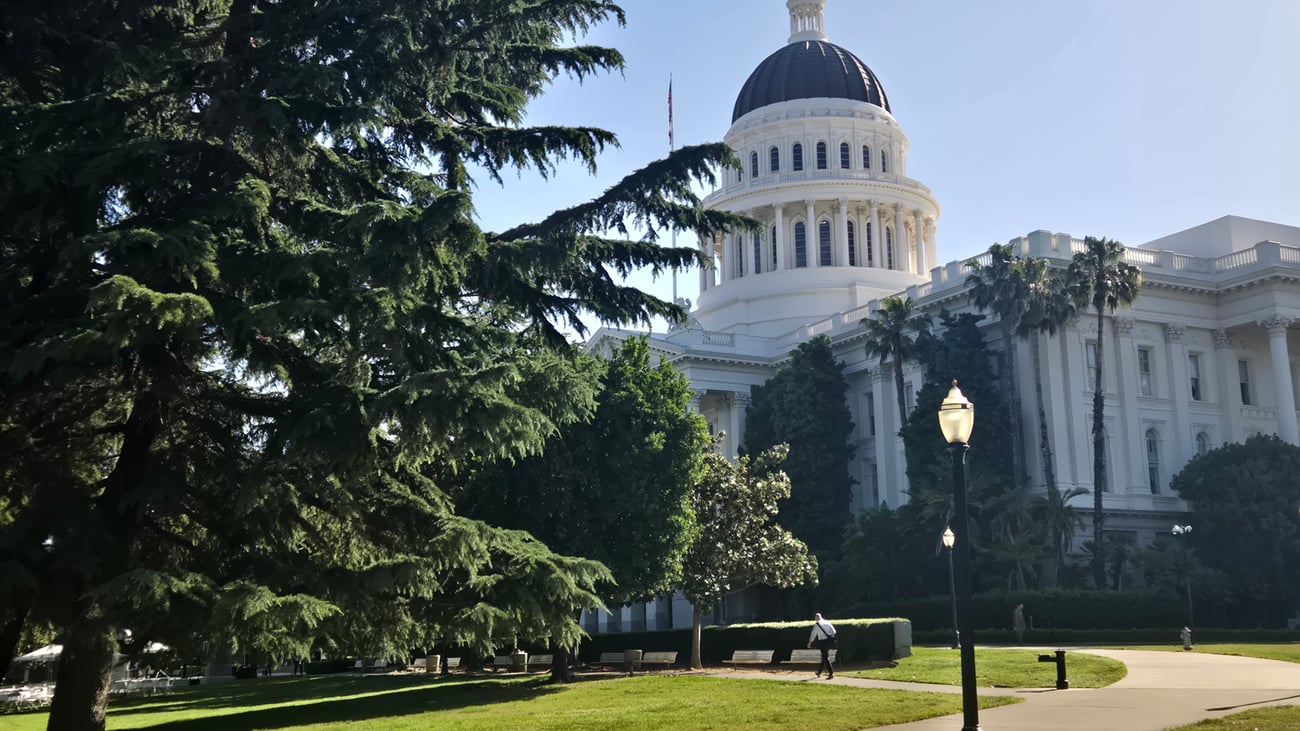
SACRAMENTO, Calif. (CN) — California’s legislative analyst cautioned lawmakers in a Tuesday report, saying they likely must significantly reduce spending in future years to balance a $100 billion growth in their budget.
That growth in state spending has come since fiscal year 2019-20, when the budget reached $146 billion. Under Governor Gavin Newsom’s 2026-27 budget, spending would reach $248 billion.
A majority of the growth, some 70%, went to services already in operation during 2019-20. The remainder went to the expansion or creation of new services since then, the analyst’s office wrote.
Much of that 70% targeted schools and community colleges, which drew $37 billion. Medi-Cal received $25 billion. Other agencies and efforts that saw more money included the Department of Developmental Services, childcare and universities.
Spending on kindergarten through 12th grade and community colleges made up most of the service-expansion increased spending.
The analyst pointed to estimated annual deficits of $20 billion to $30 billion, saying both his and Newsom’s offices expect them. Recent, strong revenue stemming from the stock market and investors enthusiastic about artificial intelligence have helped the budget short-term. However, major change is needed to balance future budgets, the analyst’s office wrote.
“In short, in the years ahead, policymakers will have difficult decisions to make,” it added.
Digging into the reason for the growing budget, the analyst noted leaving a program’s funding unchanged likely leads to worse service. Increased funding is necessary to handle inflation, population changes and how often a program is used. Adding technology improvements also costs more.
In fact, many cost increases happen without the need for lawmakers to pass a budget, as the law calls for those cost bumps to sustain existing service levels.
“We estimate that about two-thirds of the nearly $60 billion increase in local assistance is attributable to these automatic changes,” the analyst’s office wrote.
Examples of services that received automatic increases include developmental services, Medi-Cal and a cost-of-living adjustment for childcare providers.
Focusing on the $37 billion for schools and community colleges, the analyst’s office pointed to Proposition 98 as the reason. The voter-passed proposition created a minimum funding level, which is calculated by formula annually.
Some $17.6 billion sustained services for kindergarten through 12th grade and community colleges — providing cost-of-living raises. Another $13.8 billion expanded services like transitional kindergarten for all 4-year-olds.
Pivoting to the reasons for the deficit, the analyst’s office noted revenue has grown by 60% cumulatively since 2019-20. However, spending from the state’s general fund has increased by 70% over the same time.
That leads to the question of how lawmakers can bridge the financial gap.
“Ultimately, the decision over whether to address the state’s budget deficits through revenue increases or spending reductions is a decision about how big state government should be,” the analyst’s office wrote. “This is a question for elected policymakers, not our office.”
However, the office noted constitutional provisions limit lawmakers’ ability to raise taxes. They’d also need to offset the estimated $20 billion to $30 billion in annual deficits with another $30 billion to $60 billion in revenue. That’s mostly because increased revenue requires more spending under Proposition 98.
Eliminating the deficit with higher taxes would come with significant hurdles. The analyst’s office said voters would have to extend higher personal income tax rates set to expire, which would only stop the deficit from growing larger. The Legislature would also need to consider raising personal income tax rates by 6%, corporate tax by 6%, and raising sales tax by a cent.
“Near-term revenue gains may temporarily mask structural imbalances, but in the coming years, the fiscal realities are likely to be undeniable,” the office wrote. “Addressing the budget gaps will require sustained and consequential action — through revenue increases, spending reductions, or likely both.”
State Senator Tony Strickland, a Huntington Beach Republican, said in a statement to Courthouse News that stronger oversight was needed over existing programs. He also advocated for cuts to $12 billion in healthcare spending for noncitizens and $1 billion for the high-speed rail.
“At some point, the governor and the Legislature will have to address the state’s multi-year structural budget deficits because we can’t keep kicking the can down the road," Strickland said.
State Senator John Laird, a Santa Cruz Democrat and chair of his chamber’s Budget and Fiscal Review Committee, told Courthouse News in a statement that he agreed with the analyst: temporary revenue gains don’t fix long-term problems.
“Our Foundation for the Future proposal reflects that,” he said of the Senate’s budget plan. “It takes a balanced, two-year approach with ongoing spending reductions and new revenues to cut the structural deficit in half, while building reserves and making targeted adjustments to put the budget on a more sustainable path.”
A spokesperson for Newsom’s office noted the majority of the increase is for existing commitments rather than new programs.
“The governor has consistently called for fiscal discipline: The state must manage long-term obligations, curb spending and maintain a balanced budget,” the spokesperson said.
Subscribe to our free newsletters
Our weekly newsletter Closing Arguments offers the latest about ongoing trials, major litigation and rulings in courthouses around the U.S. and the world, while the monthly Under the Lights dishes the legal dirt from Hollywood, sports, Big Tech and the arts.
Additional Reads
 Spanish PM led plot to rig contracts, graft trial hears April 29, 2026