
 Search Articles


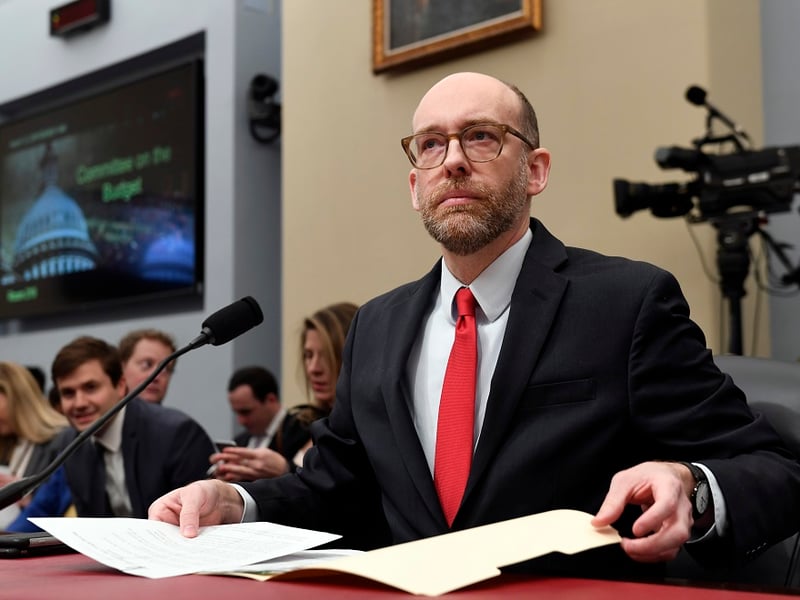
WASHINGTON (CN) — A top Consumer Financial Protection Bureau executive testified Monday that the agency would be “unrepairable” following mass terminations and stop-work orders for congressionally mandated services, even if a federal judge ultimately intervenes.
Adam Martinez, the CFPB’s chief operating officer, detailed the chaos at the agency after President Donald Trump and billionaire Elon Musk targeted it as part of their effort to reshape the federal government.
U.S. District Judge Amy Berman Jackson ordered the evidentiary hearing on March 3 after receiving contradictory declarations from CFPB officials and employees regarding whether certain statutorily mandated services — such as its consumer complaint response team, student loan ombudsman’s office, and natural disaster response unit — were still operating.
Speaking on the stand, Martinez testified that after White House Office of Management and Budget Director Russell Vought’s Feb. 8 stop-work order initially halted those services, he and CFPB General Counsel Mark Paoletta have worked to ensure they were still operational.
His testimony provided the most detailed explanation of how agents of the so-called Department of Government Efficiency approached the consumer protection bureau to enact the sweeping cuts demanded by the administration.
“DOGE came in with a very hard fist, so to speak,” Martinez said. “When the OMB director’s team came in, I felt the adults were around the table at that point.”
Martinez said Christopher Young, who is part of the DOGE leadership, arrived at the agency’s offices on the evening of Feb. 6. The CFPB received an email from the Treasury Department less than an hour prior instructing it to grant DOGE full access to certain systems.
On Feb. 7, several additional DOGE staffers came to the CFPB office and demanded access to its operational data and systems governing human resources, procurements, travel and certain financial systems. Martinez compared DOGE’s work to an audit, similar to those regularly conducted by inspectors general.
CFPB employees responded negatively to DOGE’s presence, with an employee confronting DOGE staffers and demanding to see their IDs. Four security guards arrived, and the employee ultimately left.
Vought was named the agency’s acting head on Feb. 8 and immediately issued his stop-work order. He told CFPB staff that the DOGE employees were there on his behalf.
The National Treasury Employees Union sued the Trump administration on Feb. 9 after reports that nongovernmental agents of DOGE sought access to sensitive information and aimed to dismantle the agency as the U.S. Agency for International Development was.
In a Feb. 13 amended complaint, they warned that Vought ultimately planned to fire up to 95% of CFPB staff.
A consent agreement between the union and the government preventing the consumer protection bureau from laying off employees en masse and destroying agency data remains in place. That agreement went into effect on Feb. 14, the first hearing in the case.
During cross-examination, Jennifer Bennett of Gupta Wessler asked Martinez about a series of emails between him, Paoletta, and certain members of DOGE that suggested DOGE was trying to fire CFPB employees before Jackson could even grant emergency relief.
Martinez pushed back, explaining that DOGE wasn’t trying to explicitly undercut the court before the Friday, Feb. 14, hearing.
“I think DOGE would have been easily as happy if we terminated people on Wednesday versus Friday,” Martinez said. “I had no impression it was specifically tied to the court’s order. Just a desire to unload the agency.”
As part of the ordered reduction in force, Martinez testified that CFPB was first prepared to cut 1,175 out of its more than 1,700 employees.
That number was shaved down to between 700 and 900 after about 200 employees within their one- to two-year probationary period, as well as some hired for a limited term, were terminated.
Martinez testified that a planned second phase would terminate the “vast majority” of CFPB employees — himself included.
Martinez first worked at CFPB for approximately three months between December 2010 and February 2011 to help kick-start the agency, then returned as COO in February 2023. In the intervening years, he served several roles within the Treasury Department.
“I don’t want to say this is normal, but we are operating,” Martinez said of the agency’s status.
When Jackson pressed him on whether any of the actions taken by the current administration were typical during a presidential transition, such as issuing stop-work orders or conducting mass terminations, Martinez said none were.
 Follow @Ryan_Knappy
Subscribe to our free newsletters
Our weekly newsletter Closing Arguments offers the latest about ongoing trials, major litigation and rulings in courthouses around the U.S. and the world, while the monthly Under the Lights dishes the legal dirt from Hollywood, sports, Big Tech and the arts.