
 Search Articles


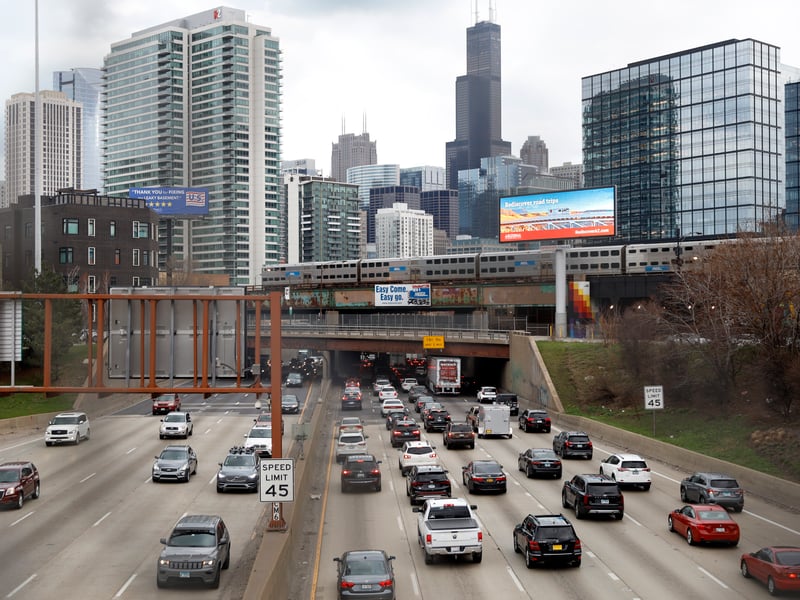
CHICAGO (CN) — A class of Chicago drivers told a Seventh Circuit panel on Wednesday that the city illegally impounded and sold their cars solely because they had unpaid parking ticket debt.
An attorney for the class likened the city’s practice of impounding and selling vehicles over unpaid parking ticket debt to unconstitutional taking, in part because Chicago keeps the sales proceeds from the vehicle without offsetting the debt.
The takings clause is a provision of the Fifth Amendment that prohibits the government from taking private property without just compensation.
The Chicago municipal code authorizes the impounding and eventual sale of any vehicle that is registered to someone with three unpaid parking tickets. It does not require that the towed and sold vehicles be the ones that were used to commit a violation. Instead, it permits the immobilization and sale of any and all vehicles registered to the ticketed person.
“The city will literally take every car you own in perpetuity simply because you failed to pay your parking tickets on one of your vehicles,” said Jacie Zolna, an attorney with Chicago-based firm Myron Cherry LLC. “Now the city tries to justify this practice by saying its just exercising its police power to enforce its parking and traffic laws, but the case law recognizes that there are limits to the police power.”
U.S. Circuit Judge Doris Pryor, a Joe Biden appointee, asked Zolna to identify the property right being taken in this case based on the Illinois Vehicle Code.
“The property right is a vehicle,” he responded. “When the city takes a vehicle from you for unpaid parking debt, under the city’s own municipal code it has a possessory lien on that vehicle in the amount of the unpaid ticket debt. So, the property interest here is the vehicle but also once —” before Zola could finish his sentence, Pryor stopped him.
“We’ve got to slow it down, because I don’t think it’s as high level as the vehicle,” Pryor said. “I really want to drill down on the property right at the moment that the taking happens. Okay? And so, just to clarify in the vehicle code, I think its 4-208, you have abandoned vehicles, lost vehicles, stolen vehicles, unclaimed vehicles.”
“For registered owners, out of those categories that are triggered by the immobilization program in the city of Chicago, which type of vehicle are we talking about?” Pryor asked.
“It would be unclaimed,” Zolna said.
Pryor said she asked Zolna to clarify which vehicle category it would be, because property rights are given by the state, a precedent set in the 2023 Supreme Court case Tyler v. Hennepin County .
U.S. Circuit Judge Michael Scudder Jr., a Donald Trump appointee, said he was troubled by the facial aspect of the case, solely based on the hypotheticals kicked around in the briefs.
“If somebody has a $75,000 Mercedes that is taken pursuant to this program, and it’s sold to a car dealership for $50,000 and the person has $500 or $1,000 in parking tickets … I think well, alright you very well could be onto something,” Scudder said. “But if we change the fact pattern, and we have a car that is worth hardly anything $200 or $300, $500 and they owe $1,000 in parking tickets.I think in that as-applied hypothetical, the takings claim weakens substantially.”
Zolna said no matter how much the car is worth, it doesn’t offset your debt. The practice is unconstitutional regardless if its a Mercedes or a Honda.
“You’re still left with $1,000 in ticket debt and you don’t have your car,” he said. “You’re still losing. The government is still taking property from you.”
Aaron Dozeman, an attorney for the city of Chicago said that because the government is taking property as punitive measure, it’s clearly an exercise of police power.
“It’s not in dispute that at least in certain contexts, the government can lower case ’t’ take property without implicating the takings clause,” Dozeman said. “It happens in forfeiture proceedings, but it also happens when the government takes property maybe as evidence as part of an investigation or prosecution, or as proceeds of criminal activity, just to name a few examples.”
Scudder asked him whether he agreed that it was a facial claim, and how that factors into the $75,000 Mercedes hypothetical question.
“That would not be relevant to the facial claim, which is the one I am looking at in all of its applications. There could be instances where for example the value of disposing the car for scrap value doesn’t even amount to the amount of expenditure the city did for the impoundment and towing on the car.”
U.S. Circuit Judge Thomas Kirsch, a Trump appointee, joined Scudder and Pryor on the panel. The panel did not indicate when it might rule
 Follow @RosenCaitlyn
Subscribe to our free newsletters
Our weekly newsletter Closing Arguments offers the latest about ongoing trials, major litigation and rulings in courthouses around the U.S. and the world, while the monthly Under the Lights dishes the legal dirt from Hollywood, sports, Big Tech and the arts.