
 Search Articles


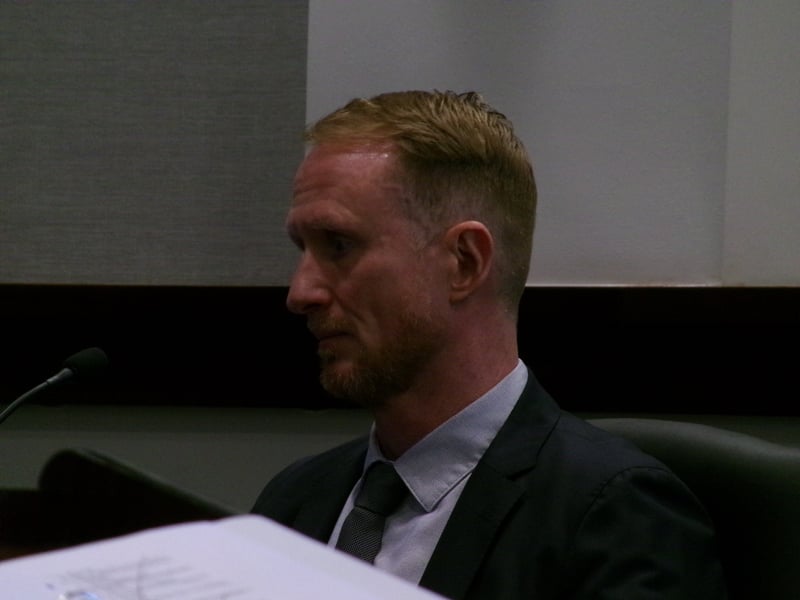
PANAMA CITY, Fla. (CN) — A Florida jury dealt a harsh blow to CNN on Friday, finding that the network defamed Zachary Young, a U.S. Navy veteran and security consultant, by painting him as an illegal profiteer and implicating him in “black market” evacuations in a story on the U.S. withdrawal from Afghanistan.
The unanimous verdict, decided by four women and two men after 8 hours of deliberations over two days, awarded $5 million in damages to Young. Though the jury was set to deliberate on punitive damages, the attorneys for Young and CNN reached a settlement later in the afternoon.
“We remain proud of our journalists and are 100% committed to strong, fearless and fair-minded reporting at CNN, though we will of course take what useful lessons we can from this case,” a CNN spokesperson said in a statement.
The Nov. 11, 2021, story at the center of the case, reported by CNN national security correspondent Alex Marquardt and appearing during “The Lead with Jake Tapper,” described the adversity faced by Afghans trying to flee their country during the United States’ hasty withdrawal from Afghanistan. The piece included interviews with some people who claimed private contractors were charging tens of thousands of dollars for “black market” evacuations.
Young was the only private contractor named in the story, prompting his lawsuit accusing the network of ruining his reputation and business, Nemex Enterprises. The suit wound its way through the court system for two years before this week’s trial in Bay County, a staunchly conservative area in Florida’s panhandle.
Young says he never accepted money from individual Afghans and instead relied on sponsorships from corporations like Audible and Bloomberg to help rescue those fleeing the war-torn country. Judge William Henry of the 14th Judicial Circuit of Florida previously ruled that there is no proof Young committed any illegal acts.
Though CNN later issued an on-air apology over the use of “black market” in the story, Young’s attorneys repeatedly pointed to private messages between CNN reporters and editors at the time that used expletives to describe Young, including one that said he had a “punchable face.”
Before the jurors began deliberations, attorneys for Young and CNN made their case a final time in the two-week trial.
“None of them are sorry,” Young’s lead counsel Devin Freedman said of the CNN employees who took the stand. “All of them said they would do it again. They said they had nothing to apologize for.”
Freedman hammered on the term “black market” and how CNN’s definition of “unregulated” differed from dictionary definitions that implied illegality.
“Don’t let CNN rewrite the English language,” he said.
Freedman also urged the jurors to look beyond the case at hand and “send a message” to “mainstream media,”
“The whole world is watching what you do today, hold me to my burden because your verdict will stand in history as the moment everyday Americans from the great state of Florida, from Bay County, stood up to fake news,” he said.
CNN’s lead counsel David Axelrod told the jury in his closing arguments to look at “the truth of this case.”
“It’s not about sending a message,” he said.
Axelrod, who shares a name with the Democratic political consultant who frequently appears on the network, recapped CNN’s “multiple rounds of review” of Marquardt’s story and how the reporter used Young’s own words to describe his evacuation business.
“If this was a hit piece, why would they include his own words in his own defense,” he said.
Axelrod also concentrated on why Young did not bring any witnesses to talk about his reputation before and after the story published, and wondered aloud why the security consultant deleted all his LinkedIn messages after consulting attorneys.
The attorney also defended CNN’s use of the term “black market.”
“Afghanistan was the wild, wild west,” he said. “Some people were taken out and killed. People were using safe houses. People were flying under the radar. People were avoiding the Taliban. You couldn’t just go to the airport. ‘Black market’ was a perfect way to describe that. That’s what it was used for. That’s the way it was understood.”
During deliberations, the jury returned to the courtroom to watch the CNN segment again and then at 5 p.m. asked to be released for the day. The judge requested they take at least another hour to make some headway in their deliberations. The jurors ended up staying until 9 p.m. Thursday night. Minutes after deliberations resumed Friday morning, the jurors asked for a calculator.
Hours later, just after 11 a.m., the foreperson knocked on the courtroom’s side door, signaling the jury was ready to present its verdict.
Defamation trials involving major news organizations are rare in part due to protections afforded to the press by the Constitution and the unwillingness of some organizations to engage in a long, expensive trial. Yet, CNN joins a handful of other major news organizations sued in defamation cases over the last couple years and choosing to settle.
In December, Disney agreed to a $15 million settlement with President-elect Donald Trump after he sued ABC News for inaccurate statements made by George Stephanopoulos. Newsmax settled with voting technology company Smartmatic before that. And also last year, Fox News settled a defamation lawsuit lodged by Dominion Voting Systems for $787 million.
The settlement terms and amount between Young and CNN have not been disclosed.
 Follow @alexbpickett
Subscribe to our free newsletters
Our weekly newsletter Closing Arguments offers the latest about ongoing trials, major litigation and rulings in courthouses around the U.S. and the world, while the monthly Under the Lights dishes the legal dirt from Hollywood, sports, Big Tech and the arts.