Search Articles


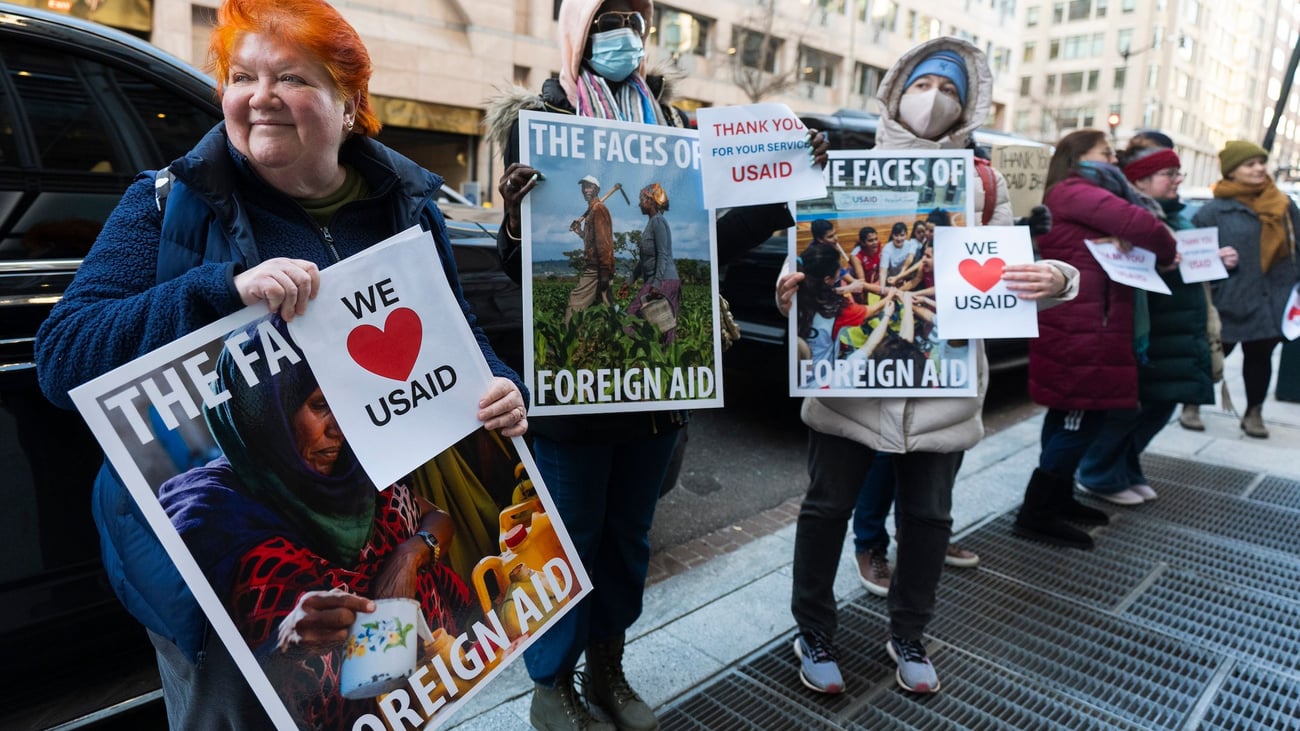
WASHINGTON (CN) — President Donald Trump must pay his foreign aid bills, foreign aid contractors told the Supreme Court Friday.
Contractors for the U.S. Agency for International Development, or USAID, were left without billions of dollars in funding disbursements after Trump abruptly halted foreign assistance in January.
Nonprofits and private companies say the ongoing and wholesale pause of congressionally appropriated foreign assistance funding is causing severe harm — plunging contractors into financial turmoil and leaving those who rely on such programs to face starvation, disease and death.
“Respondents have had to furlough or lay off employees, and some are facing cancellation of credit lines, civil and regulatory actions for employment violations, evictions, insolvency, and even physical threats to personnel in conflict areas,” the contractors wrote in a brief to the court.
A federal judge earlier this week gave the administration 36 hours to comply with a two-week-old order restarting foreign assistance. As the midnight deadline approached, the Justice Department filed an appeal at the D.C. Circuit and then the Supreme Court.
With hours to go, Chief Justice John Roberts, a George W. Bush appointee, agreed to keep funds temporarily paused while the full Supreme Court reviewed Trump’s application.
On day one of his return to office, Trump cut off USAID funding, citing a desire to root out wasteful programs that do not align with his policy goals. Since then, overseas nonprofit groups and businesses have laid off tens of thousands of staff and shut down urgent life-saving programs.
The contractors sued the administration, claiming that Trump was contravening congressional authority. U.S. District Judge Amir H. Ali issued a temporary restraining order on the funding freeze.
But contractors say they still haven’t received funding.
“The government’s continued noncompliance with the district court’s TRO forced one respondent to lay off 110 employees yesterday,” the contractors told the court in a filing on Friday. “Another will default on severance obligations, triggering civil liability and potential regulatory enforcement, if it does not receive payment for past work by today.”
Since Ali’s ruling is a temporary restraining order, the contractors argue that the Supreme Court doesn’t have jurisdiction to intervene.
Meanwhile, Trump argues the executive branch is simply ensuring these programs are free from fraud and abuse. Separate from his policy goals, the president told the justices that paying all outstanding amounts by midnight wasn’t logistically or technically feasible.
Ali’s order is the second time a judge found Trump did not follow court orders. It comes as some administration officials suggest the White House ignore court orders that it feels interfere with executive authority.
 Follow @KelseyReichmann
 Follow @kelseyreichmann.bsky.social
Subscribe to our free newsletters
Our weekly newsletter Closing Arguments offers the latest about ongoing trials, major litigation and rulings in courthouses around the U.S. and the world, while the monthly Under the Lights dishes the legal dirt from Hollywood, sports, Big Tech and the arts.