Search Articles


LOS ANGELES (CN) — The murder trial of Gene Evin Atkins, whose bloody rampage ended in a police shootout at the Silver Lake Trader Joe’s in Los Angeles in 2018, concluded Tuesday as attorneys from both sides presented their closing arguments to the jury.
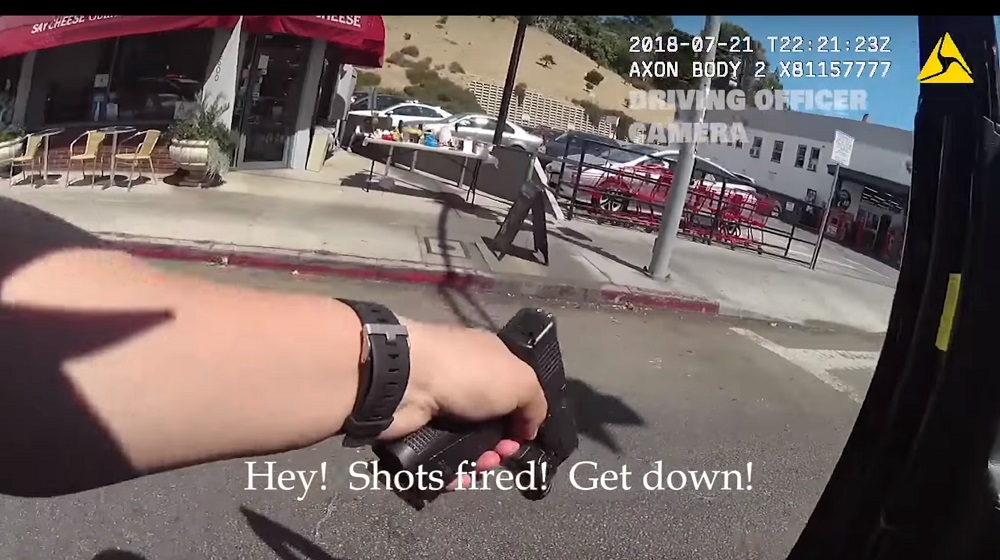
Prosecutors say Atkins shot his grandmother, whom he’d lived with since he was 7 years old, and his girlfriend, Leah Williams, before carrying Williams to his grandmother’s car and driving around for an hour and half. Police said they traced the car using LoJack and pursued Atkins, during which Atkins fired his gun at the officers and attempted to steal a car from a family at a gas station. The chase ended with Atkins crashing the car into a utility pole, firing again at the police and dashing inside Trader Joe’s. Officers returned fire; one of their bullets struck a store assistant manager, 27-year-old Mely Corado, killing her. After a long standoff, in which prosecutors say Atkins took some 24 store employees and customers hostage, using some as human shields, he surrendered.
Atkins, now 36, is charged with more than 40 felony counts, including kidnapping, grand theft, attempted murder and first degree murder, under the “provocative act doctrine,” under the theory that Corado’s death was the “natural and probable consequence” of Atkins’ actions.
In his closing argument, Deputy District Attorney Ben Schwartz said Atkins was “guilty of some of the crimes that were a chain reaction or the result of his destructive behavior.” In firing at police from a crowded store in the afternoon, “it comes as no surprise that someone was hit,” Schwartz said.
Initially, Atkins pleaded not guilty by reason of insanity, telling the court in 2019, “I was sent here by Jesus” and “I’m a prophet. Sent to correct the wrong." In 2021, he was found mentally competent to stand trial. He appeared at his own trial only intermittently, at times refusing to leave his jail cell — as he did on Tuesday. His attorney, Errol Cook, did not present an opening statement or call any witnesses. His closing argument was first time he’d publicly said anything in his client’s defense.
“This is a tough case,” Cook told the jury.
“There’s quite a bit of things that he’s probably good for,” Cook said, effectively conceding that his client was guilty of many of the counts filed against him.
Cook praised the LAPD officers who responded to the scene, and the Trader Joe’s employees. He admitted Atkins had made some “horrible and rash decisions” and had acted “impulsively,” when he shot his grandmother and Williams. But those shootings, he argued, weren’t methodical or premeditated. As evidence, he pointed to the fact Atkins had used a Trader Joe’s cell phone to call his grandmother and ask about her condition, and he had carried Williams to the car and told her he was taking her to a hospital, though he never did.
“Why would you do that if you intended to kill someone?” Cook asked. “It doesn’t make sense.”
Williams testified that Atkins, moments before the shootings, had “a strange look in his eye… like he was on something.” He had been abusive toward her many times, she said.
“Prior to shooting me, he was saying a lot of wacky things,” Williams testified. “Like crazy things. He said, ‘If I can’t have you, no one can.’ He was ’tired of chasing me.’ I know there’s more.”
“He said ‘you left me here with these people.’ I don’t know what that means at all," she added.
“Something is scrambled in that brain,” Cook argued. “Something snapped. That goes against premeditation.”
As for Corado’s death, Cook blamed the police officer who fired the bullet that killed her.
Although the city paid the Corado family $9.5 million to settle a wrongful death claim, prosecutors concluded the two officers who shot at Atkins “acted in lawful self-defense, defense of others, and in pursuit of a dangerous fleeing felon when they used deadly force."
But Cook said the police shooting was “haphazard and against LAPD policy,” and a reasonable person would not have expected officers to fire into a crowded store.
“To transfer blame, something is unfair about that,” Cook said. “Criminal conduct should not cause extreme reckless behaviors by law enforcement.”
In his rebuttal argument, Schwartz reminded the jury that there was no evidence that the shooting went against department policy. In fact, though the jury did not hear this, then-LAPD chief Michael Moore found that the shooting did not violate policy.
Schwartz urged the jury to focus on Atkins’ conduct, arguing it was no more crazy than the average criminal. “These were not the decisions of a madman,” he said.
The jury began deliberating late Tuesday afternoon, after the closing arguments. Should they find Atkins guilty of all counts, he could be sentenced to life in prison.
 Follow @hillelaron
Subscribe to our free newsletters
Our weekly newsletter Closing Arguments offers the latest about ongoing trials, major litigation and rulings in courthouses around the U.S. and the world, while the monthly Under the Lights dishes the legal dirt from Hollywood, sports, Big Tech and the arts.