
 Search Articles


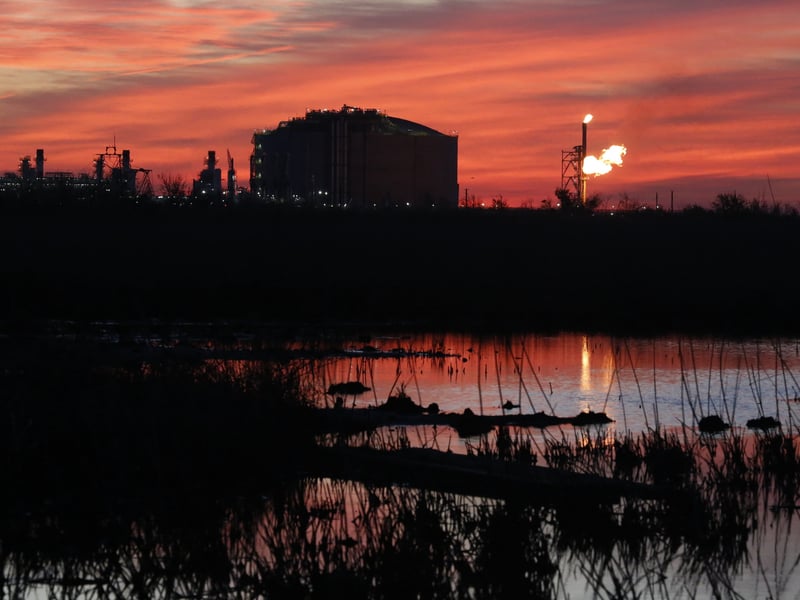
WASHINGTON (CN) — A D.C. Circuit panel seemed wary of an environmental challenge to a twin liquefied natural gas pipeline project near Louisiana’s Gulf Coast during oral arguments on Tuesday.
The suit, brought by environmental groups Healthy Gulf and the Sierra Club, centers on the Federal Energy Regulatory Commission’s 2023 approval of two pipelines meant to supply a planned Driftwood LNG export terminal in Calcasieu Parish, Louisiana.
Tuesday’s arguments before a three-judge panel opened the D.C. Circuit Court of Appeals’ new term after a four-month summer break.
David Bookbinder of Washington’s Environmental Integrity Project, representing the environmental groups, told the panel that the agency had violated the Natural Gas Act by asserting the new pipelines were necessary when it had already said a different line authorized in 2019 was capable of fully supplying the LNG terminal.
The groups say if replacing that initial line was necessary, the agency should have analyzed the environmental impact of the new project — known as lines 200-300 — as a single unit in connection with the terminal, as it had done for the first pipeline.
The agency’s carbon emissions analysis was also flawed because it didn’t factor in emissions from producing the gas that would eventually flow through the pipelines, the groups argue.
The panel appeared unlikely to accept those arguments.
U.S. Circuit Judge Raymond Randolph, a George H.W. Bush appointee, cast doubt on whether carbon dioxide emissions contribute to global warming — which no other member of the panel refuted.
“It’s not even clear there’s an impact of human-made carbon dioxide on climate, anywhere,” Randolph said.
Bookbinder seemed momentarily taken aback, then said that carbon dioxide’s effects were not at issue in the case — but he asserted that the agency itself has repeatedly agreed that human-created carbon dioxide is a key factor of climate change.
U.S. Circuit Judge Bradley Garcia, a Joe Biden appointee, interrupted Bookbinder’s necessity argument almost immediately, noting that if the twin pipelines were going to be built after the main pipeline, they were probably needed to bolster the terminal’s supply.
Randolph said the agency probably had a compelling argument that the second pipeline was necessary, since without “captive customers” for Driftwood to pass construction costs on to, the company would be “fools to build when you don’t need to.”
John Shaner, from the agency’s office of general counsel, said that even if the second pipeline was redundant, the agency could still approve the project. The agency argues the environmental groups failed to bring up many of their arguments during a public comment period.
Joshua Rosenkranz, of New York firm Orrick Herrington arguing on behalf of Driftwood, said the company had conducted market studies in the area that show another pipeline project was warranted.
He asked that, if the court found any error with the project’s authorization, it should send the case back to the agency and do so without vacating the authorization, which would disrupt future construction plans.
The groups are requesting that the court vacate the authorization and remand the case to the agency.
The proposed terminal would be built in an area of southwest Louisiana already saturated with LNG export terminals, around Cameron Parish. The primarily low-income, majority-Black area has four terminals operating, three others approved by the agency and an eighth under review.
Pipelines 200-300 would run nearly 40 miles south from Ragley to Lake Charles, which is 40 miles north of Cameron Parish.
One LNG export terminal, proposed by Commonwealth LNG, was the subject of a D.C. Circuit decision in July, which held that the agency had conducted a lackluster environmental analysis. The panel, which also included Garcia, remanded the case to the agency to fix the analysis but declined to revoke the project’s authorization.
Bookbinder briefly referenced the Commonwealth decision, but it and the other projects did not feature into the parties’ arguments.
In May 2023, a Louisiana mother and her 10-year-old daughter from Sulphur, outside of Lake Charles, wrote an op-ed in Teen Vogue decrying the extreme pollution the area faces from oil and gas projects, which they say caused the child to develop a skin condition.
U.S. Circuit Judge Robert Wilkins, a Barack Obama appointee, rounded out the panel.
 Follow @Ryan_Knappy
Subscribe to our free newsletters
Our weekly newsletter Closing Arguments offers the latest about ongoing trials, major litigation and rulings in courthouses around the U.S. and the world, while the monthly Under the Lights dishes the legal dirt from Hollywood, sports, Big Tech and the arts.