
 Search Articles


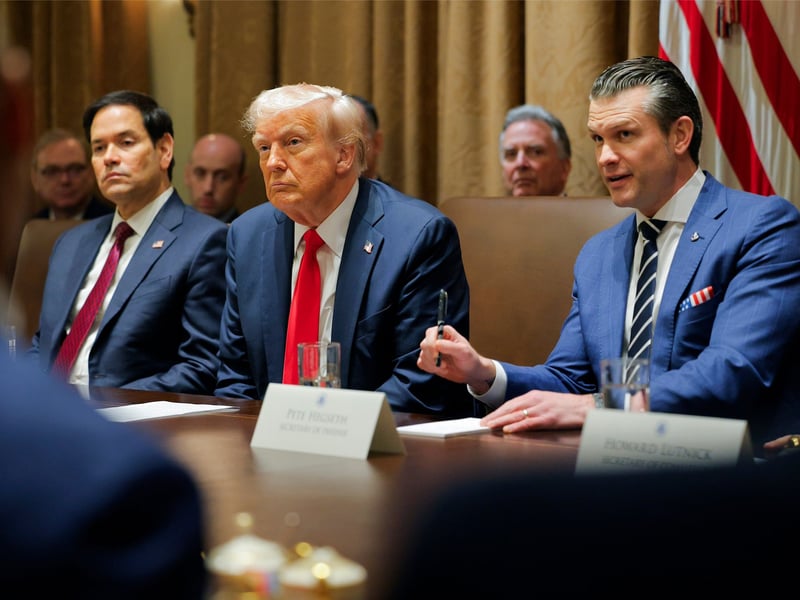
WASHINGTON (CN) — The Democratic Party sued the Trump administration on Friday, challenging a Feb. 18 executive order that ostensibly granted President Donald Trump increased control over the executive branch, including independent agencies like the Federal Election Commission.
The order, “Ensuring Accountability for All Agencies,” requires independent agencies to submit any proposed rules to the Office of Information and Regulatory Affairs within the White House. That gives Trump final say over previously nonpartisan decisions.
Democrats argue the move guts the Federal Election Campaign Act and would allow the president to dictate to the FEC’s bipartisan six-person board.
“Americans are legally guaranteed fair elections with impartial referees — not a system where Donald Trump can dictate campaign rules he wants from the White House,” party leadership said in a statement. “Democrats will use every tool at our disposal, including aggressively confronting Trump’s illegal actions in the courts, to defend Americans’ right to free and fair elections."
The Democratic National Committee brought the suit in federal court in the District of Columbia, along with the Democratic Senatorial Campaign Committee and the Democratic Congressional Campaign Committee.
After Watergate, the Federal Election Campaign Act was amended in 1974 to create a six-person independent agency made up of three Republicans and three Democrats.
Currently, there are two vacant seats on the board. Republican Sean Cooksey, a Trump appointee, resigned on Jan. 20. On Jan. 31, Trump also removed Democrat and former FEC Chair Ellen Weintraub, appointed by George W. Bush, under dubious circumstances.
Weintraub said in a Feb. 6 post on X, formerly Twitter, that she was terminated. She posted a screenshot of Trump’s terse letter.
“There’s a legal way to replace FEC commissioners," Weintraub wrote. “This isn’t it.”
Weintraub isn’t alone. Officials across the federal government — including at the Office of Special Counsel, the National Labor Relations Board, the Federal Labor Relations Authority, the Merit Systems Protection Board and the U.S. Privacy and Civil Liberties Oversight Board — were likewise abruptly terminated. Many have filed lawsuits. Weintraub has not.
Without court intervention, the Democratic Senate Campaign Committee would be prejudiced during an ongoing case before the FEC, the Democrats warned.
That case, brought by Texas Senator Ted Cruz against former Democratic opponent Colin Allred, argues the committee improperly classified four campaign ads as “hybrid ads” during the 2024 election cycle. That resulted in contributions from the Senate Committee to Allred that exceeded FECA limits, Cruz has argued.
Under his executive order, “President Trump — the head of the Republican Party — could dictate to the Commission a legal interpretation of FECA’s provisions that would be dispositive to the complaint against DSCC,” the Democrats say. They’ve asked U.S. District Judge Amir Ali, a Joe Biden appointee, to declare Trump’s executive order unlawful and enjoin it for the Commission.
But Trump allies are also targeting Ali, one of several federal judges who now face potential impeachment over their rulings against the Trump administration. Among those rulings, Ali ordered this week that the White House must resume payments for foreign aid contracts funded by the defunct U.S. Agency for International Development.
Tennessee Representative Andy Ogles drafted articles of impeachment for Ali. He also drafted articles against U.S. District Judge John Bates, a George W. Bush appointee, after Bates said federal health agencies must restore online information that Trump characterizes as “gender ideology.”
These orders — both temporary restraining orders — are not final rulings. Instead, they’re efforts to maintain the status quo while the judges consider the issues in full.
The White House did not respond to a request for comment.
Friday’s lawsuit is the latest to challenge Trump’s flurry of executive actions and efforts to strengthen the presidency, which legal experts call unitary executive theory. Under that controversial theory, the president has sole authority over the executive branch.
Trump has embodied that idea — terminating federal employees en masse, firing independent government watchdogs, and dismantling federal agencies and freezing federal funds without congressional approval. There are approximately 94 lawsuits across the country against the Trump administration, with 51 filed in Washington alone.
 Follow @Ryan_Knappy
Subscribe to our free newsletters
Our weekly newsletter Closing Arguments offers the latest about ongoing trials, major litigation and rulings in courthouses around the U.S. and the world, while the monthly Under the Lights dishes the legal dirt from Hollywood, sports, Big Tech and the arts.