
 Search Articles


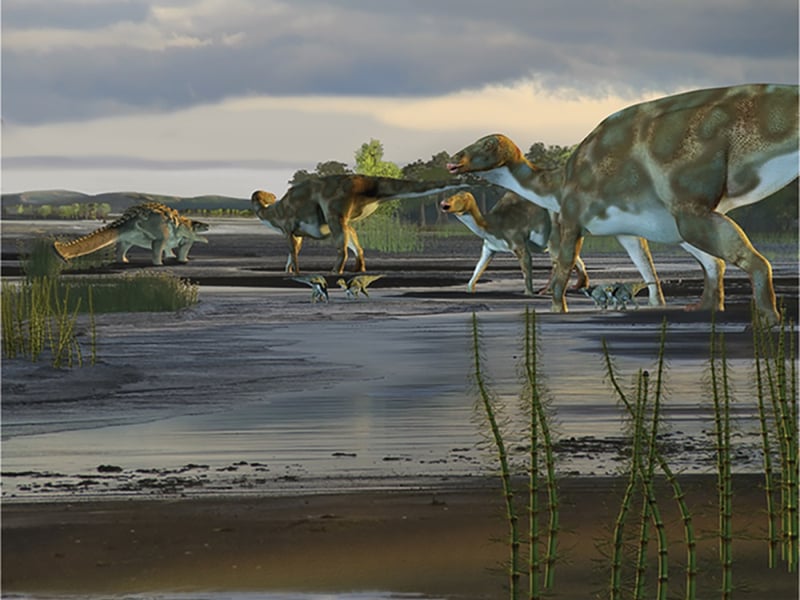
(CN) – Archaeologists have uncovered a clearer picture of what a dinosaur species’ habitat was like thanks to ancient tracks of the creatures discovered in the Alaskan Peninsula, according to research released Wednesday.
The study, published in the open journal PLOS ONE, recorded dozens of dinosaur footprints preserved in the Chignik Formation, coastal sediment deposits that date back around 66 million years ago during the Late Cretaceous Period.
Most of the footprints were those of the hadrosaur, a bulky duck-billed herbivorous dinosaur that ranged in size from 10-40 feet long. Hadrosaur fossils are the most commonly found in high-latitudes, the researchers said.
While a few of the footprints uncovered were those of armored dinosaurs and a large tyrannosaur, 93% of the trackways were those belonging to hadrosaurs.
“Our study shows us something about habitat preferences for some dinosaurs and also that duck-billed dinosaurs were incredibly abundant. Duck-billed dinosaurs were as commonplace as cows, though given we are working in Alaska, perhaps it is better to consider them the caribou of the Cretaceous,” said Anthony Fiorillo of the Perot Museum of Nature and Science in Texas.
The study seems to back up previous research on the habitat of hadrosaurs, finding that they were abundant in coastal habitats where they had access to plenty of vegetation. Although their fossils have been discovered in other parts of Alaska, this new evidence shows that they also made their home in the southwest part of the state.
The researchers “suggest that understanding habitat preferences in these animals will contribute to understanding of how ecosystems changed through time as environmental conditions shifted and dinosaurs migrated across northern corridors between continents.”
Subscribe to our free newsletters
Our weekly newsletter Closing Arguments offers the latest about ongoing trials, major litigation and rulings in courthouses around the U.S. and the world, while the monthly Under the Lights dishes the legal dirt from Hollywood, sports, Big Tech and the arts.