
 Search Articles


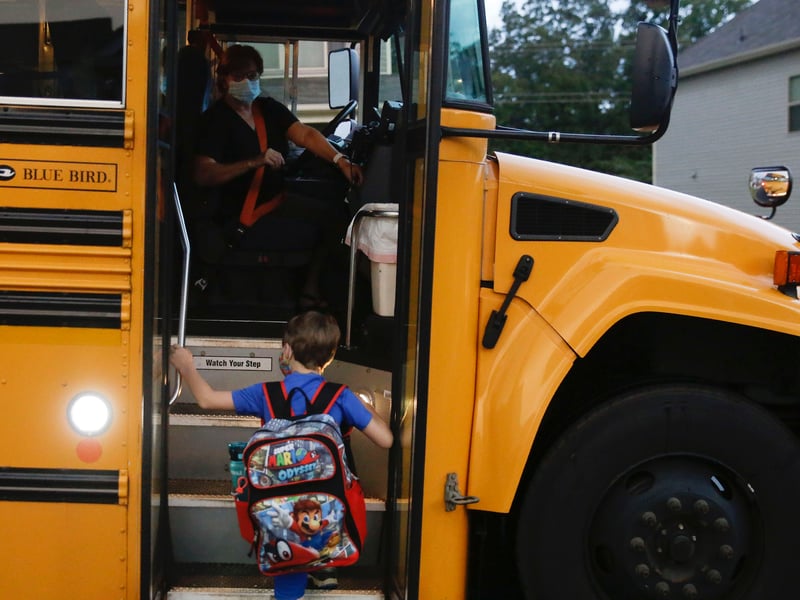
WASHINGTON (CN) — A D.C. Circuit panel ruled Tuesday that Washington was wrong to deny a parent’s request for assistance in transporting a disabled first grader who uses a wheelchair from the door of his apartment to the bus.
The city, the panel found, was obligated to provide “door-to-door” assistance under the federal Individuals with Disabilities Education Act and struck down a policy requiring city staff to retrieve students from the outermost door of their home and forbidding them to physically lift or carry students.
A three-judge panel, made up of Chief U.S. Circuit Judge Sri Srinivasan and U.S. Circuit Judges Karen Henderson and Naomi Rao — Barack Obama, Ronald Reagan and Donald Trump appointees, respectively — found that the parent’s request was reasonably covered by the federal statute requirement that the city provide transportation to students with disabilities.
Srinivasan wrote in the panel’s opinion that under the city’s “unduly narrow” reading, bus drivers in a district that provided service to bus stops rather than individual homes would only be obligated to drop a child with a disability at the stop, not to ensure they made it home.
Congress clearly intended for municipalities to provide a myriad of education services for children with disabilities, both in and out of the classroom, depending on their needs, Srinivasan said. The city’s contention that transportation services are so narrowly defined would make those services impossible.
The child, referred to in the opinion and K.N., was eight years old at the time and has multiple disabilities, including spastic quadriplegic cerebral palsy, is nonverbal and faces several functional limitations. He requires a wheelchair to move, a tracheotomy tube to breathe and a gastronomy tube to eat and take medication.
K.N. remotely attended Bridges Public Charter School in Northeast Washington from 2020 to 2022 due to Covid-19 and his medical conditions. His mother, Marga Pierre-Noelle, withdrew K.N. from Bridges at the start of the 2023-2024 school year, and indicated during the appeal that she does not plan to re-enroll him there.
In May 2022, Pierre-Noel met with school staff to update his individualized education program so he could attend school in person the next fall when he would begin first grade.
Pierre-Noel and staff agreed that K.N. could attend classes in person with specialized instruction and a dedicated nurse, as well as bus transportation with the aide present to monitor his medical equipment.
Pierre-Noel requested the school provide an aide who could carry K.N. from their apartment to the bus, which has two 14-step stairs one must climb via the front or back entrance. Pierre-Noel explained that she could not carry him down due to a medical condition, and her husband would not be home three of the five weekdays because he works.
The Office of the State Superintendent of Education denied that request, citing safety concerns and policy that states bus drivers are not responsible for providing physical assistance beyond “occasional non-intrusive assistance” that does not involve carrying the student. Despite the charter school amending K.N.’s education program to specify that he needed those services to, the city maintained its position.
Pierre-Noel challenged the decision in federal court. U.S. District Judge Trevor McFadden, a Trump appointee, granted the city’s request for summary judgment.
McFadden found that Pierre-Noel’s request did not count as a transportation service under the IDEA, leading her to take her case to the appellate court.
In the panel’s opinion, Srinivasan clarified that the claims against Bridges were dismissed, due to K.N. no longer being a student there, and remanded the case to the District Court for D.C. for further proceedings.
“In sum, the IDEA’s terms, scheme and purpose indicate that ‘transportation’ services include the door-to-door assistance sought by Pierre-Noel for K.N.,” Srinivasan wrote. “The service she seeks — moving K.N. from their apartment to the vehicle that will take him to school — fits within the scope of transportation services that must be provided to disabled students.”
 Follow @Ryan_Knappy
Subscribe to our free newsletters
Our weekly newsletter Closing Arguments offers the latest about ongoing trials, major litigation and rulings in courthouses around the U.S. and the world, while the monthly Under the Lights dishes the legal dirt from Hollywood, sports, Big Tech and the arts.