Search Articles


THE HAGUE, Netherlands (AFP) — A Dutch court on Wednesday gave the go-ahead for Greenpeace to counter-sue U.S. conglomerate Energy Transfer over a $345 million damages claim that could bankrupt the climate pressure group.
The Amsterdam court ruled it was competent to judge the closely followed case brought by Greenpeace, which has its headquarters in the Netherlands, and would hold further hearings next month.
Legal experts and advocacy groups say the case could have far-reaching implications for protests and free speech, as well as Greenpeace’s financial survival in the United States.
Last year, a U.S. jury ordered Greenpeace and other groups to pay more than $660 million for charges including trespass, nuisance and deprivation of property access over protests against an Energy Transfer pipeline nearly a decade ago.
A court in North Dakota later cut the damages in half, but Greenpeace has repeatedly said it cannot pay, denouncing the proceedings as a means to silence protest.
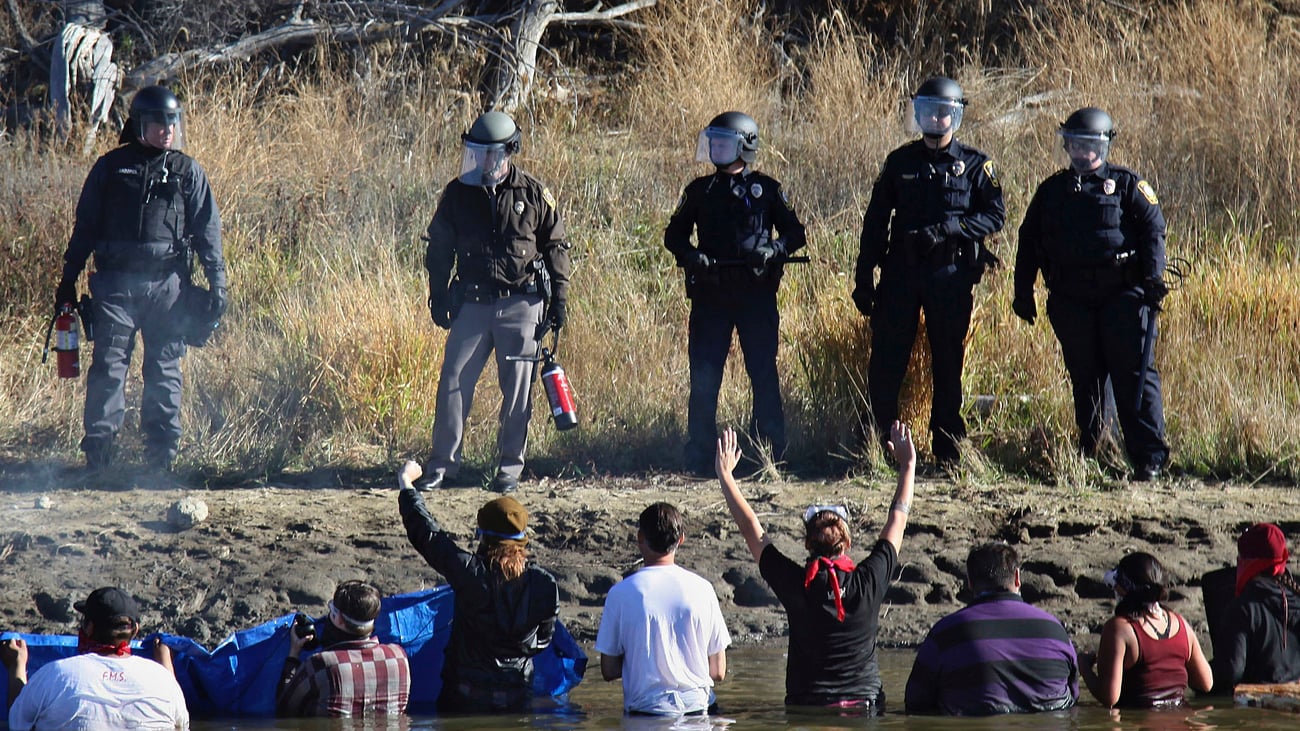
At the heart of the U.S. court battle was the Dakota Access Pipeline, where the Standing Rock Sioux Tribe led one of the largest protests against fossil fuel in U.S. history from 2016 to 2017.
Hundreds were arrested and injured in the demonstrations, which ultimately proved unsuccessful as the pipeline — transporting fracked crude oil — came online in 2017.
Greenpeace maintains it played only a small and peaceful role in the protest, which was led by Native Americans.
‘SLAPP cases’
The Dutch court ruled that “Amsterdam is the place where the damage claimed by (Greenpeace) actually occurred,” dismissing Energy Transfer’s request to throw out the case.
It set July 15 as the start date for the next hearings.
Dutch law professor Xandra Kramer said the case “might indirectly influence what happens in the U.S.” if the Dutch court rules the North Dakota suits were so-called SLAPP cases (Strategic Lawsuits Against Public Participation).
“If they (Energy Transfer) want to push the case and also try to enforce it in the headquarters of Greenpeace in the Netherlands, then it will not be possible,” added Kramer, professor at Utrecht and Rotterdam Universities.
In advance of the ruling, Greenpeace released a video featuring Academy Award-winning actor and activist Javier Bardem warning about the so-called SLAPP cases.
“The type of lawsuits used by Energy Transfer are being used to silence journalists, artists and ordinary people who care about their communities,” said Bardem.
AFP has asked Energy Transfer for a reaction.
Mads Christensen, executive director of Greenpeace International, said in a statement: “People are tired of billionaires and their polluting corporations behaving like the law does not apply to them.”
“Energy Transfer is clearly desperate to avoid this case, but (the) pipeline company will have to answer for its actions here in the Netherlands,” he said.
—
By EVA VAN DAM Agence France-Presse
Subscribe to our free newsletters
Our weekly newsletter Closing Arguments offers the latest about ongoing trials, major litigation and rulings in courthouses around the U.S. and the world, while the monthly Under the Lights dishes the legal dirt from Hollywood, sports, Big Tech and the arts.