
 Search Articles


(CN) — Researchers in Amsterdam have identified five biological variants of Alzheimer’s disease, a development that could have important implications on how to treat the disease.
Alzheimer’s, a neurodegenerative disease, is the leading cause of dementia. It affects roughly 44 million people around the world and is the seventh leading cause of death in the United States.
Little is known about what causes the disease, what might cure it, or indeed if it is one or multiple diseases.
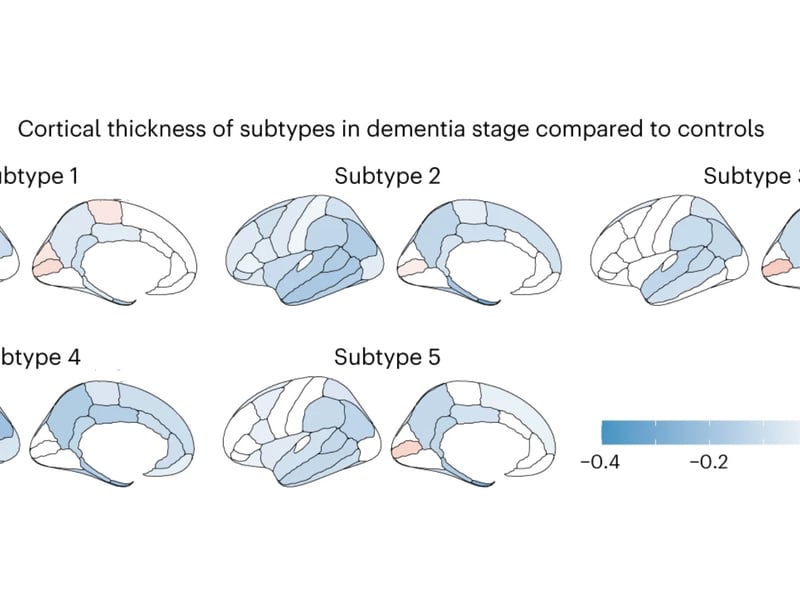
A paper published Tuesday in the journal Nature Aging, authored by Betty Tijms and Pieter Jelle Visser, reveals five Alzheimer’s subtypes.
The first three, each known by a pronounced attribute — hyperplasticity, innate immune activation and blood–brain barrier dysfunction — had already been identified by Trims and Visser. This new paper adds two more subtypes, “one with RNA dysregulation and one with choroid plexus dysfunction,” according to the paper, which adds, “All subtypes were associated with distinct genetic risk profiles.”
The existence of different Alzheimer’s profiles, the researchers write, “highlights the need for personalized treatments and for in vivo tools” — meaning tools that can be used on a living person — “to define such molecular subtypes.”
The researchers analyzed more than a thousands different proteins in cerebrospinal fluid samples from 609 individuals, 419 of whom had been diagnosed with Alzheimer’s, with the other 187 as controls.
Across the five variants, the researchers observed differences “in the degree of protein synthesis, the functioning of the immune system, and the functioning of the organ that produces cerebrospinal fluid,” according to a press release about the study. The disease progressed faster in some of the subtypes than in others.
The findings could mean that Alzheimer’s drugs are only effective for one subtype.
“For example, medication that inhibits amyloid production may work in the variant with increased amyloid production but may be harmful in the variant with decreased amyloid production,” the press release says. “It is also possible that patients with one variant have a higher risk of side effects, while that risk is much lower with other variants.”
The finding could presage a breakthrough in Alzheimer’s treatment research. Different drugs or therapies can now be tested on different subtypes separately, potentially offering more accurate and more encouraging results.
 Follow @hillelaron
Subscribe to our free newsletters
Our weekly newsletter Closing Arguments offers the latest about ongoing trials, major litigation and rulings in courthouses around the U.S. and the world, while the monthly Under the Lights dishes the legal dirt from Hollywood, sports, Big Tech and the arts.