Search Articles



(CN) — Iowa’s state law that bans sexually explicit books in school libraries and regulates teaching related to LGBTQ+ issues is likely constitutional, a federal appeals court held in two decisions Monday as it sent the cases back to the District Court for rulings on the merits.
Iowa statute Senate File 486, signed into law in 2023 by Republican Governor Kim Reynolds, requires removal of books containing “descriptions or visual depictions of a sex act” from Iowa public school libraries and bars school districts from providing instruction relating to gender identity or sexual orientation to students in kindergarten through sixth grade.
Book publishers, including Penguin Random House, along with Jodi Picoult and other authors, sued the state over the book ban, and a group advocating for LGBTQ+ rights sued over the curriculum provision, both suits asserting the law is unconstitutional on its face on First Amendment grounds.
A federal judge in Des Moines issued preliminary injunctions partially blocking enforcement of the statute last year in two separate rulings affirming his previous injunctions that had previously been vacated and remanded by the Eighth Circuit.
In its decisions, the St. Louis-based Eighth Circuit cleared the way for enforcement of Iowa’s statute and signaled the outcome in the District Court is all but foreordained, saying that none of the plaintiffs is likely to succeed on the merits. Both decisions were written by U.S. Circuit Judge Ralph Erickson, joined by fellow Donald Trump appointee U.S. Circuit Judge Jonathan Kobes and George W. Bush appointee U.S. Circuit Judge Lavenski Smith.
In Monday’s ruling on the book publishers’ claims, the Eighth Circuit cited the U.S. Supreme Court’s 1988 decision in Hazelwood School District v. Kuhlmeier, in which the Supreme Court said “expressive activities that students, parents, and members of the public might reasonably perceive to bear the imprimatur of the school” constitute school-sponsored speech, over which a school can exercise editorial control, “so long as [its] actions are reasonably related to legitimate pedagogical concerns.”
The Hazelwood standard applies to school activities that “may fairly be characterized as part of the school curriculum,” the Eighth Circuit said.
“It is indisputable that the purposes of a school library are to enhance education, supplement classroom learning and facilitate the development of students’ knowledge and skills,” the court said. “A school library is curated by school officials, educators, librarians or perhaps some combination of these people. It is supervised by educators and librarians. Given these aspects, under Hazelwood, a school library bears the imprimatur of the school and is properly characterized as part of the school’s curriculum.”
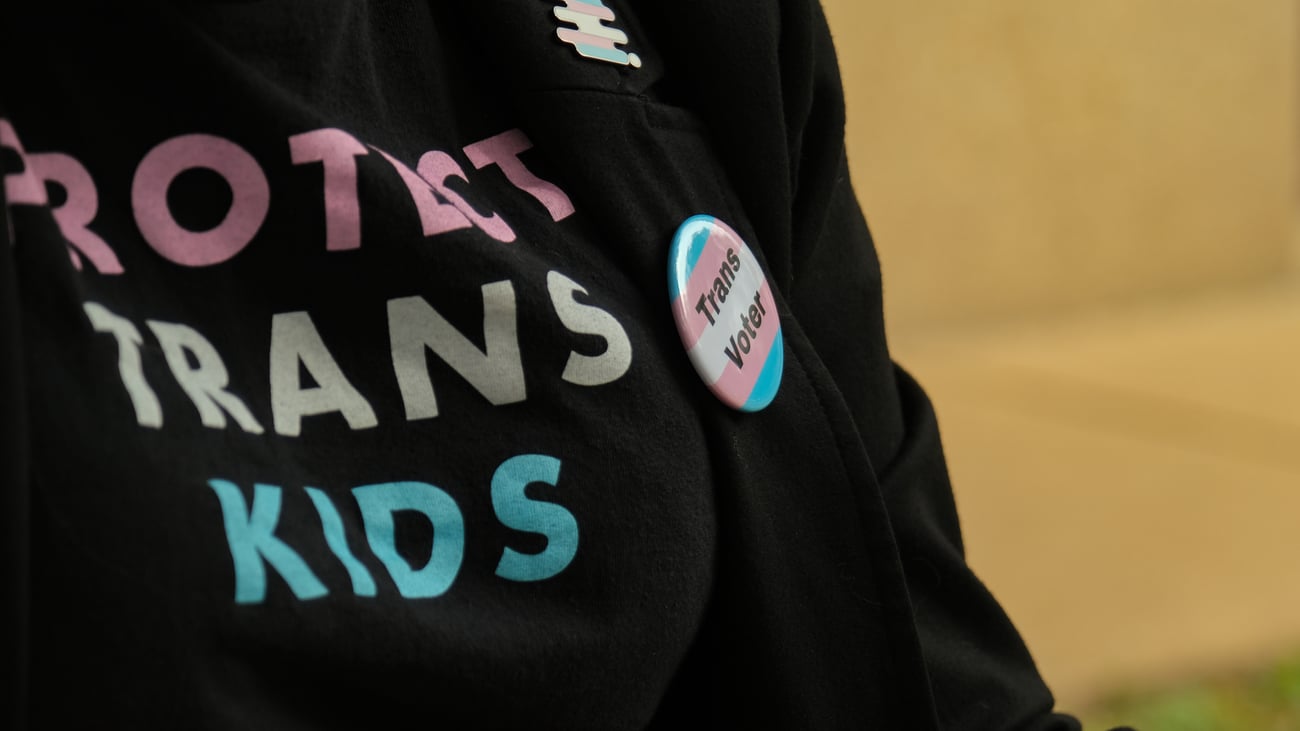
In its ruling in the case involving school curriculum related to LGBTQ+ issues, the Eighth Circuit panel likewise vacated the District Court’s injunction against enforcement of Iowa’s statute. That statute bars schools from providing instruction relating to gender identity or sexual orientation to students in kindergarten through grade six and requires school officials to notify parents if a student asks for the use of a pronoun that does not match the school’s registration records or requests an “accommodation that is intended to affirm the student’s gender identity.”
Although the District Court found Iowa’s statute to be unconstitutionally vague, the Eighth Circuit said a vagueness challenge would be more plausible had the plaintiffs brought as-applied challenges rather than attacking the constitutionality of the statute on its face.
“This is a huge win for Iowa parents,” Iowa Attorney General Brenna Bird said in a statement praising the Eighth Circuit decisions. “Parents should always know that school is a safe place for their children to learn, not be concerned they are being indoctrinated with inappropriate sexual materials and philosophies. I am grateful that our law protecting children was upheld today.”
“While we’re disappointed that the injunction is no longer in place, we are actively evaluating next steps,” Penguin Random House said in a statement. “The fight continues, and we stand with authors, educators, librarians and students to protect access to books and the freedom to read.”
 Follow @roxalaird16
Subscribe to our free newsletters
Our weekly newsletter Closing Arguments offers the latest about ongoing trials, major litigation and rulings in courthouses around the U.S. and the world, while the monthly Under the Lights dishes the legal dirt from Hollywood, sports, Big Tech and the arts.
Additional Reads
 Chief on the hook for excessive force April 6, 2026
 Three-day delay to pick up guns April 6, 2026