
 Search Articles


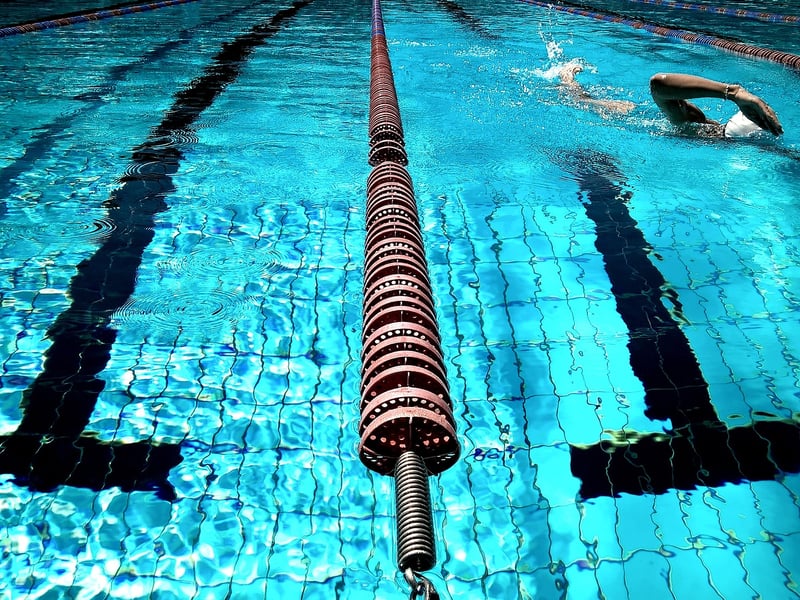
MANHATTAN (CN) — An Olympic-style tournament that encourages doping is suing three major sports governing bodies for $800 million, claiming that they are exercising their monopoly to prevent athletes from competing in the tournament.
The Enhanced Games filed a lawsuit on Wednesday in Manhattan federal court, accusing World Aquatics, USA Swimming and the World Anti-Doping Agency of conspiring to “kill off its only potential competitor" by blocking access to athletes and officials.
Australian billionaire Aron D’Souza first floated the idea for the Enhanced Games in 2023, touting the prospective competition as one that would allow athletes to use performance-enhancing substances without having to be drug tested. The first event is set to take place in 2026 in Las Vegas, featuring $500,000 in prizes per event in track, swimming and weightlifting.
Athletes are incentivized with $1 million prizes to break world records, with “natural” competitors invited as well.
“One of the core narratives of the Enhanced Games is the competition between natural and enhanced athletes,” D’Souza said. “And we are trying to present a competition between different ideologies on technology and science.”
The brand currently has five athletes signed to compete, all of them swimmers. But in its lawsuit, the Enhanced Games claims that the Switzerland-based World Aquatics implemented an anticompetitive rule earlier this year that is making it harder to expand that roster.
That rule, announced in June, is a new bylaw that bans individuals who “support, endorse, or participate in sporting events that embrace the use of scientific advancements or other practices that may include prohibited substances and/or prohibited methods” from competing in their events.
In an interview with Courthouse News, D’Souza said this actively and unfairly discourages natural athletes from participating in the Enhanced Games.
“The rule is so broad,” D’Souza said Wednesday. “The rule is not just for using performance-enhancing drugs, it’s for anyone who supports the use of performance enhancement. It could be a journalist, a commentator, a timekeeper, an athlete, a parent.”
D’Souza said this was a concerted effort from the defendants, who he claims are “conspiring to prevent the Enhanced Games from succeeding” by scaring participants away from the competition.
D’Souza expects he’ll have to continue litigating against other sports federations as his concept picks up steam. He believes swimming was the first sport to target his event after an Enhanced Games swimmer went faster than the longstanding 50-meter freestyle world record earlier this year, albeit while wearing a banned “super suit.” D’Souza awarded the athlete $1 million for his efforts.
Representatives for World Aquatics, USA Swimming and WADA didn’t immediately respond to requests for comment about the lawsuit.
While the scrutinized rule comes from World Aquatics, the Enhanced Games claims in its lawsuit that both USA Swimming and WADA are working hand-in-hand to enforce that rule and prevent the success of the pro-doping tournament.
Their efforts run afoul of the Sherman Antitrust Act of 1890, which bans monopolies and anticompetitive behavior, the Enhanced Games argues.
“The actions of defendants make clear that they had a conscious commitment to a common scheme to foreclose the entry of a new competitor for international elite swimming events and for the services of elite swimmers for such events,” the Enhanced Games says in its 73-page lawsuit.
The company is seeking roughly $800 million in damages, which is based in part on a $200 million valuation multiplied by the treble damages made available under the Sherman Act.
Prior to founding the Enhanced Games, D’Souza helped lead Peter Thiel’s controversial litigation against Gawker Media over its publication of late professional wrestler Hulk Hogan’s sex tape. The 2012 lawsuit led to a stunning $140 million damages valuation, which was later shaved down to $31 million following a settlement between Hogan and the now-defunct media company.
 Follow @Uebey
 Follow @uebey.bsky.social
Subscribe to our free newsletters
Our weekly newsletter Closing Arguments offers the latest about ongoing trials, major litigation and rulings in courthouses around the U.S. and the world, while the monthly Under the Lights dishes the legal dirt from Hollywood, sports, Big Tech and the arts.