Search Articles


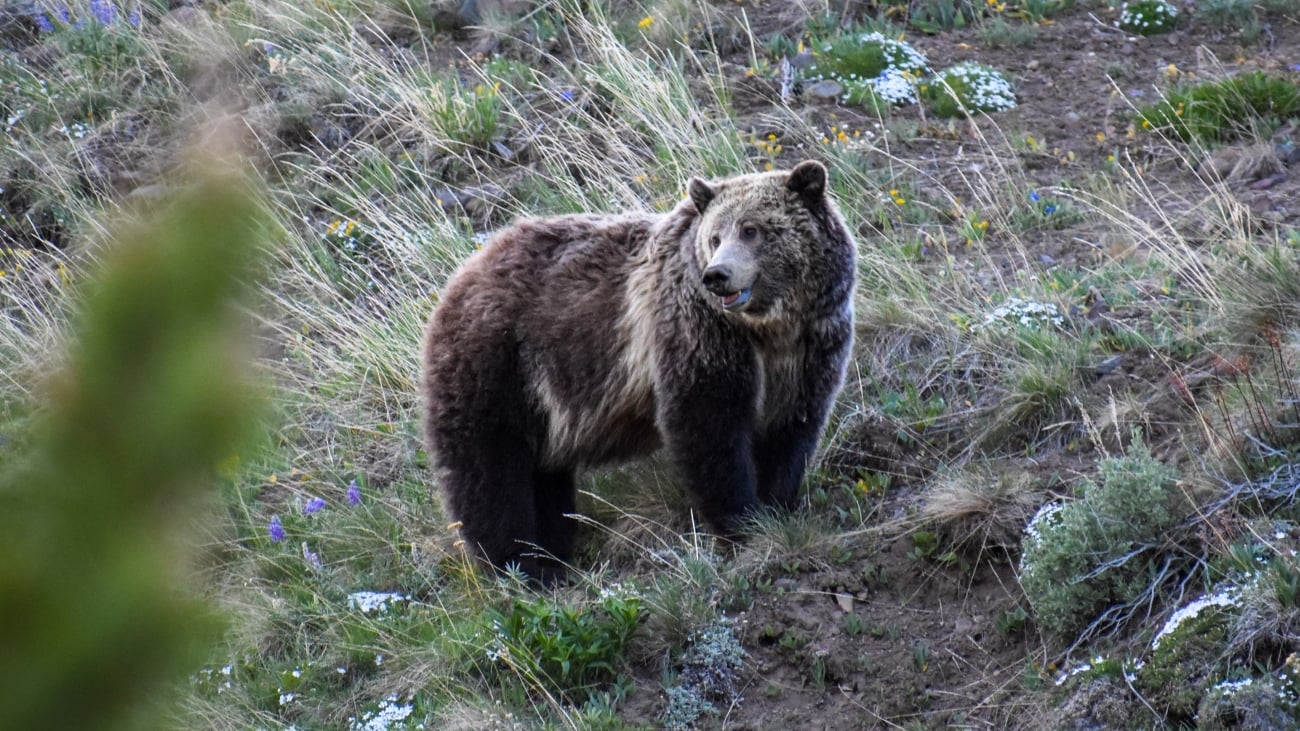
(CN) — Three environmental nonprofits sued federal agencies Tuesday, challenging a redefinition of what constitutes secure habitat for grizzly bears and an approval for a Montana logging project they say will greatly impact grizzly conservation efforts.
In the complaint filed in Montana federal court, the Alliance for the Wild Rockies, the Council on Wildlife and Fish and Native Ecosystems Council say the redefined “secure habitat” for grizzlies — generally seen as an area that is free of roads and development with ample space to forage — no longer meets the large mammals’ needs in the Helena-Lewis and Clark National Forest.
“This change to how secure habitat for grizzly bears is defined, managed, and analyzed on the Helena Forest was made by the Forest Service largely behind closed doors and in the absence of any public review, input, or analysis,” the environmental groups wrote. “This change was also quickly adopted by the U.S. Fish and Wildlife Service in two 2025 biological opinions on the Helena Forest without first consulting the best available science on the habitat needs of grizzly bears.”
A patch of secure habitat, established by scientific data, includes the space needed for an adult female grizzly to forage adequately for up to two days, without coming near vehicle-use roads. In essence, grizzly bears need thousands of acres to meet daily necessities.
In 2021, the Helena-Lewis and Clark National Forest Plan — with input from the U.S. Forest Service and the U.S. Fish and Wildlife Service — secured a 2,500-acre minimum for secure grizzly habitat.
But Fish and Wildlife Service reversed the finding in 2025, saying that outside of the Northern Continental Divide Ecosystem — a 16,000 square-mile stretch of land in northwestern Montana — grizzly “secure habitat” patches need one-acre of space. The Forest Service aligned with Fish and Wildlife Service’s finding and updated its guidance.
“The Helena-Lewis and Clark National Forest secretly shrunk grizzly bear secure habitat to one-acre in size without telling the public,” executive director of the Alliance for the Wild Rockies Mike Garrity said in a statement.
According to the environmental groups, with the newly established one-acre patches of habitat, the federal agencies instituted a work-around, allowing approval of logging projects, such as the Larabee Hat Vegetation project,
The Larabee Hat Vegetation project includes public lands that act as corridors connecting grizzly populations from the Greater Yellowstone Ecosystem and the Northern Continental Divide Ecosystem. It proposes logging on almost 17,700 acres, including over 3,000 acres of clearcutting woodland and creating about 17 miles of temporary roads over the next 15 to 20 years.
But under the new one-acre definition, the number of acres of “secure habitat” in the Divide Geographic Area increased from 41,531 to 59,143. The environmental groups say the increase is “artificial” and the land available isn’t the healthiest for bear conservation.
“Changing the parameters of what qualifies on paper as habitat doesn’t make more habitat,” director of the Native Ecosystems Council, Sara Johnson said in a statement. “A one-acre island of forest surrounded by roads isn’t secure habitat — it’s a death trap for a bear trying to survive there.”
Environmental groups won a similar case in December 2025 regarding a logging project in the Custer Gallatin National Forest near Yellowstone National Park, with bear habitat shrinking to 10-acre patches.
“The court already rejected this approach once,” said Garrity. “Yet the agencies are trying the same thing again and we intend to stop it again and force the Forest Service to follow the law, just like the rest of us have to.”
The U.S. Fish and Wildlife Service and U.S. Forest Service did not immediately respond to requests for comment.
Subscribe to our free newsletters
Our weekly newsletter Closing Arguments offers the latest about ongoing trials, major litigation and rulings in courthouses around the U.S. and the world, while the monthly Under the Lights dishes the legal dirt from Hollywood, sports, Big Tech and the arts.