Search Articles


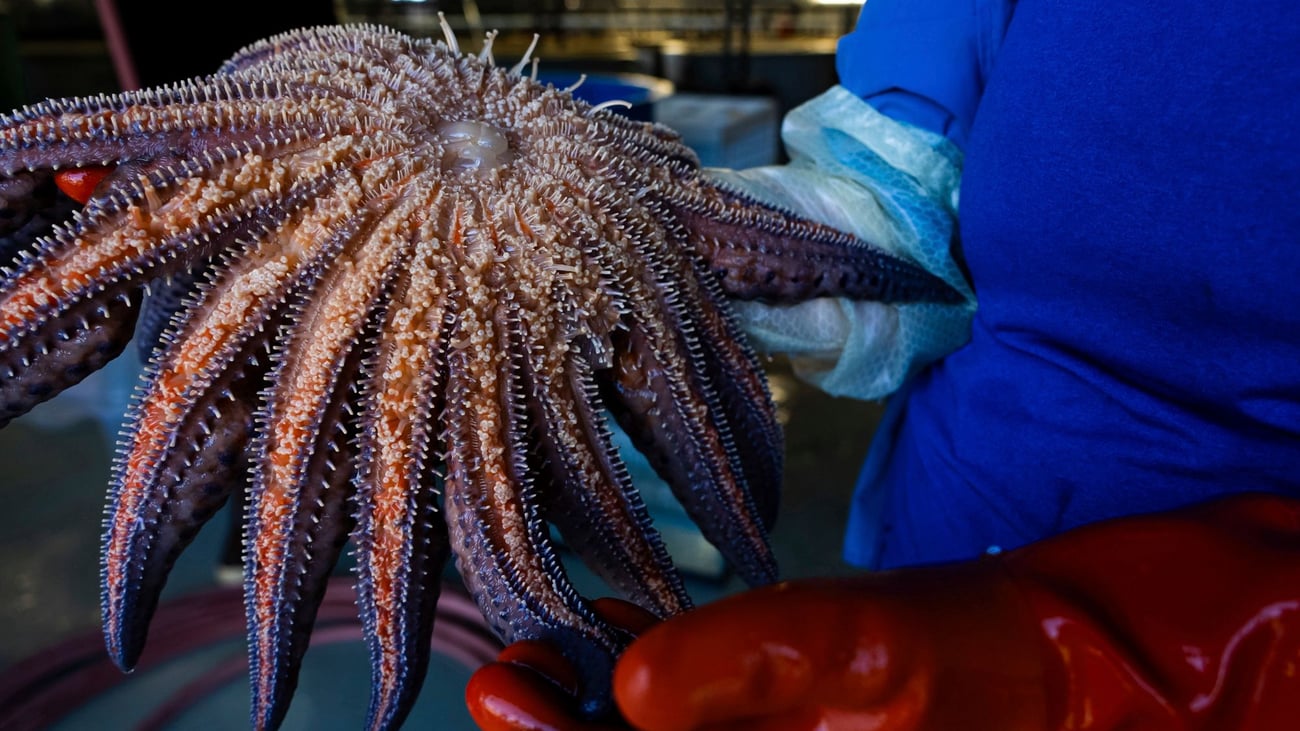
SAN FRANCISCO (CN) — An environmental nonprofit sued the National Marine Fisheries Service on Monday in a bid to push the federal agency to issue protection guidelines for the sunflower sea star, one of the largest sea star species in the world.
The Center for Biological Diversity filed a complaint in the Northern District of California, where the coastal regions around the San Francisco Bay are a historic spot for the multi-armed predator.
The nonprofit says the National Marine Fisheries Service needs to issue a final rule protecting the sea star as a threatened species under the Endangered Species Act, as its numbers have rapidly declined in the last 13 years.
“Nearly 6 billion sunflower sea stars have died along the West Coast of the United States since 2013,” the center says. “These mass mortalities are due to a wasting disease that starts with gruesome lesions, rapidly progresses to twisting and melting arms, then causes death within just a few days.”
In March 2023, the National Marine Fisheries Service, based on a proposal by the center, acknowledged the sunflower sea star was at risk of extinction and started the process to list it under the Endangered Species Act. Generally, a proposed listing has a year to be finalized, but a final rule hasn’t been issued for the sunflower sea star.
“At this time, NOAA Fisheries has not yet completed our work on the Center for Biological Diversity’s proposal to list the sunflower sea star under the Endangered Species Act,” Michael Milstein, the West Coast public affairs representative for the National Marine Fisheries Service says in an email to Courthouse News. “NOAA Fisheries continues to optimize its available resources to prioritize mission-critical research and actions to address fisheries management and endangered species responsibilities.”
Since 2013, approximately 90% of the sunflower sea star Pacific population has died due to the wasting disease, which spreads in warming waters. Once abundant along the western U.S. coastline from Alaska to Baja, California, the species can be various colors, grow to the size of a bicycle wheel and have up to 24 limbs. The carnivorous star eats purple sea urchins, clams, scallops and crustaceans.
“These incredible many-armed sea stars have taken a huge hit from climate change and obviously need protection, but for years federal officials haven’t acted,” Miyoko Sakashita, oceans program director at the center says in a statement. “It’s been painful to watch disease spread among the species as the ocean warms. The Trump administration has a clear legal duty to take action on these amazing animals.”
In an email to Courthouse News, Sakashita says the delay in listing the sunflower sea star is just one of many delays for the administration. In fact, she says, the second Trump administration has not listed a single species under the Endangered Species Act.
She also notes that the National Marine Fisheries Service has “lost hundreds of expert employees to Trump’s firings, and Trump has proposed cutting the agency’s budget dramatically.”
Importantly, sea stars are a “keystone species” for kelp forests, fragile ecosystems off the California coast where otters, sea turtles and other endangered wildlife live among giant fronds of kelp.
“They are an essential part of a healthy ecosystem that is home to an array of other plants and animals,” the center says.
The nonprofit seeks to compel the National Marine Fisheries Service to issue and publish its final listing determination for the sunflower sea star and to ensure the agency complies with deadlines.
Subscribe to our free newsletters
Our weekly newsletter Closing Arguments offers the latest about ongoing trials, major litigation and rulings in courthouses around the U.S. and the world, while the monthly Under the Lights dishes the legal dirt from Hollywood, sports, Big Tech and the arts.
Additional Reads
 SCOTUS won’t review role of race in police stops June 22, 2026