
 Search Articles


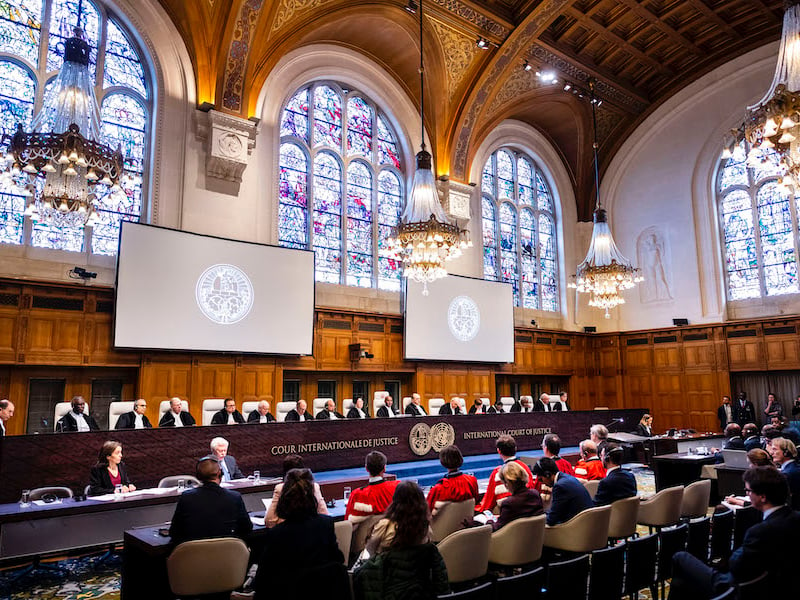
THE HAGUE, Netherlands (CN) — France can move forward with selling a Paris mansion once tied to Equatorial Guinea’s ruling family, after the United Nations’ top court rejected the country’s last-minute attempt to block the sale. In a 13-to-2 vote, the International Court of Justice said Equatorial Guinea hadn’t shown it had a valid claim to the property under the UN’s corruption treaty.
The judges made clear they didn’t see the situation as urgent enough to step in, ruling that this wasn’t the kind of case that called for emergency measures.
How the mansion ended up in court
The Paris mansion, a grand estate near the Arc de Triomphe, has long been central to France’s “ill-gotten gains” saga, which began in 2008 when Transparency International France accused several African leaders of hiding stolen public funds in luxury real estate.
Attention soon focused on Teodoro Nguema Obiang Mangue, son of Equatorial Guinea’s president, who held a senior government post at the time, funneled millions into cars, art and the Avenue Foch mansion, prosecutors said. Obiang’s lavish spending — from luxury sports cars to Michael Jackson memorabilia — far outstripped his official government salary.
Obiang was convicted of money laundering in 2017, and judges ordered the Paris mansion seized. He appealed, but in 2021, France’s top court upheld both the conviction and confiscation.
Equatorial Guinea argued the mansion was part of its Paris diplomatic mission and off-limits. That claim, if accepted, would have put the property under the same protections as an embassy. However, in 2020, the International Court of Justice ruled it was never embassy property and not protected by immunity.
The country then shifted tactics, claiming France had violated the UN anti-corruption treaty by retaining the mansion. Its lawyers argued the country deserved the property back because it was bought with public funds stolen from the state.
Equatorial Guinea cited a treaty clause that, in its view, gave it top priority to reclaim the seized property. France countered that the rule doesn’t guarantee restitution, and what was stolen were public funds, not the mansion itself.
The court sided with France, saying the treaty gives countries discretion over confiscated assets rather than mandating restitution. As the order put it, the phrase shall “give priority consideration, read in conjunction with the listing of three possibilities, suggests that the requested state party has some discretion as to the course of action ultimately adopted.” The treaty allows a country to decide whether to return the property, hand it to private owners or compensate victims.
Gentian Zyberi, professor of international law and human rights at the Norwegian Centre for Human Rights at the University of Oslo, said a cleaner route would have been to deny the request on urgency alone, since the sale did not appear imminent. That, he said, would have matched the court’s usual focus in emergency orders on harm that cannot be undone.
He also read the order as leaning into the substance more than necessary, noting that the judges emphasized France’s room to choose among several outcomes for confiscated assets rather than a single mandatory result. As he put it, “it seems the court might have veered a little more than necessary into the merits of the case.”
The court cut to the chase, saying Equatorial Guinea had not shown “that it possesses a plausible right to the return of the building located at 42 avenue Foch in Paris.”
Cecily Rose, associate professor of public international law at Leiden University, said the court’s take on the corruption treaty was convincing, since it gave France leeway rather than an obligation to return the mansion. “This means that Equatorial Guinea likely has a very weak case on the merits,” she said.
But Rose also warned against blowing the ruling out of proportion. It was the first time the court had weighed in on the corruption convention, and the order was narrowly tied to this dispute. “The ICJ’s decision in this case by no means entails that it will be difficult for other states in the future to successfully seek provisional measures,” she said.
What it means
The fight isn’t over. The judges stressed their order “in no way prejudges the question of its jurisdiction to deal with the merits of the case,” saying it was limited to emergency measures. Both France and Equatorial Guinea will still get to argue their full case when the main proceedings begin.
Even so, it’s a setback for Equatorial Guinea. Without an emergency order, France can press ahead with the sale, and its asset recovery agency already controls the property. The Paris mansion — valued at about 107 million euros, according to a 2022 Le Figaro Immobilier report — is among the city’s most expensive private homes.
Two judges broke ranks and backed Equatorial Guinea, while several others added their own declarations and opinions that will appear alongside the order.
For Malabo, the case is about more than the mansion — it insists it deserves both the property and France’s cooperation and respect for its sovereignty in recovering stolen assets. For Paris, it is a test of how far international law can go in forcing one country to hand over property seized after a criminal conviction.
Alain-Guy Tachou Sipowo, assistant professor at the School of Criminology at the Université de Montréal, said the court’s reasoning was sound but exposed a flaw in the treaty system, warning it risks leaving victim states without remedies. “France ultimately becomes the beneficiary of the sale, while the state harmed by the corruption is left without recourse,” he said.
He added the case highlights broader tensions in international law, showing how conventions fall short in balancing asset recovery, state immunity and victims’ rights. The ruling, he said, could also reinforce views among African states that international institutions are failing to address deeper inequities in the fight against corruption.
Officials from both Equatorial Guinea and France did not immediately respond to requests for comment.
The broader legal fight is far from finished. The case on the merits will continue in The Hague, where judges will eventually decide whether France violated its obligations under the UN corruption treaty. That process is expected to take months, if not years.
In the meantime, French authorities remain free to push forward with the sale, while Equatorial Guinea is left weighing its next moves in a courtroom battle that shows no sign of ending soon.
Courthouse News reporter Eunseo Hong is based in the Netherlands.
Subscribe to our free newsletters
Our weekly newsletter Closing Arguments offers the latest about ongoing trials, major litigation and rulings in courthouses around the U.S. and the world, while the monthly Under the Lights dishes the legal dirt from Hollywood, sports, Big Tech and the arts.