
 Search Articles


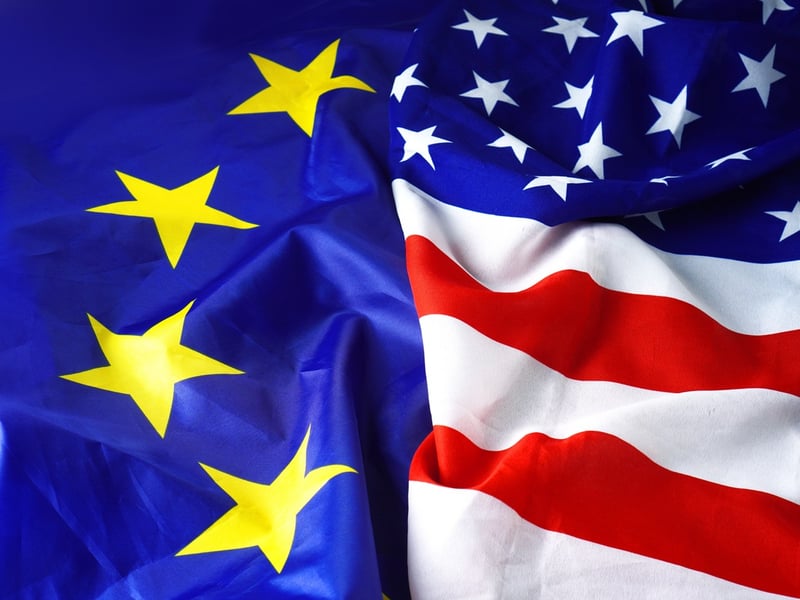
BRUSSELS (CN) — The European Union defiantly rejected U.S. President Donald Trump’s ultimatum to scrap digital regulations targeting U.S. tech giants, declaring Tuesday that Europe has a “sovereign right” to regulate American companies in its territory despite Trump’s overnight threat of “substantial” tariffs and chip export restrictions.
In a combative Truth Social post at 8:31 p.m. ET Monday (2:31 a.m. Tuesday in Brussels), Trump warned that the U.S. will no longer be the “piggy bank” or “doormat” of the world, demanding countries remove digital taxes and tech regulations or face economic retaliation. “Show respect to America and our amazing Tech Companies or, consider the consequences!” he wrote.
European officials dismissed the threats Tuesday and said they would forge ahead Wednesday with promised tariff reductions under July’s fragile trade agreement. The defiant response sets up a potential collision between Trump’s aggressive trade tactics and Europe’s determination to regulate American tech platforms.
“It is the sovereign right of the EU and its member states to regulate economic activities on our territory, which are consistent with our democratic values,” European Commission spokesperson Paula Pinho said Tuesday, framing the dispute as a matter of European sovereignty rather than trade policy.
The EU’s top trade official, Sabine Weyand, escalated the rhetoric throughout the day. After declaring Monday that digital regulations were “absolutely not on the table for concessions,” she hardened her stance Tuesday: EU rules are “not up for concessions or negotiations with other countries. That doesn’t change.”
Though he didn’t name specific countries or measures, Trump’s ultimatum targets Europe’s landmark Digital Services Act and Digital Markets Act — laws that regulate platforms with over 45 million EU users and force “gatekeeper” tech giants like Google, Apple and Meta to open their services to competitors. The regulations require platforms to assess and limit risks from misinformation and harm to minors.
European officials rejected Trump’s claim that the laws discriminate against American companies: “The DSA does not look at the color of a company,” said Thomas Regnier, commission spokesman for trade, noting recent enforcement actions targeted Chinese platforms AliExpress, Temu and TikTok rather than U.S. firms.
European officials also acknowledged recent reports that the State Department is considering personal sanctions on EU officials responsible for implementing digital policies in the form of visa restrictions but said the issue had not been raised during their regular contact with U.S. counterparts.
Despite the new threats, European officials said they would proceed Wednesday with legislation to reduce tariffs on U.S. industrial goods and automobiles as promised under the July deal. The EU legislation would trigger the U.S. to cut automotive tariffs from 27.5% to 15%, with reductions applying retroactively from Aug. 1.
The Commission insisted the July agreement still provides “predictability and stability,” with spokesman Regnier calling Trump’s latest threats “merely speculative.” But the pattern of recurring trade tensions suggests that Trans-Atlantic economic diplomacy has evolved beyond traditional tools to encompass technology regulation and digital governance.
Trade threats hit growth
Europe’s defiant stance carries significant risks given fresh economic analysis showing the continent’s vulnerability to U.S. trade pressure. Trump’s previous tariff threats caused growth in the eurozone — the 20 EU countries that use the euro — to slow by 83%, dropping from 0.6% in the first quarter to just 0.1% in the second, as businesses scrambled to navigate trade uncertainty, according to a new analysis released Tuesday by Eurostat, the EU’s official statistics agency.
The earlier standoff devastated European trade flows: EU exports fell 3.4% while imports dropped 7.1% in the second quarter, shrinking the region’s trade surplus 53% from 55 billion euros ($60.2 billion) to 26 billion euros ($28.5 billion). Chemical exports saw their surplus plummet from 90.9 billion euros ($99.5 billion) to 60.3 billion euros ($66.1 billion) as companies pulled back after front-loading shipments.
Germany’s economy contracted 0.1% during the trade dispute as pharmaceutical and mechanical engineering industries heavily dependent on U.S. markets experienced significant declines. Both industrial production and construction output fell to their lowest levels in a decade. Manufacturing employment declined approximately 2% over the past year as uncertainty weighed on business investment.
The bilateral U.S.-EU trade relationship, worth 1.6 trillion euros ($1.7 trillion) annually, proved especially volatile. The trade surplus fell 48% from 18.4 billion euros ($20.1 billion) in May to 9.6 billion euros ($10.5 billion) in June as American imports from Europe declined while European imports from the U.S. jumped.
That economic damage led to July’s breakthrough agreement capping most U.S. tariffs on European goods at 15% in exchange for European commitments to buy $600 billion in U.S. investments and $750 billion in American energy. The deal appeared to provide stability after months of volatility.
But Trump’s overnight post shattered that calm just days after the agreement was formalized. The digital services dispute represents a more complex challenge than traditional trade fights, extending beyond economics to technology regulation, competition policy and democratic governance.
For U.S. tech giants, the threatened restrictions could disrupt both revenue streams and supply chains. Chip export restrictions would complicate the global semiconductor networks American firms depend on, while tariffs would raise costs for European operations where platforms face growing regulatory scrutiny.
Economic sentiment had begun recovering in July, rising 1.6 points to 95.8 across the eurozone as news of the trade breakthrough spread. But the indicator remained below the long-term average of 100, suggesting businesses remained cautious about trade stability — caution that Trump’s latest threats appear to validate.
European companies remain vulnerable to renewed volatility given their slow recovery from the previous disruption. Employment growth slowed to just 0.1% quarter-on-quarter in the second quarter, while industrial capacity utilization remains well below long-term averages despite recent improvements.
The EU’s decision to defy Trump’s ultimatum while proceeding with trade deal implementation reflects a calculated bet that the president’s threats are negotiating bluster. But the second-quarter economic damage demonstrates how quickly trade uncertainty can undermine growth, making Europe’s defiant stance a high-stakes gamble on Trump’s willingness to follow through.
Courthouse News correspondent Yuval Molina Obedman is based in Brussels, Belgium.
Subscribe to our free newsletters
Our weekly newsletter Closing Arguments offers the latest about ongoing trials, major litigation and rulings in courthouses around the U.S. and the world, while the monthly Under the Lights dishes the legal dirt from Hollywood, sports, Big Tech and the arts.