
 Search Articles


THE HAGUE, Netherlands (CN) — The European Union told an arbitration court on Tuesday the United Kingdom is violating a post-Brexit agreement by banning sand eel fishing in the North Sea.
The Permanent Court of Arbitration is holding three days of hearings into whether a move by London to protect eel stock is allowed under the EU-UK Trade and Cooperation Agreement, the economic deal set up after the UK left the bloc in 2020.
“We are here today because the UK’s prohibition of all sand eel fishing in its waters of the North Sea nullifies rights conferred on the European Union,” EU lawyer Anthony Dawes told the three-judge panel.
It’s the first time the Brexit trade deal has landed the pair in court.
Before leaving the European Union, fishing in the UK was governed by the EU Common Fisheries Policy, which shared fishing resources amongst the 27 member states. With broad control over its fishing policy, the UK banned fishing for the sand eel in 2024, following years of pushing from environmentalists.
However, the post-Brexit Trade and Cooperation Agreement gives the EU some access to UK fishing waters and Brussels argues a blanket ban violates that arrangement. Denmark catches 96% of the world’s sand eel and Brussels further contends that the ban discriminates against the Danish fleet.
The catch nets 49 million euros ($51 million) each year.
The UK, which will deliver its arguments Wednesday, says it relied on the best available scientific advice when it instituted the ban. According to the UK, stopping fishing of the sand eel will have positive impacts on the marine life and bird populations that rely on the tiny fish for food.
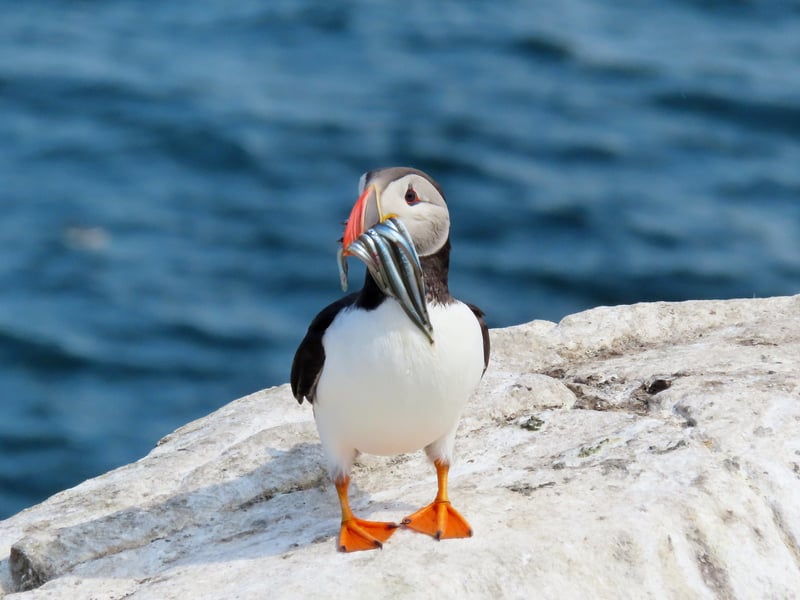
In particular, the iconic puffin can eat 40 sand eels per day.
Environmentalists are concerned that overturning the ban will harm bird and fish species and open up other UK conservation regulations to challenges from Brussels. Over 30 UK and EU conservation organizations condemned the EU’s decision to take the dispute to arbitration when it was announced in November.
“The EU’s decision flies in the face of its commitment to protect and restore marine ecosystems. It is a scandalous attempt to reverse a hard-won victory for under-pressure seabirds like Puffins and Kittiwakes, as well as the many other marine species that depend on sand eels,” Katie-jo Luxton of the Royal Society for the Protection of Birds said in a statement at the time.
Ex-Prime Minister Rishi Sunak’s Conservative government created the ban. Prime Minister Keir Starmer kept it on when he came into power last year; the Labor Party leader does not want to be seen backing off of environmental protections.
After negotiations between the two failed, Brussels brought the dispute to the Permanent Court of Arbitration. The arbitral court dates to 1899 and shares a building with the International Court of Justice, the top court of the United Nations.
The Permanent Court of Arbitration is not a court in the traditional sense: Parties must pay for their own judges and fund the cost of the hearings.
The three-judge panel has until April to render a decision and the ruling cannot be appealed.
 Follow @mollyquell
Subscribe to our free newsletters
Our weekly newsletter Closing Arguments offers the latest about ongoing trials, major litigation and rulings in courthouses around the U.S. and the world, while the monthly Under the Lights dishes the legal dirt from Hollywood, sports, Big Tech and the arts.