Search Articles


ATLANTA (CN) — At the time of the year when rain is most needed for infant crops, wildlife procreation and warming temperatures, a historic and unusual spring drought grips the entire state of Georgia.
The Peach State experienced its second driest January through April on record since 1895, with just over 9 inches of total precipitation.
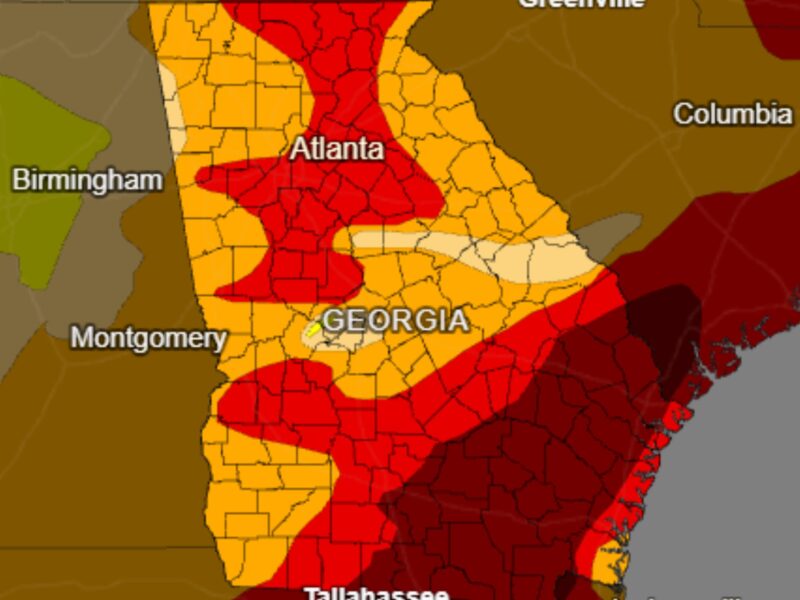
Despite recent rains, over half of the state remains in extreme or exceptional drought, with the other half still facing moderate to severe drought, according to the U.S. Drought Monitor.
The conditions have posed significant challenges for Georgia’s farmers with major agricultural losses and ponds and water sources for livestock drying up.
At its peak intensity in April, the extreme rain deficit fueled two abnormally large wild fires in southeastern Georgia that burned more than 50,000 acres and destroyed over 120 homes. Public water systems launched campaigns encouraging residents to conserve water, as directed by the Georgia Environmental Protection Division.
But humans aren’t the only ones left parched. The impacts of the dry spell on Georgia’s wildlife could have long-lasting effects.
While it may be too soon to see the long-term ramifications, extended droughts — which are occurring more frequently in Georgia — lower reproductive rates for all kinds of animal species, Todd Schneider, a wildlife biologist with the Georgia Department of Natural Resources’ Wildlife Resources Division, told Courthouse News.
“It’s hard to know exactly how much a drought like ours has affected the birds or the other wildlife in the state. But there are known things that happen,” Schneider said in a Monday interview.
“It’s not something so dramatic that you see adults dropping over dead everywhere like in the cartoons where they’re in the dessert and falling over. That doesn’t happen that often,” he added.
Instead, it reduces food availability and many animals get most of their moisture from the foods they eat, Schneider said.
With plants bearing less fruits and berries and withering vegetation during breeding season, fewer young survive. The lack of moisture also means far less insects, putting birds especially at risk, to the point where they won’t even bother laying eggs if food becomes too scarce.
“There is going to be less breeding,” Schneider said.
“Those species in wetlands where there’s extremes, they’ll potentially suffer a little more than the others,” he added.
Wetlands represent critical wildlife habitat in the Southeast, with Georgia’s supporting exceptionally high biodiversity. Prolonged periods of drought shrink these areas, threatening essential habitats for aquatic organisms, alligators, amphibians, and numerous marsh bird species.
Once the prayer for rainfall was finally answered, it came down hard.
On May 20, the metropolitan Atlanta region experienced a reported three inches of rainfall in just an hour.
The drastic change from weeks of extreme dryness to flood warnings issued in some areas, led to other unprecedented problems.
Massive amounts of stormwater flow and polluted runoff from the City of Atlanta’s combined sewer system carried directly into the Chattahoochee River, the most heavily used water resource in Georgia.
With the drought putting the river at near-historic lows in water levels, the high load of additional pollutants created deadly conditions and killed thousands of fish.
According to the Chattahoochee Riverkeeper, the prolonged rain combined with ongoing drought conditions have also contributed to spikes in bacteria levels, with elevated E. coli levels creating unsafe water conditions.
While Schneider said droughts must be extensive and long-term to cause drastic declines in wildlife populations, the Southeast is projectedto experience future drier springs as air temperature increases.
“With climate change, we’re getting more extremes,” Schneider said.
As much of it seems to be human induced, Schneider said the biggest threat to Georgia’s wildlife is still our own species.
Rapid suburban and industrial expansion has spurred habitat losses, while other human activities are contributing to rising sea levels that erode crucial nesting grounds for Georgia’s endangered sea turtles.
 Follow @Megwiththenews
Subscribe to our free newsletters
Our weekly newsletter Closing Arguments offers the latest about ongoing trials, major litigation and rulings in courthouses around the U.S. and the world, while the monthly Under the Lights dishes the legal dirt from Hollywood, sports, Big Tech and the arts.