
 Search Articles


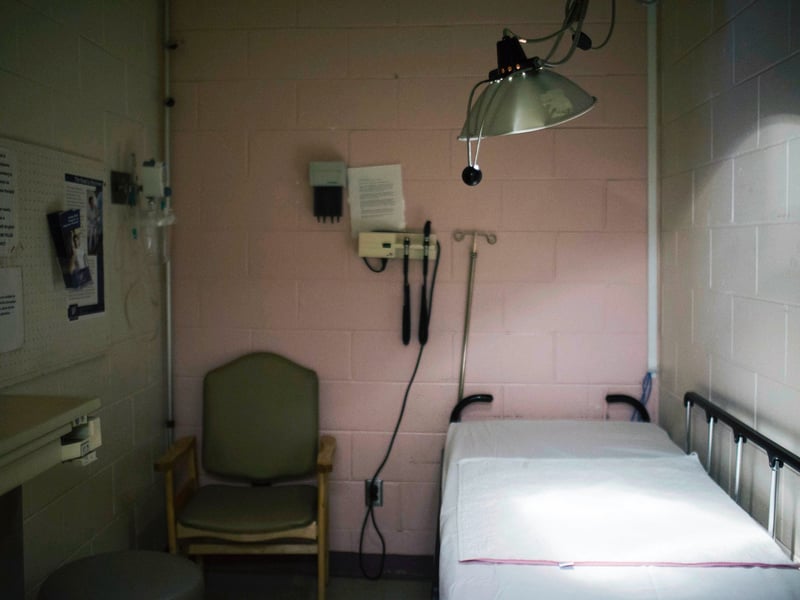
SAN DIEGO (CN) — A federal judge declined to dismiss invasion of privacy claims from a family who say San Diego County officials used cameras to spy on a minor patient for over a month in a San Diego children’s hospital.
In their 2021 complaint, Madison Meyer and her family said that they didn’t find out about the surveillance for months after the were admitted to Rady Children’s Hospital in San Diego for around the clock care in 2019. Rady’s child protection team and San Diego County’s child abuse investigators used the surveillance in an effort to prove their suspicion that Meyer was being abused.
They say that the covert footage captured Meyer during vulnerable moments — while she was getting undressed, while she used the bathroom and during sensitive medical procedures, such as the placement of a urinary catheter. They claimed that through their actions, Rady attempted to take away Meyer from the custody of her parents.
U.S. District Judge Robert Huie, a Joe Biden appointee, wrote in a 51-page order denying San Diego County’s motion to dismiss that the county violated the family’s right to privacy by videotaping them without a warrant or consent in a place where they had a reasonable expectation of privacy.
The defendants claimed that Meyer and her family had no reasonable expectation of privacy because she was in a hospital room that hospital personnel could enter at any time, but citing the Ninth Circuit, Huie wrote that people are entitled to temporary zones of privacy even in public places like hospitals.
“The door to plaintiff’s room was kept closed by her parents most of the time they were present. Although the room had windows facing the hallway outside, there was a curtain which plaintiff’s parents also kept closed. With the curtain drawn and the door closed, the interior of the room was not visible from the hallway or from the nurse’s station outside,” Huie wrote. “These allegations are sufficient to allege plaintiff exhibited a subjective expectation not to be filmed in her hospital room.”
The county also tried to get the claims dismissed, arguing the county had qualified immunity because Meyer’s right to be free from video surveillance in her room was not clearly established, an argument that Huie dismissed.
“Multiple Ninth Circuit decisions have held that video recording individuals without a warrant constitutes a violation of the Fourth Amendment in similar locations to the private hospital room at issue here … While defendants cite several cases to argue plaintiff’s right to be free from video surveillance in her hospital room was not clearly established, these decisions are not factually analogous and therefore are not persuasive,” Huie wrote.
When Meyer — who is diagnosed with Ehler-Danlos syndrome, hypermobile type, a rare genetic disorder that affects connective tissues, causing broken bones, dislocated joints and stretchy skin — was moved to Rady in 2019, her parents moved into the room with her, sleeping on a makeshift bed in Meyer’s hospital room.
The family later found out that they were under 24/7 surveillance for 38 days because Rady’s child protection team and San Diego County’s child abuse investigators suspected Meyer was the victim of a condition called Munchausen syndrome by proxy, a form of child abuse where a parent lies about injuries or causes real injuries to their child, with the endgame being medical attention for the child.
In the opinion published late Monday night, Huie also ruled that claims against Elizabeth Reese, a member of the child protection team at Rady, can proceed at this point because the record shows she knowingly made false claims when she called the county’s child abuse hotline to report that she thought Meyer was being abused.
“The FAC sets forth a plausible claim Reese reported false information to the County’s child abuse hotline either deliberately or at least with reckless disregard for the truth despite evidence to the contrary (such as plaintiff’s medical records),” Huie wrote.
While Huie allowed some of the privacy and medical procedure claims against the child protection team to proceed, the judge also dismissed a group of hospital and county defendants for lack of specificity as to their contributions to the family’s claims. The judge also dismissed the family’s Americans with Disabilities Act claims.
Counsel for Meyer’s family did not respond to requests for comment before press time. Counsel representing San Diego county did not respond to requests for comment before press time.
Subscribe to our free newsletters
Our weekly newsletter Closing Arguments offers the latest about ongoing trials, major litigation and rulings in courthouses around the U.S. and the world, while the monthly Under the Lights dishes the legal dirt from Hollywood, sports, Big Tech and the arts.