Search Articles


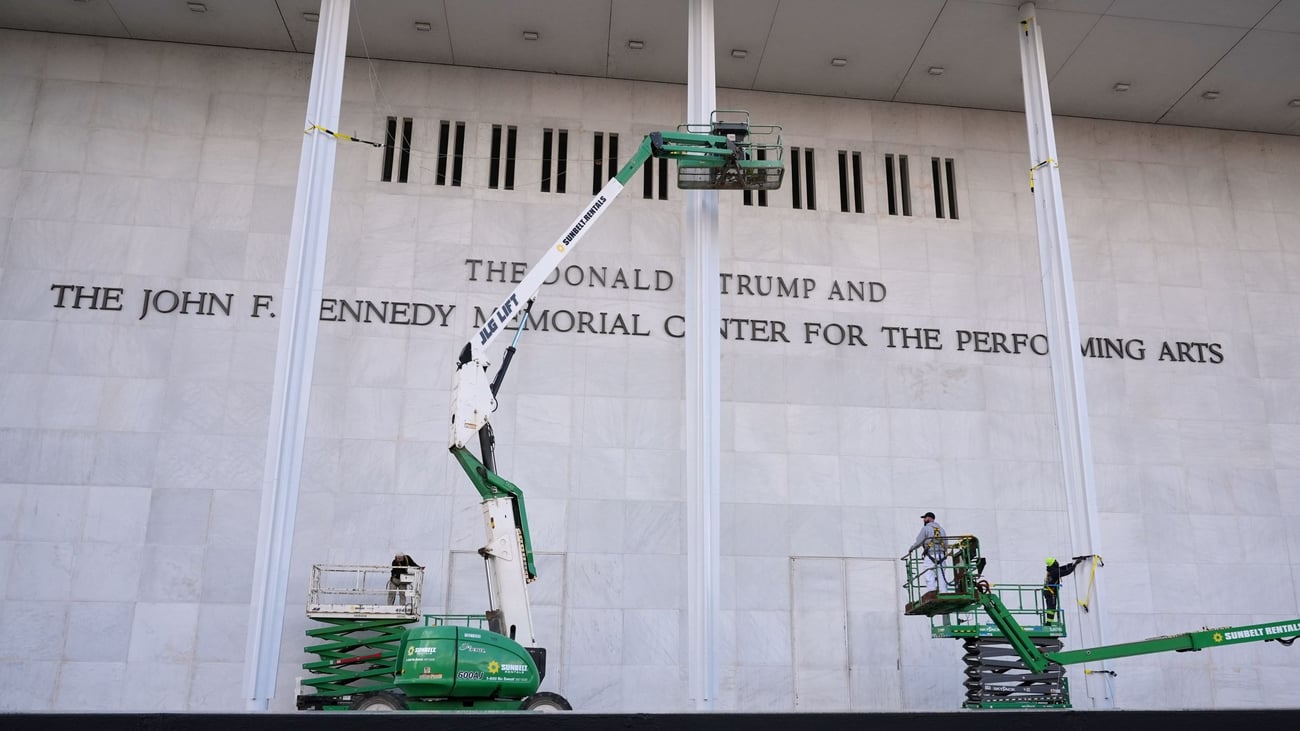
WASHINGTON (CN) — A federal judge on Friday blocked the Trump administration from shuttering the Kennedy Center for two years and ordered the government to remove the president’s name from the building, finding it in clear violation of its purpose as a living monument to John F. Kennedy.
U.S. District Judge Christopher Cooper granted partial summary judgment to Ohio Democratic Representative Joyce Beatty regarding the government adding Trump’s name to the building’s facade and its website, and granted a preliminary injunction halting the closure and the planned renovations set for July 6.
The Barack Obama appointee ordered the Trump administration to remove President Donald Trump’s name from the building, its website and other materials by June 12, or risk violating his order.
“The court has concluded that the Board [of Trustees] overstepped its statutory authority bounds by unilaterally renaming the Kennedy Center after President Trump,” Cooper wrote in the 94-page opinion. “In 1964, Congress deliberately rechristened the ‘National Culture Center’ the ‘John F. Kennedy Center for the Performing Arts.’ The text, structure and evolution of the organic statute makes the institution’s name abundantly clear.”
“Congress gave the Kennedy Center its name, and only Congress can change it,” Cooper added.
When Trump moved to unilaterally add his name to the Kennedy Center last December — Beatty, as an ex officio member of the board, detailed how the issue was not on the agenda for a Dec. 18 meeting and only came up at the very end — he clearly violated the Kennedy Center’s organic establishing statute, Cooper found.
He highlighted how, when Congress authorized the REACH expansion in 2012, it “was so wary of diluting the power of the public dedication to the slain president” that it required the board to acknowledge any private contributors inside the building rather than the exterior.
The Justice Department argued the decision was not a renaming and placing Trump’s name on the front portico was not a memorial, instead suggesting the “Trump Kennedy Center” is merely a secondary name.
It was merely another change akin to calling the Bureau of Financial Protection the Consumer Financial Protection Bureau or calling the Federal National Mortgage Association “Fannie Mae” or even renaming the Department of Defense to the Department of War, the government asserted.
Cooper called the position “too cute by half” and undermined by the White House’s own statements and conduct.
“Most fundamentally, none of these examples implicate a presidential memorial that was legitimately intended to honor a specific public figure,” Cooper wrote. “The ‘Trump Kennedy Center’ label adds an entirely new name to the Center’s formal title and relegates President Kennedy’s name to second place. If that’s not a renaming, what is?”
In a statement to Courthouse News, Beatty applauded Cooper’s ruling and said it affirms that the government’s decisions to rename and close the Center “have no basis in law.”
“The Kennedy Center is an institution that belongs to the American people, not to Donald Trump,” Beatty said. “He has desecrated this sacred memorial for his own vanity. I am proud to have fought for the rule of law and to protect this sacred institution.”
Cooper determined the board — which Trump filled with his allies and named himself the chairman of — had exceeded its statutory authority to both maintain the building in good working order and operate it as a performing arts venue and memorial to Kennedy.
He specifically determined a March 16 board meeting that approved the two-year closure for much-needed repairs was faulty.
“The preliminary factual record before the court reveals that, in ratifying President Trump’s closure announcement, the board was derelict in discharging the full range of its responsibilities to the center,” Cooper wrote. “More specifically, the board based its decision on an insufficient, one-sided presentation of information and neglected to consider the full range of its statutory obligations and potential adverse consequences of closure on programming and memorial functions.”
Cooper made clear his injunction did not prevent the center from conducting sorely needed repairs — including those to address significant damage caused by decades of water intrusion — nor would it categorically prohibit the board from closing the center if it follows a more balanced review.
On April 29, Cooper heard testimony from Matthew Floca, the center’s chief operating officer since March 24 following former acting director Richard Grenell’s departure, who detailed the concern areas an extended closure would address.
Cooper, who is also presiding over a near-identical challenge to the closure by the DC Preservation League, denied a second preliminary injunction and ordered the parties to file a joint status report on next steps by June 5.
The White House did not respond to a request for comment.
 Follow @Ryan_Knappy
Subscribe to our free newsletters
Our weekly newsletter Closing Arguments offers the latest about ongoing trials, major litigation and rulings in courthouses around the U.S. and the world, while the monthly Under the Lights dishes the legal dirt from Hollywood, sports, Big Tech and the arts.