
 Search Articles


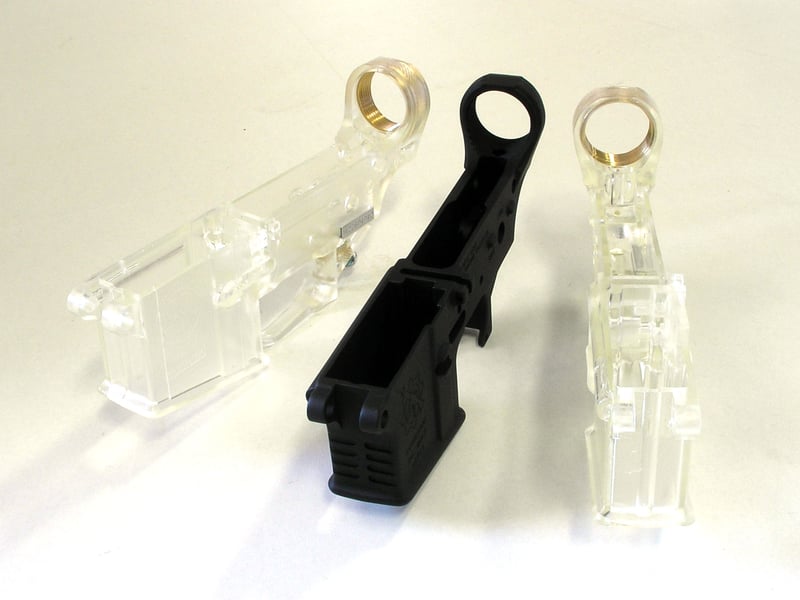
DENVER (CN) — A federal judge on Thursday denied gun rights groups’ request to block Colorado’s new ghost gun registration requirements from taking effect.
“Plaintiffs’ constitutional injury hinges on little more than speculation and contingency,” wrote U.S. District Judge Gordon Gallagher in a 24-page opinion.
Last year, Colorado lawmakers passed the “Unserialized Firearms and Firearm Components” law, prohibiting individuals from making firearms or parts without a license and establishing a process for putting serial numbers on frames and receivers.
Two Second Amendment advocacy groups — the National Association for Gun Rights and Colorado-based Rocky Mountain Gun Owners — sued Democrat Colorado Governor Jared Polis on New Year’s Day, claiming the new law violated their members’ rights.
The named and anonymous plaintiffs said they wanted to protect their ability to build handguns from kits largely purchased from the firearms company Polymer80.
Handguns, the groups argued, are primarily used for self-defense, and thus are protected by the Second Amendment.
The groups argued that the practice of building homemade firearms has never been regulated by the federal government, and that the act predates the founding of the country, running counter to the legal tests set in New York State Rifle & Pistol Association Inc. v. Bruen , which instructs courts to weigh gun restrictions against the historical record.
Gallagher, a Joe Biden appointee, was unconvinced by the groups’ argument made in an evidentiary hearing on the motion in March.
“Despite the evolution of the Supreme Court’s Second Amendment jurisprudence," he wrote. “The Supreme Court (either in majority holdings or by the individual justices) has consistently reaffirmed that there are constitutional limitations to the Second Amendment.”
Since Bruen did not throw out state licensing schemes, Gallagher saw no reason it would block registration requirements.
In a similar case, VanDerStok v. Garland , the Fifth Circuit struck down the Bureau of Alcohol, Tobacco and Firearms’ ability to regulate ghost guns. While VanDerStok remains pending before the U.S. Supreme Court, the ATF’s rules are in effect. Because serial numbers are currently required by federal law, Gallagher found the challenge to state law unripe.
“Ultimately, [plaintiffs] have failed to establish that there is a ‘substantial controversy’ that is ripe for adjudication regarding future purchases of firearm component kits that is ‘of sufficient’ immediacy and reality to warrant the issuance of a declaratory judgment or injunctive relief,” Gallagher wrote.
Last year, Rocky Mountain Gun Owners successfully challenged Colorado’s move to raise the age to purchase a gun to 21 years old, but failed to defeat a 48-hour waiting period between purchasing and obtaining a firearm. Both decisions are awaiting review by the 10th Circuit.
A spokesperson for the governor’s office applauded the order via email.
“Governor Polis is committed to protecting our second amendment rights and making Colorado safer, including by preventing senseless gun violence Governor Polis has signed common-sense legislation to keep Coloradans safe, including banning untraceable ‘ghost guns’ which he called for in his State of the State address in 2023,” the spokesperson told Courthouse News.
The plaintiffs are represented by Wheat Ridge attorney Barry Arrington, who did not immediately respond to an inquiry for comment.
 Follow @bright_lamp
Subscribe to our free newsletters
Our weekly newsletter Closing Arguments offers the latest about ongoing trials, major litigation and rulings in courthouses around the U.S. and the world, while the monthly Under the Lights dishes the legal dirt from Hollywood, sports, Big Tech and the arts.