Search Articles


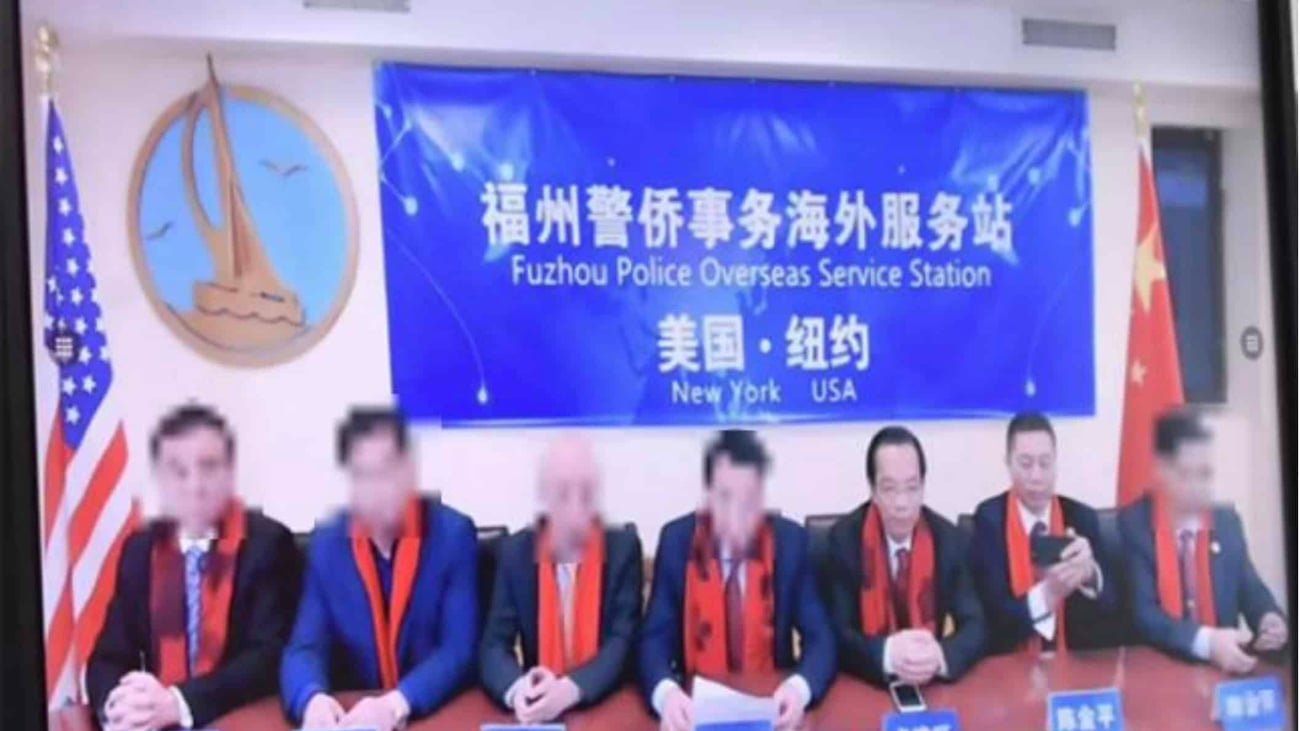
BROOKLYN (CN) — A supposed international chain of covert police outposts, backed by the Chinese Communist Party, is at the center of a federal trial in Brooklyn that kicked off Wednesday morning.
The defendant, 64-year-old Lu Jianwang, also known as Harry Lu, is accused of running one of them. Out of a nondescript six-story office building in Manhattan’s Chinatown, prosecutors say Lu secretly assisted the Chinese government with its goal of targeting CCP dissidents living overseas.
“In 2022, the defendant Lu Jianwang was living in New York City, but he was working for the Chinese government,” Assistant U.S. Attorney Lindsey Oken said at the trial’s opening. “He opened what China called an ‘Overseas Police Service Station’ right here in New York City.”
Prosecutors say the station helped local Chinese citizens renew Chinese driver’s licenses, which in and of itself is a crime if done without informing United States leadership in advance. But it also had a more sinister use, one the government says Lu spearheaded behind the scenes.
“The darker parts operated in secret,” Oken said. Prosecutors claim Lu helped the Chinese national police locate political dissidents, including a Chinese pro-democracy activist who was living in California.
Oken said jurors will hear from that dissident during what is expected to be a roughly two-week trial. Lu was initially charged in 2023 with conspiracy to act as an agent of a foreign government and obstruction of justice. In March of this year, prosecutors superseded with an added charge of acting as an unauthorized agent of China.
He has pleaded not guilty to all charges. But his co-defendant, Chen Jinping, pleaded out at the end of 2024 to charges of working as an unauthorized agent of the Chinese government. Chen has not yet been sentenced.
Hu’s lawyer John Carman downplayed the charges against his client, telling jurors that the FBI baselessly raided a Chinatown community organization, of which Hu was the president, after reading an article online about the purported network of secret CCP outposts in 2022.
An “army” of agents descended on the building, Carman claimed, breaking into cabinets and a locked safe and seizing “everything they could get their hands on.”
“They turned the place upside down,” Carman said.
According to Carman, the charges effectively boil down to his client’s failure to file a form, “a form I guarantee you’ve never heard of,” he said, referring to prosecutors’ claims that Hu failed to register as an agent to the Chinese government.
The obstruction of justice charge is the result of Hu deleting a text thread, Carman added. Prosecutors say the thread contained communications and instructions from Hu’s handler in the Chinese government.
“He’s 64 years old,” Carman said of his client. “Harry Lu is not a spy. He’s not part of Chinese intelligence services. He’s not a member of the Chinese Communist Party. And most importantly to you, he was not an agent … If Harry Lu is an agent for anyone, he is an agent for the people in his community.”
What prosecutors describe as an outpost for surveillance and secret policing, Carman described as a “good deed” by Hu. Carman claimed his client merely agreed to operate the outpost to let Chinese citizens in New York City renew paperwork, unable to travel to China in the aftermath of the Covid-19 pandemic. He invoked ChangLe, the nonprofit organization that owned the scrutinized building space.
“ChangLe means eternal joy," Carman said. “It does not mean secret police station.”
Filling the courtroom were members of Hu’s Chinatown community, supporting the man who now faces decades in prison if convicted. Many of them hoisted signs outside of the courthouse earlier in the day with messages like “Chinese Americans are Americans.”
Prior to Wednesday’s testimony, prosecutors put the judge on notice of the demonstrators, fearful they could come within eyeshot of the jurors.
The government’s first witness, Julian Ku, testified about the lengths the CCP goes to neutralize dissent — even overseas.
A Hofstra University law professor and Chinese government expert, Ku testified about the “gigantic” Ministry of Public Security, which he said encompasses every law enforcement officer in China.
“An estimated 2 million people work for it,” Ku said.
The agency is responsible for everything from local law enforcement to national investigations, Ku said. He explained how agency officers aren’t allowed to travel internationally in their official capacity.
As a result, they rely on “friends and allies” of the CCP overseas to communicate with them and investigate on their behalf.
Ku has testified in a similar case before in the same courthouse. Last year, he told another jury about the CCP’s overseas influence efforts in the trial of Linda Sun, a former high-ranking New York official accused of taking bribes to do Beijing’s bidding within her role in state government. That case ended in a mistrial, with jurors unable to reach a unanimous verdict.
 Follow @Uebey
 Follow @uebey.bsky.social
Subscribe to our free newsletters
Our weekly newsletter Closing Arguments offers the latest about ongoing trials, major litigation and rulings in courthouses around the U.S. and the world, while the monthly Under the Lights dishes the legal dirt from Hollywood, sports, Big Tech and the arts.