
 Search Articles


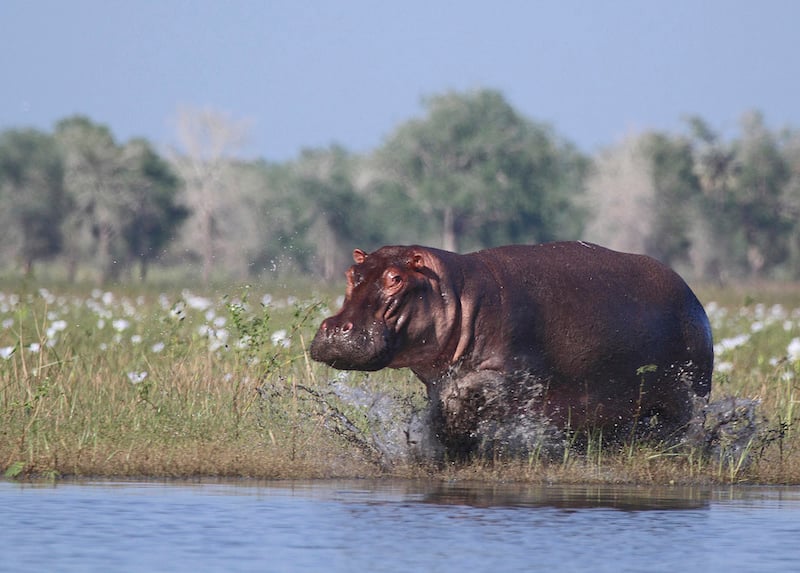
WASHINGTON (CN) — Conservationists sued the U.S. Fish and Wildlife Service on Tuesday over its failure to list the common hippopotamus for protections under the Endangered Species Act.
The Humane Society International and two affiliates brought the suit with the Center for Biological Diversity in the U.S. District Court for the District of Columbia against the agency after it missed a March 24, 2023, deadline to make a decision the coalition initially requested in 2022.
Without a decision, already 18 months overdue, hippos face further population loss due to habitat loss and fragmentation, legal overutilization for commercial and recreational purposes, illegal hunting and trade, disease and the inadequacy of current legal and regulatory schemes, the coalition says.
“These threats put the species at serious risk of extinction,” the conservationists say in the suit. “Because the hippo is a keystone species — one that is irreplaceable to the terrestrial and aquatic ecosystems it inhabits — the loss of this species would reverberate throughout ecosystems.”
The conservationists note the agency made a delayed finding on March 21, 2023, well beyond the required 90-day timeline, that listing the hippos for protection “may be warranted.” That determination triggered a requirement under the statute that the agency decide whether listing “is warranted” within 12 months.
While the common hippopotamus is primarily found in sub-Saharan Africa — the Humane Society cited in their March 2022 petition an International Union for Conservation of Nature estimate that global population numbered between 115,000 and 130,000 as of 2016 — the United States plays an outsized role in the species’ decline.
According to the conservationists, the United States is the top importer of hippo parts and products in the world, consuming 45% of global imports between 2019 and 2021.
An analysis from the Convention on International Trade in Endangered Species Trade Database collected between 2009 and 2018 showed France to be the second largest importer, at 30% to the United States’ 34% in that time period. At least 3,081 hippos were killed to meet American demand during that period, the convention found.
The convention is an international treaty between governments that seeks to regulate the trade in wild animals and fauna to ensure the survival of the species. The United States is one of 184 member states party to the agreement.
Such products include hippo teeth, skins, feet, skulls, ivory, meat and other body parts. According to an undercover investigation conducted by the Humane Society, among the thousands of products for sale in the U.S., the most common items were made from hippo leather, such as belts, shoes and purses, or hippo ivory, with knife handles, bottle openers and decorative carvings.
Some vendors even sold hunting trophies like shoulder mounts, made up of a hippo’s head and neck.
Unless the agency lists the hippopotamus for protection, domestic trade within the U.S. is not regulated at the federal level, and imports of hippo parts and product are not scrutinized under the statute’s strict standards.
Sophie Nazeri, senior coordinator of wildlife for Humane Society International, said in a statement announcing the lawsuit that the international trade of hippo products was exacerbating the threats the species already faces.
“These animals are ecologically indispensable and deserve more than being reduced to mere accessories,” Nazeri said. “The U.S. government’s delay is tragic since the Endangered Species Act protections are essential to curbing the gruesome market for hippo products.”
Hippos are listed on Appendix II of the treaty, meaning the legal trade of their parts must be controlled to prevent any threats to their survival.
However, at a November 2022 meeting of the Conference of the Parties to the Convention, the member states failed to adopt a proposed revision to the hippo’s listing that would have prohibited all exports of wild specimens for commercial purposes. Delegates from the European Union cast their 27 votes to sink the proposal.
Tanya Sanerib, international legal director at the Center for Biological Diversity, said in a statement announcing the suit that the organization would continue fighting to protect all species threatened by potential extinction.
“Hippos are disappearing from Africa’s freshwater ecosystems, and lagging action from U.S. wildlife officials isn’t helping,” Sanerib said in the statement. “These chunky icons belong in the water, not carved up for fashion, knickknacks or trophies for U.S. consumers.”
The Fish and Wildlife Service declined to comment on the lawsuit.
The conservationists want a federal judge to impose a deadline for the agency to determine whether the hippo should receive protections and obtain a date when such a determination will be issued.
 Follow @Ryan_Knappy
Subscribe to our free newsletters
Our weekly newsletter Closing Arguments offers the latest about ongoing trials, major litigation and rulings in courthouses around the U.S. and the world, while the monthly Under the Lights dishes the legal dirt from Hollywood, sports, Big Tech and the arts.