
 Search Articles


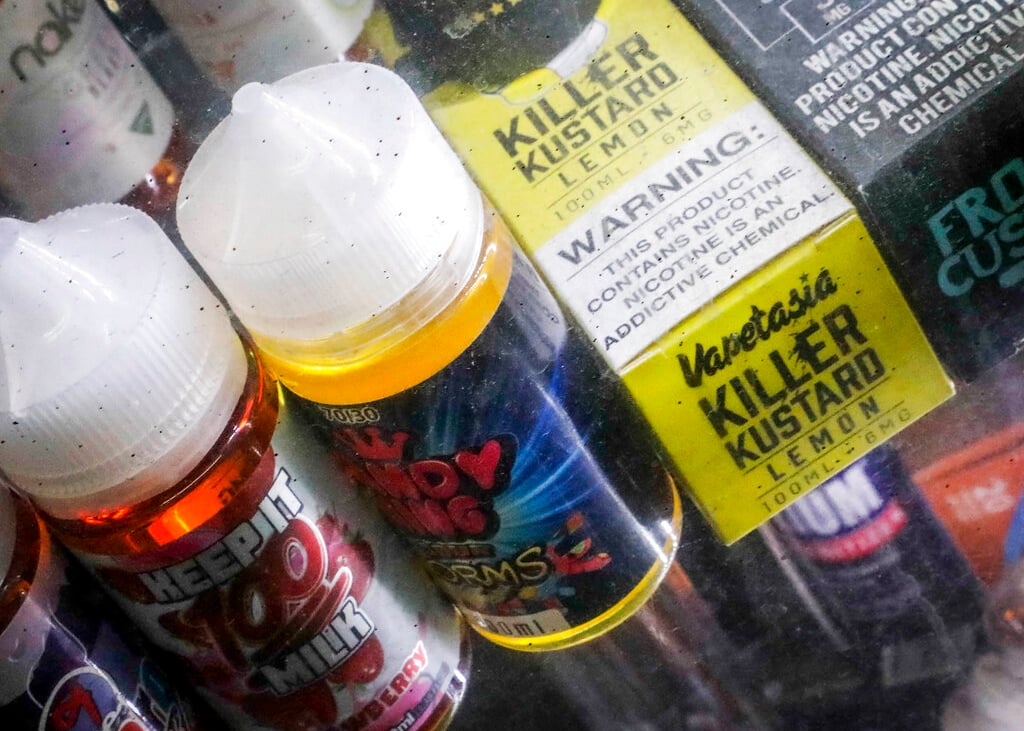
(CN) — It was a simple but cloudy question: Can the FDA force vape makers to prove their flavored e-liquids help smokers quit better than plain tobacco flavor, without ever telling them that rule existed?
That tension dominated oral arguments Tuesday before a three-judge panel of the Fifth Circuit, where seven small vape-liquid companies are fighting the Food and Drug Administration’s blanket denial of marketing approval for flavored electronic nicotine delivery systems.
In 2020, lead plaintiff NicQuid filed a detailed Premarket Tobacco Product Application (PMTA) with scientific data, consumer surveys and youth-access restrictions. It argued the products satisfy the Tobacco Control Act’s “appropriate for the protection of the public health” standard, which requires the FDA to weigh risks and benefits to the entire population, protecting kids from nicotine addiction while offering adult smokers a less-harmful alternative to cigarettes.
In May 2024, the FDA issued a Marketing Denial Order (MDO) blocking sales. The agency ruled NicQuid failed to provide a “comparative efficacy study” showing its non-tobacco-flavored products (including menthol) help adults switch from cigarettes better than tobacco-flavored versions. Similar denials hit the six other plaintiffs in the now-consolidated case.
Attorney Eric P. Gotting, representing NicQuid, told the panel the FDA’s approach violates both the Tobacco Control Act and the Administrative Procedure Act. He argued the comparative efficacy requirement is effectively a “tobacco product standard” that required formal notice-and-comment rulemaking.
“We still have that with regard to non-menthol flavor products, and that has resulted in an effect of ban,” Gotting said, citing the court’s earlier decision in Wages and White Lion Investments, LLC v. FDA. Even for menthol, “it’s the same rationale.”
Gotting said the FDA is not truly conducting individualized adjudications.
“All it has done is opened up this mass of applications and asked if there a comparative efficacy study,” he said. “If the answer is no, you get an MDO. That is it.”
He added the agency ignored its own National Youth Tobacco Survey data showing virtually no middle- or high-school use of his clients’ specific products.
Amicus attorney Christian G. Vergonis, arguing for R.J. Reynolds Vapor Co., reinforced the notice-and-comment claim. He pointed to internal FDA “menthol memos” that showed a top-down policy shift.
“The titles of those memos are not application-specific,” Vergonis said. “They talk about resolving foundational questions, all based on general considerations, not specific to any one applicant.”
Citing the Fifth Circuit’s 2001 Shell Offshore precedent, Vergonis said when an agency adopts a policy first and then applies it across cases, that’s rulemaking in disguise.
Kevin B. Soter, arguing for the government, defended the denials as straightforward case-by-case adjudications required by the Tobacco Control Act. Congress placed the burden on manufacturers to prove their specific new product is “appropriate for the protection of the public health,” weighing risks and benefits “to the population as a whole.”
Soter emphasized three key FDA findings: non-tobacco flavors significantly increase youth appeal and initiation risk; traditional marketing restrictions don’t fully mitigate that risk; and general evidence does not show flavored products provide additional switching benefits for adults beyond tobacco-flavored ones.
“The flavored e-cigarettes and the tobacco-flavored e-cigarettes in general have the same potential benefits to adults,” Soter said. “But the flavors are adding risk to kids.”
He stressed product-specific evidence is required because benefits depend on a product’s exact formulation, nicotine strength and ability to satisfy cravings. Six recently approved menthol products from Juul and NJOY succeeded because those manufacturers submitted robust switching data for their specific formulations. Other manufacturers cannot simply piggyback on approved applications.
U.S. Circuit Judge Andrew S. Oldham, a Donald Trump appointee, pressed both sides on menthol.
“Why doesn’t every menthol ENDS manufacturer file a one-page application that says ‘we rely on [the Juul and NJOY approvals]?’” he asked Gotting. Gotting replied that approvals help but the FDA must still conduct a full statutory review.
Oldham also questioned the timeline of notice.
“Nobody knew anything about these comparative efficacy standards before the deadline” for PMTAs in September 2020, Vergonis said. Soter countered that the statute itself, which the U.S. Supreme Court interpreted in Wages, provided sufficient guidance.
U.S. Circuit Judge Stephen A. Higginson, an appointee of Barack Obama, asked whether the panel should wait for the en banc court’s decision on remand in the Wages case. Gotting urged the panel to decide now while Soter deferred to the court.
Gotting briefly raised a separate issue involving NicQuid’s zero-nicotine liquids. The FDA applied the same denial rationale even though the statutory definition of “tobacco product” requires nicotine, he said.
The panel also included U.S. Circuit Judge Jerry E. Smith, an appointee of Ronald Reagan. A ruling could affect thousands of pending applications and clarify how much procedural leeway the FDA has when reviewing the flood of vape products submitted after the 2020 PMTA deadline.
 Follow @gabetynes
Subscribe to our free newsletters
Our weekly newsletter Closing Arguments offers the latest about ongoing trials, major litigation and rulings in courthouses around the U.S. and the world, while the monthly Under the Lights dishes the legal dirt from Hollywood, sports, Big Tech and the arts.
Additional Reads
 Tennessee National Guard can deploy for task force April 28, 2026