Search Articles


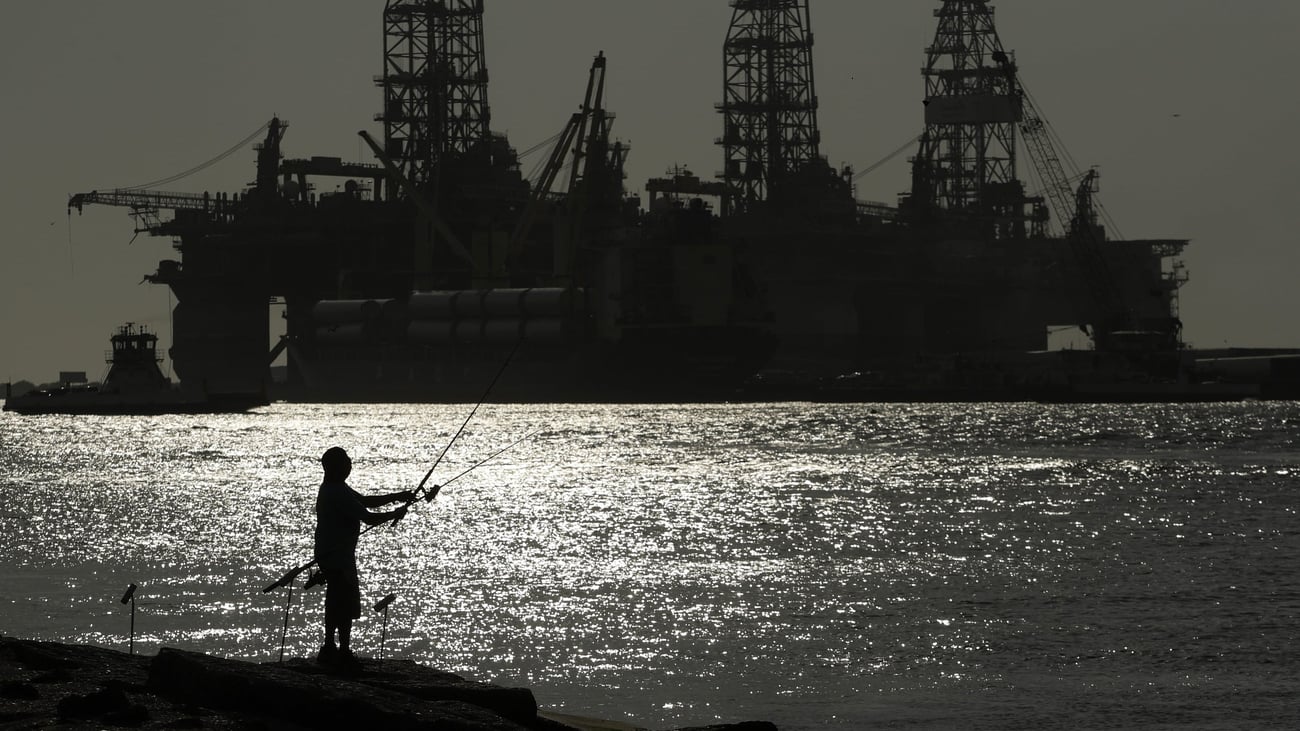
(CN) — Environmental groups on Monday pressed two different panels of the Fifth Circuit to block federal approvals of major offshore energy projects in the Gulf of Mexico, arguing the Maritime Administration (MARAD) skirted key requirements of the Deepwater Port Act and related environmental laws when greenlighting projects to export liquefied natural gas (LNG) and crude oil.
In Louisiana, the Center for Biological Diversity, Sierra Club and Habitat Recovery Project want the court to vacate MARAD’s 2025 license for the Delfin LNG deepwater port, about 40 nautical miles offshore. The project involves floating LNG vessels, platforms and pipelines capable of exporting up to 12 million tons of LNG annually.
A 2017 record of decision approved an earlier version of the project, but it later underwent significant changes, including a new mooring system, fewer vessels and updated cooling technology.
Attorney Lauren Parker argued that MARAD’s own 2024 letter described the changes as a “revised proposal” requiring an amended application, environmental review and public input. Instead, she said, the agency issued the license without taking those steps.
Before Parker could address the merits, U.S. Circuit Judge Jerry E. Smith, a Ronald Reagan appointee, pressed her on standing. She responded that the plaintiffs suffered both procedural and concrete harms, pointing to three declarants: a commercial fisherman, a professor studying the critically endangered Rice’s whale and a Holly Beach resident.
Parker argued the plaintiffs received inadequate notice of the project and shared “concerns about the project’s impacts on their daily lives and the deprivation of procedural rights.” She added: “The agency acknowledged that process in its 2024 denial, yet that process was not followed here. That is why this court should vacate the license.”
Government attorney Rebecca Jaffe countered that the changes were beneficial “refinements” that reduced environmental impacts and remained within the scope of the original 2017 analysis.
“This is fundamentally the same project, but with a refined design,” Jaffe said, noting the revisions included fewer ship berths, fewer pilings driven into the seafloor and that the switch away from seawater cooling “reduces impacts both on water quality and fisheries.”
For Delfin LNG, attorney Sean Marotta argued that petitioners lack standing because their declarants describe being “sort of in the Gulf, kind of nearby,” without factual detail tying their use of the area to the specific footprint and impacts of the Delfin project.
U.S. Circuit Judges Don R. Willett, an appointee of Donald Trump and Irma Ramirez, an appointee of Joe Biden, also presided.
In the companion case from Texas, Citizens for Clean Air & Clean Water in Brazoria County challenged MARAD’s approval of the Texas GulfLink crude oil export terminal. The plaintiffs argue the agency improperly defined the project’s “application area” under the DPA: a geographic zone that determines competition and the scope of any environmental review. They contend the area should have included offshore pipelines along with the terminal and that approving GulfLink violated the statute’s intent to limit one deepwater port per area, especially with another project nearby.
Attorney Amy Dinn said MARAD violated the statute by excluding offshore pipelines from the application area, allowing overlapping projects without the required “national interest” comparison.
“The government’s drawing of the GulfLink’s application area does not comport with the statutory text of the act,” Dinn said. She highlighted MARAD’s quick shift in approach between nearby projects just months apart.
Government attorney Ezekiel Peterson defended MARAD’s interpretation, arguing the plaintiffs’ reading would produce impractical results by effectively prohibiting the pipeline crossings that are common in the Gulf. He noted that the DPA uses the distinct term “deep water port site” and argued “that difference has to mean something,” supporting MARAD’s view that the application area need not include all pipelines.
On the procedural issue, Peterson argued that any “failure to explain” claim “really rises and falls with the statutory interpretation claim,” because if MARAD’s reading of the statute is correct, its explanation is adequate as a matter of law.
Intervenor attorney Todd Everage argued the petitioners are not challenging any substantive finding in MARAD’s record of decision, but rather its 2019 decision about “how large to draw a circle” around the application area. He noted GulfLink has since been licensed, fully permitted and found to serve the national interest after years of review. Everage maintained that both the statute and past practice give MARAD discretion to define a “reasonable” application area in a Gulf already crisscrossed by pipelines.
The second panel included U.S. Circuit Judges Leslie Southwick and Edith Brown Clement, both appointees of George W. Bush, along with U.S. Circuit Judge Kurt Engelhardt, an appointee of Donald Trump. Neither panel indicated when they would enter a ruling.
 Follow @gabetynes
Subscribe to our free newsletters
Our weekly newsletter Closing Arguments offers the latest about ongoing trials, major litigation and rulings in courthouses around the U.S. and the world, while the monthly Under the Lights dishes the legal dirt from Hollywood, sports, Big Tech and the arts.