Search Articles


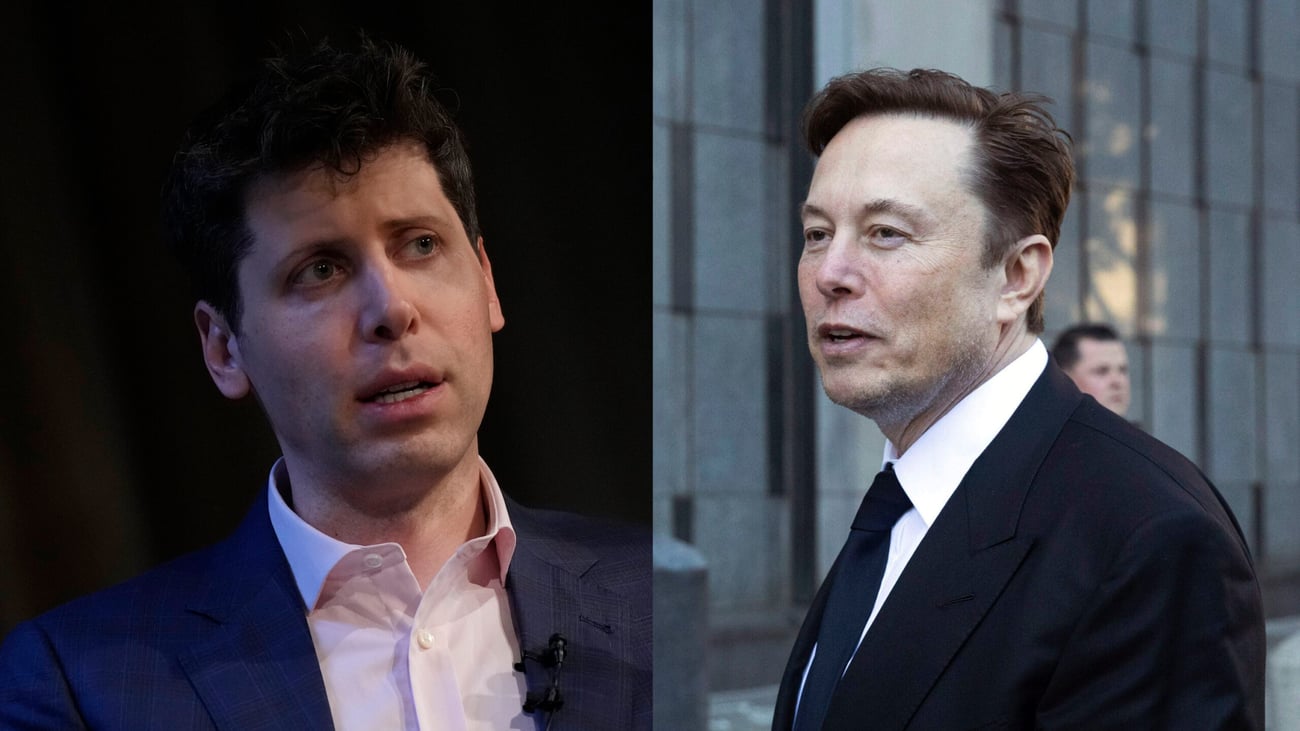
OAKLAND, Calif. (CN) — A half dozen witnesses took the stand Wednesday in the last day of testimony for the three-week, highly publicized trial that pits two tech billionaires against each other, with the future of the highest-valued private artificial intelligence enterprise in the world at stake.
The plaintiff, Elon Musk, the world’s richest man, was not in the courtroom at the Ronald V. Dellums Courthouse in Oakland Wednesday, nor any other time this week, as OpenAI and Microsoft witnesses testified in front of a nine-person jury about OpenAI CEO Sam Altman’s leadership and the company’s unique corporate structure. Musk appeared for opening statements on April 28 and spent two days testifying in court early in the trial.
On Wednesday, Microsoft’s chief technology officer, Kevin Scott, was the first witness to testify. Under questioning by Microsoft attorney Jay Jurata, Scott explained the nascent production of AI at OpenAI and its initial partnership with Microsoft.
Scott said OpenAI required an “enormous amount of compute,” or computing power; so much so, Scott said, that Microsoft needed to make a new kind of supercomputer to power the kind of AI it wanted to build, with artificial general intelligence — an AI smarter and more capable than a human brain — as OpenAI’s primary goal.
Scott testified that OpenAI came up with a scaling law in the AI world: AI became more capable and more powerful as more data and compute were used to train it. Microsoft began its first agreement partnership with OpenAI in 2019, with a $1 billion investment in its for-profit entity.
However, in the early OpenAI days of 2017 to 2019, Scott said he thought it was unlikely that Microsoft would partner with OpenAI.
“Before GPT and ChatGPT, most of the people at Microsoft were skeptical if these claims were going to come to reality,” he said about AI capabilities.
Scott said the partnership paid off, not just for OpenAI in terms of cash and stability but for Microsoft as well, as it helped get its AI workload in the playing field with its main competitor, Google.
In his 2024 suit, Musk claims Altman and current OpenAI President Greg Brockman deceived him about moving OpenAI from a nonprofit to a for-profit entity that no longer followed its mission, which includes a “fiduciary duty to benefit humanity.”
Musk, Altman, Brockman and former chief scientist Ilya Sutskever co-founded OpenAI in 2015. Musk acrimoniously left the startup in February 2018. Musk launched a competing AI startup, xAI, in 2023, which merged with SpaceX earlier this year.
He brings breach of charitable trust and unjust enrichment claims and seeks $150 billion in compensatory and punitive damages from OpenAI and Microsoft for betraying its original nonprofit mission. He also claims Microsoft aided and abetted the breach of charitable trust and that the company benefited from his early donations, equaling $37 million in quarterly cash donations and rent payments for office space in San Francisco.
From 2019 to 2023, Microsoft’s investments in OpenAI’s for-profit entity equaled $13 billion, in exchange for early licensing agreements and access to OpenAI intellectual property. Mike Wetter, the head of corporate development at Microsoft and one of the witnesses who testified Wednesday, said the revenue Microsoft received totaled $9.5 billion in March 2025, noting that figure did not include operating and technical costs.
Based on Microsoft’s questioning of its own witnesses, Musk attorneys were not allowed to ask witnesses about OpenAI’s 2025 recapitalization, as it would have been outside the scope of testimony, and U.S. District Judge Yvonne Gonzalez Rogers, a Barack Obama appointee, sustained several objections during cross-examination.
OpenAI completed a recapitalization in October 2025 that reinforced its corporate structure as a nonprofit with an equity stake in its for-profit entity, after the nonprofit initially contributed $60.8 million in IP to the for-profit in 2019. Microsoft currently owns about a 27% stake in OpenAI’s for-profit, and the OpenAI Foundation, the nonprofit, a 29% stake, or approximately $200 billion, according to one of OpenAI’s expert witnesses who testified Wednesday, Harvard Law and Economics professor John Coates.
Other witnesses called Wednesday included Louis Dudney, a forensic accountant with AlixPartners, who investigated Musk’s donations to OpenAI and how they were spent, OpenAI expert witness Daniel Hemel, a law professor at New York University who specializes in nonprofit customs and practices, and Josh Achiam, OpenAI’s chief futurist.
Achiam testified that at an all-hands meeting at OpenAI, when Achiam was a part of an “alignment team,” he mentioned to Musk about how working faster to compete with Google may compromise AI safety, and Musk responded by calling him a “jackass.”
After the incident, he said he received a gold trophy from OpenAI colleagues in the shape of a male donkey that was inscribed “thanks for being a jackass on safety.”
During cross-examination, Musk’s attorney Alex Eynon asked Achiam about his employee equity stake in OpenAI.
“Would you say it is more than $10 million?” Eynon asked. Achiam answered yes, saying it was around $20 million to date.
Closing arguments are scheduled for Thursday. Jury deliberations begin May 18.
Subscribe to our free newsletters
Our weekly newsletter Closing Arguments offers the latest about ongoing trials, major litigation and rulings in courthouses around the U.S. and the world, while the monthly Under the Lights dishes the legal dirt from Hollywood, sports, Big Tech and the arts.
Additional Reads
 Miami residents sue over land gifted to Trump May 13, 2026