
 Search Articles


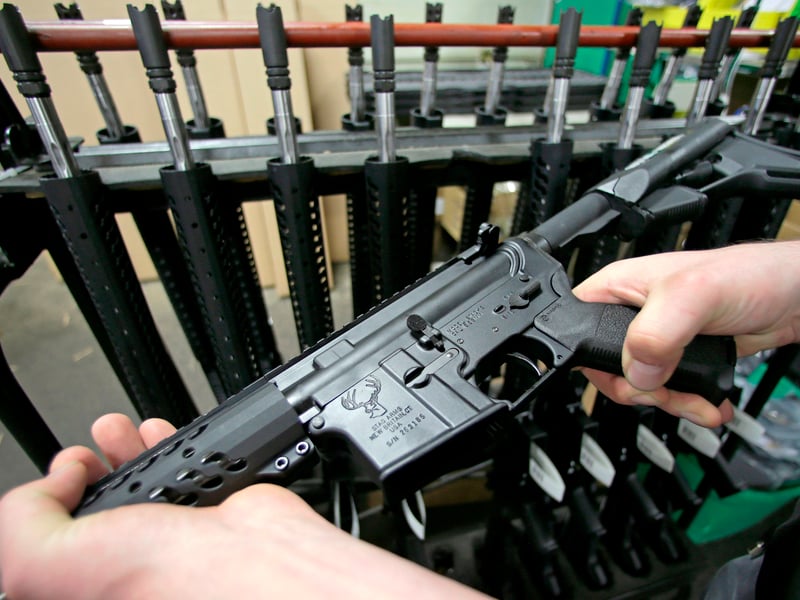
EAST ST. LOUIS, Ill. (CN) — Gun owners and advocates challenged Illinois’ ban on assault weapons and extended ammunition magazines in a federal bench trial which began Monday in southern Illinois. They claim the bans violate the Second Amendment.
The plaintiffs in the four combined lawsuits — including state residents, gun retailers and Second Amendment advocacy groups like the Illinois State Rifle Association — accuse Illinois, Governor J.B. Pritzker and multiple state police agencies of unconstitutionally enforcing the ban.
“Because modern semiautomatic rifles and the hundreds of other arms banned under HB 5471 are arms in common use today, they are protected by the Second Amendment, full stop, rendering Illinois’ effort to flatly ban them flatly unconstitutional,” the plaintiffs wrote in their initial complaint.
The bans, with some exceptions, outlaw the trade and private ownership of a wide variety of firearms state lawmakers deemed assault weapons. The extended magazine ban applies to any gun feeding mechanism that can hold more than 10 rounds for long guns and more than 15 rounds for hand guns.
The bans have weathered multiple challenges in state and federal court since Illinois lawmakers passed them in January 2023 as the Protect Illinois Communities Act, though this is the first time any of the cases have reached trial.
The state and federal courts have instead wrestled over the bans for much of the last two years, reflecting the cultural and political divide between liberal Chicagoland in northeast Illinois and the state’s more conservative regions to the south and west.
U.S. District Judge Stephen McGlynn, a Donald Trump appointee based in East St. Louis, placed an injunction on the bans in April 2023 as part of the same consolidated suit now at trial. That ruling came only three days after U.S. District Judge Lindsay Jenkins, a Joe Biden appointee in Chicago, declined to enjoin the ban in a separate case brought by a physician in the Chicago suburbs.
The Chicago-based Seventh Circuit lifted McGlynn’s injunction in early May 2023, and that November it upheld the bans. The appellate court found the banned weapons were akin to military firearms like machine guns, which have faced restrictions on civilian ownership since 1934. The Illinois Supreme Court also upheld the bans in August 2023, and the U.S. Supreme Court has repeatedly declined to weigh in on the issue — most recently this past July.
The plaintiffs in the case now at trial named several state sheriffs’ departments as defendants despite the Illinois Sheriffs’ Association also opposing the bans. In March 2023, the association filed an amicus brief on the gun rights advocates’ behalf, and as of last December dozens of Illinois sheriffs’ departments had issued statements saying they would not enforce the bans.
The bench trial on the plaintiffs’ claims against the sheriffs, Pritzker, Illinois Attorney General Kwame Raoul and other state officials is expected to last a week, after which McGlynn will deliver his ruling on the bans’ constitutionality. McGlynn has expressed enmity toward laws that he sees as violating the Second Amendment in prior filings.
“The Second Amendment guarantees are fundamental and belong to the citizens. The Second Amendment acknowledges a right of the people, not a license to be issued or denied by the government as it sees fit,” McGlynn wrote in a December order in the case currently at trial, adding that “any entreaties to ignore, erode, or infringe the constitutional rights of the people will not gain traction in this court.”
Nevertheless, in that same order McGlynn declined to block one of the bans’ key enforcement provisions on 14th Amendment grounds. That provision allows current assault weapon or extended magazine owners to keep their guns so long as they were bought before the governor signed the bans into law. But it also required the grandfathered owners to register their guns and magazines with state police before Jan. 1, 2024.
The plaintiffs said this requirement violates the 14th Amendment, arguing the state did not give current assault weapon owners enough time to go through the registration process. The Jan. 1, 204 registration deadline had been in place since state lawmakers enacted the bans, but the Illinois State Police didn’t file the actual rules outlining the registration process until Sept. 15, 2023 and the electronic registration portal for assault weapon owners didn’t launch until Oct. 1.
McGlynn rejected that argument, and went even further in the same December order by dismissing the gun advocates’ 14th Amendment claims outright.
“The government is correct that, absent a clear indication that the [gun rights] advocacy organizations have standing to sue on behalf of their members, the … plaintiffs cannot bring suit on behalf of hypothetical, unnamed Illinois citizens who allegedly do not have adequate notice of the registration requirements,” McGlynn wrote.
The plaintiffs in the combined cases filed their suits in January 2023, only days after Pritzker signed the bans into law. Public pressure to outlaw assault weapons built in the aftermath of the July 4, 2022 Highland Park mass shooting, which suspected gunman Robert Crimo III carried out using legally-purchased guns.
 Follow @djbyrnes1
Subscribe to our free newsletters
Our weekly newsletter Closing Arguments offers the latest about ongoing trials, major litigation and rulings in courthouses around the U.S. and the world, while the monthly Under the Lights dishes the legal dirt from Hollywood, sports, Big Tech and the arts.