Search Articles


(CN) — Two Alabama fishermen who were seriously injured when their boat crashed into a hidden duck blind asked an 11th Circuit panel on Wednesday to overturn the dismissal of their negligence lawsuit against the federal government and the Tennessee Valley Authority.
An attorney for fishermen Carter Gilliam and Schrade Jones urged the three-judge panel to reverse an Alabama federal judge’s finding that the government cannot be sued in this instance. The lower court ruled the case falls under an exception to the Suits in Admiralty Act, a law which otherwise allows individuals to sue the government for negligence in maritime actions.
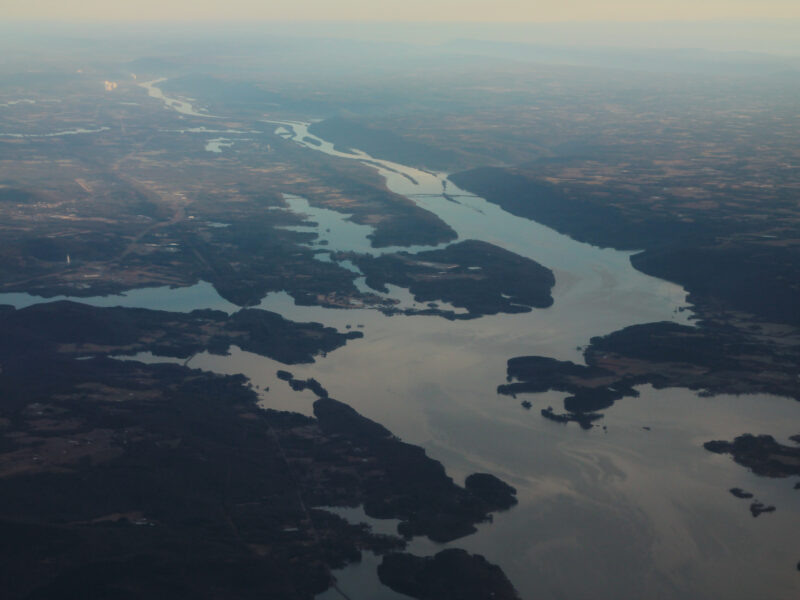
Gilliam and Jones were knocked unconscious and suffered multiple broken bones while bowfishing one summer night in 2020 when their 16-foot jon boat crashed into an unmarked duck blind in Lake Guntersville.
The plaintiffs say the duck blind — which was privately owned but located only feet from the main channel marked for commercial boat traffic — had no reflective materials or buoys and was virtually invisible in the dark. They claim the U.S. and the Tennessee Valley Authority (TVA) negligently failed to remove, warn of or mark the duck blind in the 16 years it had existed.
Attorney Franklin Taylor Rouse of Ryan & Rouse, who represents the plaintiffs, told the panel the danger presented by the duck blind was “conceptually no different than a wet floor at a store.” The government had previously mapped the area and was legally responsible for maintaining it for travel, Rouse said.
“At a certain point, when that wet floor exists for so long, the store has an obligation … to remove it. Here, this duck blind existed in the middle of the lake, right in between the commercial boat traffic and where speed boats are going by with water-skiers,” Rouse argued. “At night it is required to be lighted. That’s what a reasonable person would do. The government did not light it.”
But an attorney for the TVA told the panel that discovering the duck blind, which was built not by the government but a private person, would have been like finding a needle in a haystack.
“The TVA manages about 40,000 miles of river and lake and 11,000 miles of shoreline,” David Ayliffe of Baker Donelson Bearman Caldwell & Berkowitz said. The attorney said the situation was “a whole heck of a lot different than a wet floor.”
The government and the TVA have argued they had no legal obligation to remove the hazard from navigable waters or mark it to make it more visible even if they knew about it before the crash.
An Alabama federal judge sided with the government last year and threw out the case.
The government’s decision not to mark or remove the duck blind fell squarely into the type of decision-making shielded by the discretionary function exception to the Suits in Admiralty Act, U.S. District Judge Liles C. Burke decided.
But Rouse told the panel the law “permits suit against the government if the same action can be maintained against a private person.”
Rouse acknowledged the 11th Circuit has found otherwise in earlier cases. But the attorney said the panel could find its precedent was overruled by cases holding the judiciary cannot rewrite statutes or negate claims authorized by Congress, like the U.S. Supreme Court’s 2019 decision in Thacker v Tennessee Valley Authority.
Arguing on behalf of the government, Justice Department attorney Weili Shaw told the panel the analysis performed by the high court in Thacker is not relevant to the plaintiffs’ case.
“If you read Thacker, it repeatedly says it’s discussing the commercial activities of a public corporation,” Shaw said. “Everything about that is different than the Suits in Admiralty Act, which is a traditional waiver of immunity for a traditional government agency engaged in traditional governmental activities.”
U.S. Circuit Judge Robin Rosenbaum was doubtful Thacker could apply in this instance, pointing out the case dealt with discretionary function immunity under a different statute.
“To abrogate our precedent [the case] has to be on all fours,” the Barack Obama appointee said. “Don’t get me wrong, our case law on this may be wrong but we have to deal with the prior precedent rule and all that comes with it. If you want to get past that I need a very specific way to do that and that is, I think, the problem here.”
Senior U.S. Circuit Judge Charles Wilson, a Bill Clinton appointee, shared Rosenbaum’s concerns. Wilson noted that every other circuit court to address the same issue has disagreed with Rouse’s arguments.
Rouse suggested this case could be an opportunity for the 11th Circuit to set the record straight.
“What is clear in every circuit is that these courts are violating the very separation of powers by rewriting a congressional statute,” Rouse said.
Wilson and Rosenbaum were joined on the panel by U.S. Circuit Judge Embry Kidd, a Joe Biden appointee. The panel did not indicate when a decision will issue in the appeal.
 Follow @KaylaGoggin_CNS
Subscribe to our free newsletters
Our weekly newsletter Closing Arguments offers the latest about ongoing trials, major litigation and rulings in courthouses around the U.S. and the world, while the monthly Under the Lights dishes the legal dirt from Hollywood, sports, Big Tech and the arts.