
 Search Articles


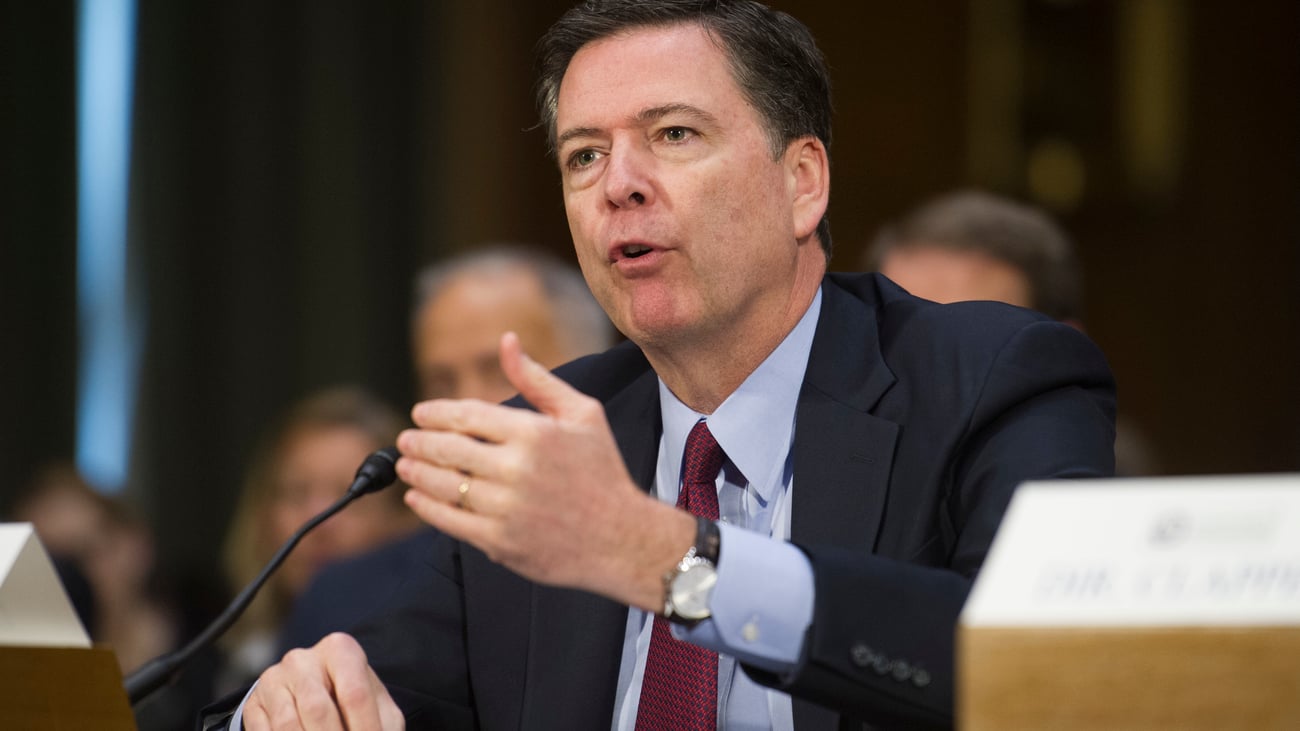
WASHINGTON (CN) — Former FBI Director James Comey is facing a second criminal indictment from the Trump administration stemming from a controversial social media post the one-time law enforcement official made last year.
Tuesday’s fresh attempt to prosecute Comey, a longtime political adversary of the president, comes months after an initial indictment against the former FBI director fell flat after the attorney overseeing the case against him was disqualified by a federal judge.
According to the indictment filed in the Eastern District of North Carolina, the Justice Department charged Comey in connection to an Instagram post he made in May 2025 which appeared to show seashells on a beach arranged to form the numbers “86” and “47.” The number 86 is often used to denote removal or elimination, and President Donald Trump is the 47th U.S. president.
Comey was charged with making a “serious expression of an intent to do harm” to the president as well as with transmitting such threats across state lines.
Announcing the charges during a news conference Tuesday afternoon, acting Attorney General Todd Blanche attempted to distance the indictment against Comey from Trump’s longstanding animosity toward the former FBI director.
“While this case is unique and this indictment stands out because of the name of the defendant, his alleged conduct is the same kind of conduct that we will never tolerate and that we will always investigate and regularly prosecute,” he told reporters.
Blanche cited other recent examples in which the Justice Department has prosecuted “hundreds of other” people who made threats against Trump and other political leaders.
Comey’s post generated significant backlash at the time, including from Trump administration officials and Republicans in Congress who suggested that the former FBI director was issuing a veiled call to assassinate the president, who at the time had been the target of two such attempts. The Secret Service reportedly interviewed Comey about the post, which was quickly deleted.
Trump said at the time that Comey knew “exactly” what his post had alluded to.
Blanche on Tuesday was evasive when pressed about what evidence the Justice Department had to back up accusations that Comey had knowingly threatened the president, telling reporters he was “not going to talk about the evidence that we have.”
And the acting attorney general pushed back on concerns about whether the charges crossed the line into prosecuting free speech.
“It’s not, in my mind, a difficult line,” said Blanche. “You are not allowed to threaten the president of the United States of America. That’s not my decision — it’s Congress’ decision, and a statute they passed which we charge multiple times a year.”
Under federal law, it’s illegal to transmit any communication containing “any threat to take the life of, to kidnap or to inflict bodily harm upon” the president. Comey has denied that the photo of seashells represented an assassination threat against Trump.
Tuesday’s indictment included an arrest warrant for Comey, but Blanche refused to say whether the former FBI director would be detained.
The new indictment against Comey is the Trump administration’s second attempt to prosecute the former top law enforcement official, who the president has long disdained.
The Justice Department in September indicted Comey on perjury charges, arguing that he lied under oath during testimony given to the Senate Judiciary Committee in 2020. Prosecutors said at the time that the former FBI director told lawmakers at the time that he had not authorized leaks to the press in 2016 concerning a federal investigation into Hillary Clinton’s emails.
Republicans at the time hailed the indictment as long-awaited justice for what some have called a pattern of government officials lying to members of Congress. But Democrats argued that the charges against Comey represented little more than a judicial system weaponized against opponents of Trump and his agenda.
But a judge late last year tossed the Trump administration’s case against Comey, arguing that Lindsey Halligan — then the interim U.S. attorney for the Eastern District of Virginia — was on the job illegally. She was tapped by Trump to replace Erik Siebert, the former prosecutor for the district who left his position after refusing to sign off on a separate indictment against New York Attorney General Letitia James.
Halligan left the Justice Department in January, though the Trump administration has formally nominated her as U.S. attorney for Virginia’s eastern district. She’s unlikely to be confirmed by the Senate, however, thanks to objections from the Old Dominion’s two Democratic senators.
Comey, meanwhile, has been a controversial figure in U.S. politics since the 2016 election, when his oversight of the probe into then-candidate Clinton’s use of a private email server earned him criticism from Democrats. The FBI never charged the former secretary of state with any wrongdoing, but Comey himself called Clinton’s conduct “careless” during a news conference months before the election.
Trump fired Comey in 2017. He’s since called the former FBI director a “dirty cop” and “one of the worst human beings.”
 Follow @BenjaminSWeiss
Subscribe to our free newsletters
Our weekly newsletter Closing Arguments offers the latest about ongoing trials, major litigation and rulings in courthouses around the U.S. and the world, while the monthly Under the Lights dishes the legal dirt from Hollywood, sports, Big Tech and the arts.
Additional Reads

 Fifth Circuit grapples with flavored vape regulations April 28, 2026