
 Search Articles


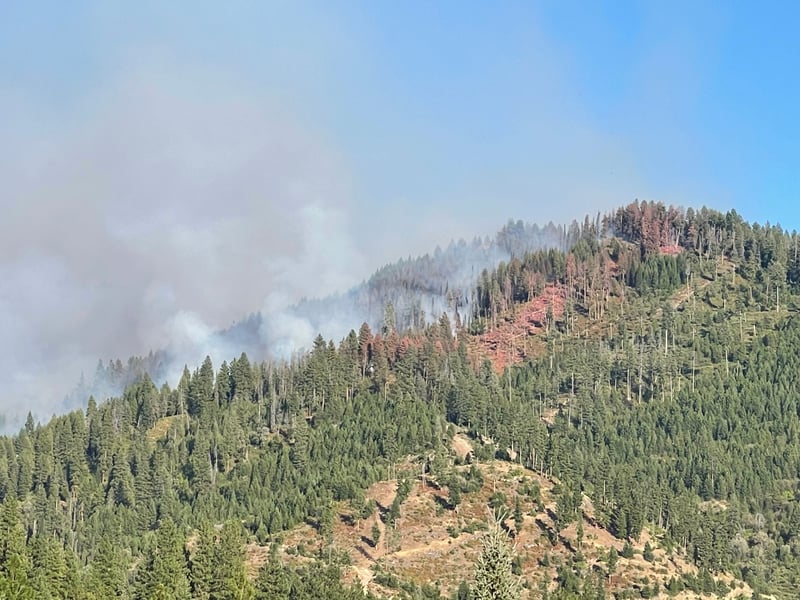
BOISE, Idaho (CN) — On the evening of July 24, a bolt of lightning cracked through the sky, igniting what would become the Wapiti Fire.
Roughly two miles southwest of Grandjean campground, the fire tore across the steep terrain of the Boise National Forest, posing challenges for firefighters right from the very start.
With difficult access points and unfavorable weather conditions, the fire quickly spread — burning not only in Boise County but also across the Sawtooth and Salmon-Challis National Forests in Custer County.
It was a fitting example of this year’s Idaho fire season, which has left officials scrambling to keep up. Wildfires are striking more frequently and with greater intensity across the United States, a trend that experts warn will only continue without action to address climate change.
Troubling stats, growing challenges
According to Josh Harvey, chief of fire management for the state Department of Lands, Idaho has had 318 fires this year, which have collectively burned 53,765 acres. Of those, 133 were caused by humans, while 119 were sparked by lightning. Another 66 are still under investigation.
“The numbers show we’re above average in both fires and total acreage burned,” Harvey said, noting that firefighting costs have soared to around $60 million.
Fire patterns have been erratic. North Idaho saw fires early in the season, while the central and south of the state had a late but intense outbreak.
“Early in August, we got some rain and cooler weather that helped calm things down in North Idaho,” he said. “But places like Stanley and Idaho City got hit hard during the peak heat.”
As Idaho’s landscape changes, fire seasons are becoming less predictable.
“We’re now seeing fires starting earlier in the year," Harvey said. “If things don’t change, we might even be battling flames late into October. This season has gone from weeks to months.”
The wildfire threat is increasing for several reasons, Harvey said, including population growth and more people moving into areas that used to be untouched.
“Homes creep into areas that used to be full of trees,” he said. “We need to put money into prevention projects and actively manage our forests to lower fuel loads.”
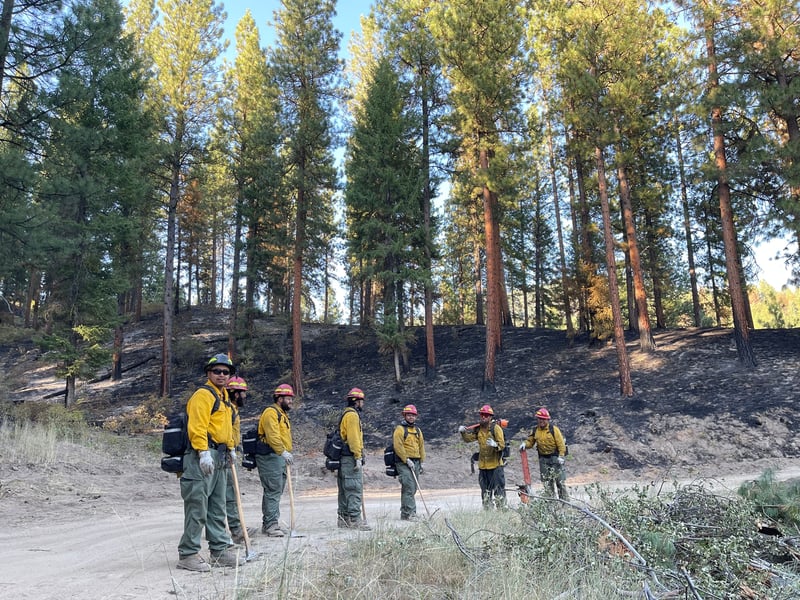
According to Harvey, the Idaho Department of Lands’ focus on early detection and quick response is crucial. He said the agency is using high-tech tools like AI-driven cameras to keep an eye on potential fire threats.
“We’ve had a lot of success where mitigation efforts are in place,” he said. “In spots where we’ve reduced fuel, our chances of putting fires out quickly are way better, which ultimately saves taxpayer money.”
The role of climate change
Jen Pierce, an associate professor of geosciences at Boise State University, noted in an interview how climate change is reshaping fire seasons across the United States.
Idaho is no exception. Due to warmer and drier conditions, fires here are becoming larger and more severe, she said.
The introduction of flammable cheatgrass in rangelands also plays a huge role — but forest fires are also increasingly affecting higher elevations. In places that used to be too wet to burn, climate change is turning those areas into hotspots for severe wildfires.
“The reality is that fires are bigger and more severe when it’s warm and dry,” she said.
Human-caused climate change is making summers throughout the West warmer and drier, Pierce added. As a result, fire seasons are lasting longer and fires are burning more intensely, especially in higher elevation forests.
Lightning has always sparked fires in these forests. In the the past, though, such strikes would have only led to small blazes.
Now, those small fires can grow into massive ones.
“If you’ve been outside in Idaho and had to sneeze or cough because of smoke, you’re feeling the direct effects of climate change,” Pierce said. “Wildfire smoke is a significant health threat, globally killing at least 300,000 people every year.”
Researchers at Boise State University, in conjunction with organizations like Idaho Physicians for Climate Health, are conducting studies to better prepare for the health impacts of wildfire smoke
“These health impacts can be hard to track because they linger,” Pierce said. “The effects of wildfires can stretch for thousands of miles due to smoke, and we also have to consider post-fire erosion and the economic impacts on communities that lose homes.”
When it comes to addressing these challenges, Pierce believes the first step for lawmakers is to recognize the role climate change plays in driving large, dangerous fires. She suggested incorporating climate models into fire management strategies.
“Our firefighters are doing an amazing job with a really tough situation,” she said. “But if our main goal is to protect structures and lives, we need to focus our efforts where they matter most.”
Pierce suggested that funding could be better spent on things like replacing flammable roofs in fire-prone areas and reducing fuel loads around buildings. Since different ecosystems require different approaches, she stressed there isn’t a one-size-fits-all strategy for managing fires.
Nonetheless, large fires in Idaho forests are primarily driven by climate change, Pierce said.
The data backs that up. A study by the National Oceanic and Atmospheric Administration found that climate change has been the main driver behind the increase in fire weather in the Western United States. Drought and persistent heat have created the perfect conditions for extraordinary wildfire seasons from 2020 to 2022 across many Western states, with each of those years burning far more than the average of 1.2 million acres since 2016.
“We need to plan for severe fire seasons and take practical steps now,” Pierce said. “Any progress toward clean energy in Idaho is a step toward tackling the fire issue. Let’s not wait until disaster strikes to prepare.”
Planning for the future
State leaders, including Republican Governor Brad Little, have put together a report that outlines ten main priorities for dealing with the effects of wildfires in the coming years.
The report highlights the importance of collaboration between state agencies, local governments, and other groups to build a solid wildfire-response plan.
One key suggestion is for stakeholders like the Office of Species Conservation to write a letter to federal agencies and Congress, requesting more categorical exclusions for vegetation-management treatments. Officials argue this would help cut down on the time it takes to roll out essential wildfire mitigation measures.
Joan Varsek, spokesperson for Little, said the state is actively working to secure funding for these efforts.
“State agencies are looking into various grant opportunities that can help support underresourced entities such as rangeland fire-protection associations,” she said. “The State of Idaho will continue to invest dedicated funds to help build capacity at the Idaho Department of Lands for fire response.”
According to Varsek, the expected balance in the state’s fire-suppression account will be only around $7 million after this season. That’s a far cry from the more than $60 million spent this past fire season alone.
The report also suggests developing a statewide notification and evacuation plan that includes a mobile notification tool. This tool is designed to reach folks in both urban and rural areas, making sure everyone gets the word during emergencies.
“The notification tool should be mobile and capable of receiving notifications in areas with cellular coverage and in areas without,” Varsek said.
State agencies also are pushing for better communication during emergencies. And on the tech front, Varsek said the state is looking into using more smoke-detection cameras and exploring satellite technology to boost fire detection and response times. Before next fire season starts, “the governor would like to see substantial progress on the recommendations,” Varsek said.
Subscribe to our free newsletters
Our weekly newsletter Closing Arguments offers the latest about ongoing trials, major litigation and rulings in courthouses around the U.S. and the world, while the monthly Under the Lights dishes the legal dirt from Hollywood, sports, Big Tech and the arts.