
 Search Articles


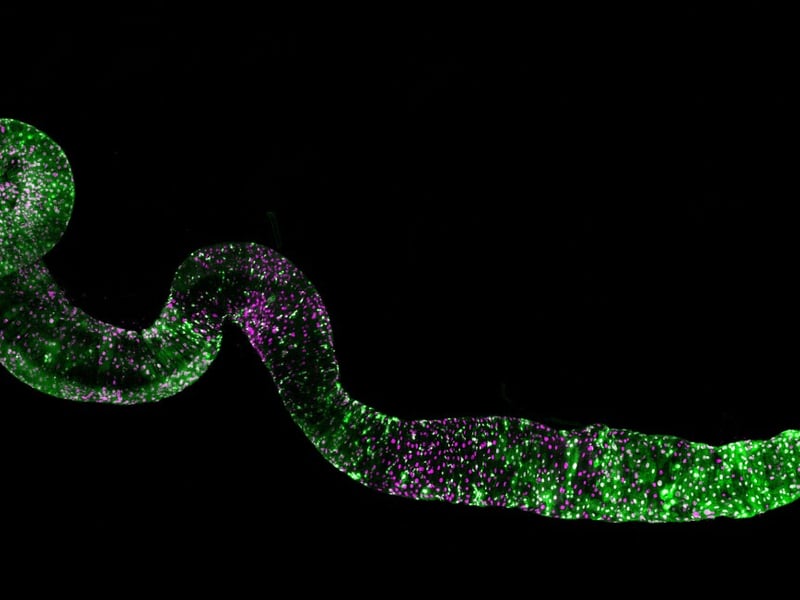
(CN) — While the intestines of fruit flies might seem unrelated to human health, new research indicates research into their inner workings could have implications for human stem cell treatments.
In a study published Thursday in the journal BMC Biology, a team of scientists found that fruit flies’ lifespans were extended in certain cases when they were introduced to genes from organisms able to regenerate their bodies, like flatworms.
Fruit flies, like most insects and mammals, lack the ability to regenerate their bodies. Flatworms, however, are one of the most highly regenerative animals and can reconstruct their entire body from just fragments.
The researchers introduced highly regenerative species-specific JmjC domain-encoding genes (HRJDs) derived from flatworms to the insects to see if the flies could regenerate parts of their bodies. HRJDs are unique to animals with high regenerative capacity.
“In animals capable of whole-body regeneration, such as flatworms and jellyfish, specific genes may help allow regeneration and maintain long-term stem cell functions,” Yuichiro Nakajima, researcher and associate professor at the University of Tokyo’s Graduate School of Pharmaceutical Sciences, said in a statement. “Conversely, mammals and insects, which have limited regenerative abilities, may have lost these genes during evolution.”
Nakajima said it was unclear if reintroducing the regenerative genes in animals that cannot regenerate their bodies would affect their regeneration or aging process.
The researchers had hoped the genes would regenerate injured tissue in the fruit flies, but instead found HRJD expression both hampered tissue regeneration in developing wing discs and compromised regeneration in the adult midgut.
When HRJDs were introduced to the developing wing discs of the fruit flies, the researchers observed that the genes impaired the regenerative response and reduced the flies’ survival after injury.
However, the researchers noticed the fruit flies’ lifespans extended when HRJDs were expressed in intestinal stem cell lineages after development.
“HRJDs promoted greater intestinal stem cell division, whilst also suppressing intestinal cells that were mis-differentiating, or going wrong in aged flies,” Nakajima said.
Nakajima compared the finding to antibiotics, which suppress mis-differentiated intestinal cells but also suppress stem cell division. The researchers found that the transferred genes helped combat an age-related intestinal issue in the fruit flies.
“For this reason, HRJDs had a measurable effect on the lifespans of fruit flies, which opens the door, or at least provides clues, for the development of new anti-aging strategies,” Nakajima said. “After all, human and insect intestines have surprisingly much in common on a cellular level.”
A challenge in the research was combining the scientists’ schedule with the aging process of fruit flies, which takes about two months. Fruit flies are frequent test subjects due to their fast rates of reproduction and maturation.
Nakajima noted that further research is needed to understand the molecular workings of HRDJs, particularly whether the genes work in combination with another component or independently.
“Therefore, this is just the start of the journey, but we know now that our modified fruit flies can serve as a valuable resource to uncover unprecedented mechanisms of stem cell rejuvenation in the future,” Nakajima said. “In humans, intestinal stem cells decrease in activity with age, so this research is a promising avenue for stem cell-based therapies.”
Subscribe to our free newsletters
Our weekly newsletter Closing Arguments offers the latest about ongoing trials, major litigation and rulings in courthouses around the U.S. and the world, while the monthly Under the Lights dishes the legal dirt from Hollywood, sports, Big Tech and the arts.