
 Search Articles


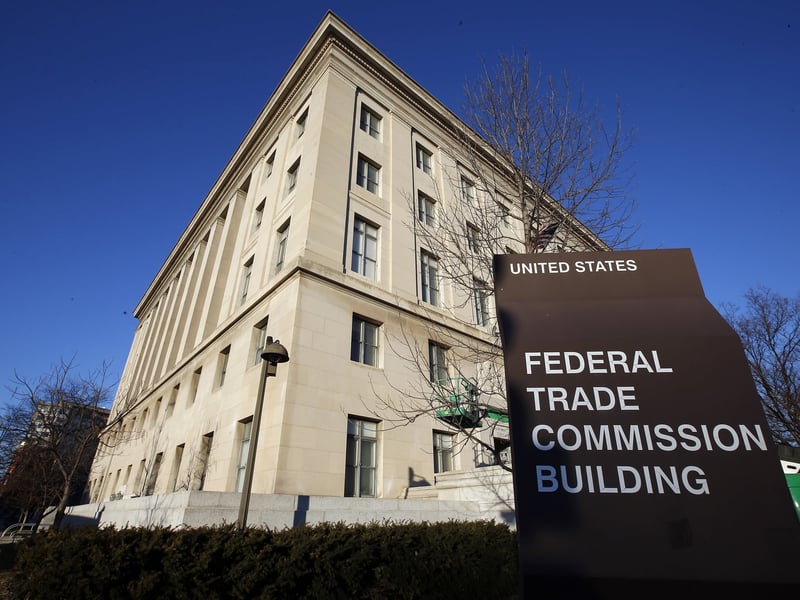
CHICAGO (CN) — The Federal Trade Commission on Thursday looked to a federal trial court to prevent the merger of two major medical device coating manufacturers at the behest of a private equity firm.
Back in 2022, Chicago private equity firm GTCR LLC acquired Biocat, the second-largest manufacturer of hydrophilic coatings used in medical devices to reduce friction, increase lubricity and help them move through the body without causing damage.
Now, through one of its affiliates, the firm wants to acquire Surmodics, the largest provider of hydrophilic coatings in the United States.
Maia Perez, an attorney for the FTC, said in court Thursday that if the firm’s deal succeeded, it would control 60% of the hydrophilic coating market, violating U.S. antitrust laws.
Specifically, Perez cited the Clayton Antitrust Act of 1914, which bolstered the protections laid out in the first federal antitrust statute in the United States, the Sherman Antitrust Act of 1890. Among other provisions, the Clayton Act pointedly outlawed mergers and acquisitions when they may substantially reduce competition.
Perez said it’s clear GTCR started with Biocat and will go down the line until there’s no competition left.
“GTCR has already signaled that it won’t stop here,” she added.
Perez argued GTCR tried to differentiate Biocat and Surmodics via the curing process of their hydrophilic coatings but said a medical device’s coating can be cured with either UV or thermal light, and both serve the same function.
“In short, it’s about the painters, not just the paint,” she said.
GTCR attorney Lawrence Buterman called Perez’s characterization of the different curing strategies inaccurate.
“As a matter of chemistry and physics, UV cannot swap with thermal light,” he said.
Buterman argued Perez’s way of calculating the market share was also inaccurate, in part because so much of Biocat’s revenue is based on old opportunities that don’t factor into current market competition.
“It’s like saying the White Sox World Series win in 2005 means they could have another chance this year,” he said, making a joke out of Chicago’s longest-losing baseball team, which lost 121 games in 2024.
The Chicago firm offered to remedy the antitrust issues via a divestiture plan ahead of Thursday’s evidentiary hearing, in which it would sell off shares of Biocat, to be purchased by Integer, another medical device company, before combining what’s left of Biocat with Surmodics.
Perez said their divestiture plan wasn’t a fix but a facade.
“Partial divestitures don’t work,” she said. “It doesn’t create a competitor; it creates a casualty.”
Buterman, an attorney with New York-based Latham and Watkins, said the FTC’s analysis of the prospective merger (and the divestiture plan) was purely speculative, born out of cherry-picking data points and communications between business partners.
“One doesn’t need an advanced medical or bioengineering degree to notice why this doesn’t affect competition,” he said. “Simple math shows that once this transaction is completed, there will be the exact same number of companies.”
The case proceedings are set to continue before U.S. District Court for the Northern District of Illinois Judge Jeffrey Cummings until Sept. 2. Cummings did not say when he might rule.
 Follow @RosenCaitlyn
Subscribe to our free newsletters
Our weekly newsletter Closing Arguments offers the latest about ongoing trials, major litigation and rulings in courthouses around the U.S. and the world, while the monthly Under the Lights dishes the legal dirt from Hollywood, sports, Big Tech and the arts.