
 Search Articles


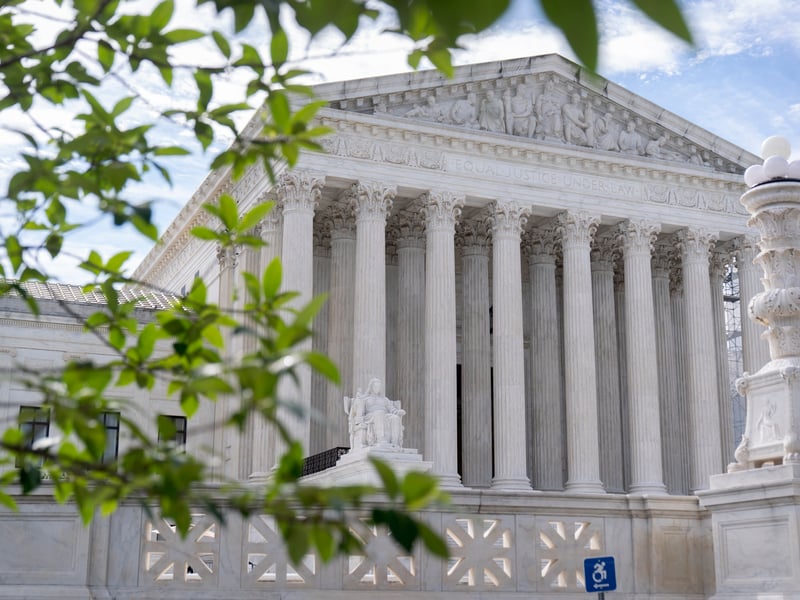
WASHINGTON (CN) — The Supreme Court agreed to hear over a dozen appeals Friday, adding cases involving vapes, DNA testing and discrimination lawsuits to its 2024 lineup.
On the eve of their return to the bench, the justices issued 15 new certiorari grants from its long conference, where the court reviewed hundreds of petitions that piled up over the summer break.
Among the bunch is a fight over Food and Drug Administration approvals for flavored vapes. The Biden administration’s authority to deny these approvals is already on the docket, but the justices also took up the Biden administration’s claim that R.J. Reynolds Vapor Co. and other tobacco sellers are venue-shopping to put their cases before favorable courts.
“Under the [Family Smoking Prevention and Tobacco Control] Act, Reynolds could have filed a petition for review in either the Fourth Circuit (where it is based) or the D.C. Circuit,” U.S. Solicitor General Elizabeth Prelogar wrote. “But ‘[t]hose two courts ha[d] already ruled on questions central to these cases in a manner that is adverse to Reynolds’ position.’”
The Family Smoking Prevention and Tobacco Control Act put special restrictions on marketing new tobacco products, forcing manufacturers to obtain government authorization to introduce any new products. If a company’s application is denied, they can appeal to the D.C. Circuit or file a petition where their business resides.
The Biden administration says Reynolds already faced adverse rulings in the Fourth Circuit and the D.C. Circuit, so the company filed its petition at the Fifth Circuit. The conservative appeals court ruled in Reynolds’ favor.
“The Fifth Circuit’s decision permits retail sellers of a tobacco product who have no right of judicial review under the act to nevertheless gain review; effectively nullifies the act’s limits on venue; facilitates blatant forum shopping; and undermines the precedents of other circuits,” Prelogar wrote.
The conservative appeals court faced harsh criticism from the government, who claimed that venue shopping encroached on the domains of other courts and undermined their precedents by allowing companies to file elsewhere.
“Because manufacturers across the country can now file petitions for review in the Fifth Circuit, moreover, it is unlikely that the question presented will percolate in other courts of appeals or that a circuit conflict about that question will ever develop,” the government wrote.
The Biden administration said the venue-shopping contributed to a youth vaping epidemic.
Another Fifth Circuit appeal will decide if a Texas man can receive DNA testing to prove his innocence. This summer, Ruben Gutierrez received a rare execution stay from the justices and his luck continued Friday when the court took up his appeal.
Despite being sentenced to death for the murder of Escolastica Harrison in 1999, Gutierrez says he is innocent. A Texas court ruled that Gutierrez didn’t have standing to ask for evidence testing that could clear his name.
The appeal comes a year after the justices held that Rodney Reed had standing to challenge Texas’ postconviction DNA testing statute. Gutierrez claims the Fifth Circuit failed to follow the justices’ ruling.
“The Fifth Circuit has ignored this court’s clear precedent and gone out of its way to create an impractical, burdensome standing test requiring federal courts to probe the parties’ dispute and litigation history with a fine toothcomb in order to foretell the future, contingent actions of state officials,” Gutierrez wrote.
The justices took up age and sex discrimination appeals. Gary Waetzig’s age discrimination complaint against Halliburton Energy Services was initially dismissed to initiate arbitration. Waetizig wants to reopen his case, however, after Halliburton violated the terms of their agreement.
Marlean Ames filed Title VII against the Ohio Department of Youth Services, claiming that the agency promoted LGBTQ employees over her. The justices will decide if Ames — who is a heterosexual woman — must show background circumstances on top of her sexual discrimination claims because she is part of a majority group.
In a Fourth Amendment case, the justices will decide the review standard for excessive force cases. Two chiropractic practices asked the high court to review a class action against unsolicited advertisements from McKesson Corporation. The justices will review standards for challenging retirement plan recordkeeping fees from Cornell University employees.
The high court could revive a lawsuit from victims of Hamas terrorist attacks in 2019 against a bank accused of aiding and abetting terrorism. The justices will decide if courts or juries can determine whether a prisoner has exhausted their administrative remedies and what a foreign-owned company needs to sue for an arbitration award in a U.S. federal court.
 Follow @KelseyReichmann
 Follow @kelseyreichmann.bsky.social
Subscribe to our free newsletters
Our weekly newsletter Closing Arguments offers the latest about ongoing trials, major litigation and rulings in courthouses around the U.S. and the world, while the monthly Under the Lights dishes the legal dirt from Hollywood, sports, Big Tech and the arts.